
 Eva Lovia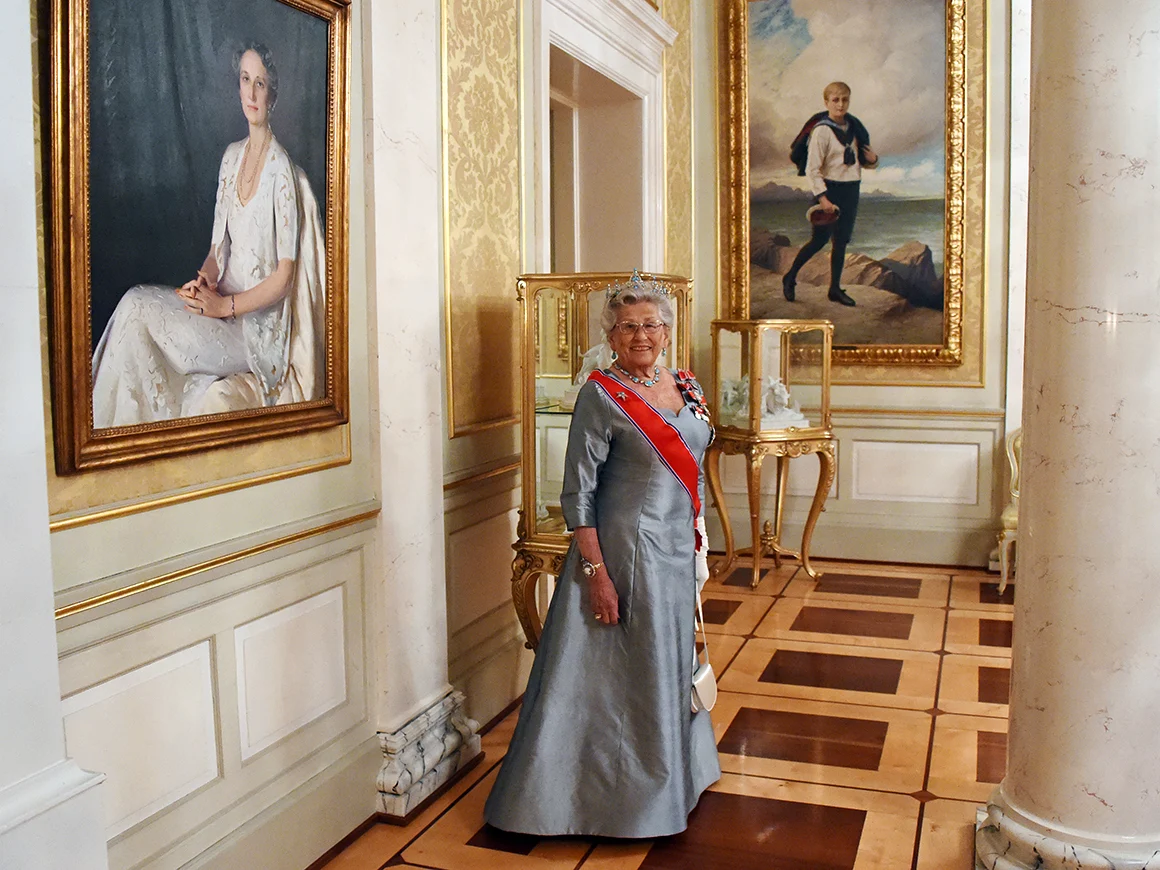
The funeral of Her Highness Princess Astrid of Norway is scheduled to take place on September 23 in Oslo, marking a period of profound national mourning for the Norwegian Royal Family and the nation. The princess passed away on September 11 at the venerable age of 94. Her death occurred just two days after the solemn funeral service for her beloved younger brother, His Majesty King Harald V, a poignant temporal overlap that underscores the deep familial bonds and the shared experiences of loss within the royal household.
A Nation Bids Farewell to a Beloved Princess
Princess Astrid’s final rites will be conducted at Ris Church in the Norwegian capital, a venue chosen for its architectural significance and its deeply personal connection to the princess. It is anticipated that King Haakon VIII, her nephew, will lead the mourners, a testament to his respect and affection for his aunt. Her Majesty Queen Sonja, King Haakon VIII’s mother, who shared a decades-long close friendship with Princess Astrid, will also be present to pay her respects, reflecting the enduring ties of kinship and personal regard.
Ris Church, renowned for its distinctive architectural beauty, holds a particularly poignant resonance for Princess Astrid. The church was consecrated and officially opened for worship in 1932, the very year of her birth. Ninety-four years later, this hallowed ground will serve as the site for the final farewell to a princess who, for many years, served as Norway’s unofficial First Lady. This role encompassed the latter part of her grandfather King Haakon VII’s reign and the initial period of her father King Olav V’s reign, periods of significant historical transition for Norway.
The funeral service is slated to commence at 1:00 PM, a deliberate choice that mirrors the start time of King Harald V’s funeral service on September 9 at Oslo Cathedral. Princess Astrid’s attendance at her brother’s funeral marked her last public appearance, a dignified presence in the congregation as she paid tribute to him. Her passing, announced less than 48 hours later, sent ripples of sorrow through the nation, emphasizing the immediate and profound impact of her loss.
A Life of Service and Royal Duty
Princess Astrid was a figure of considerable popularity and played an active and consistent role within the Norwegian Royal Family for many decades. Her funeral is expected to garner significant attention, with Norwegian media outlets planning to broadcast the proceedings to allow a wider audience to participate in this national moment of remembrance.
Born in 1932, Astrid was the second child and second daughter of King Olav V and Crown Princess Märtha of Sweden. Her early life was shaped by the political upheavals of the 20th century. She grew up in Oslo, but during the Nazi occupation of Norway in World War II, she, along with her mother, younger brother, and elder sister Princess Ragnhild, sought refuge in the United States. This period of exile, though challenging, provided her with educational opportunities and broadened her perspective. She pursued her studies at Oxford University, a prestigious institution that honed her intellectual capabilities.
Upon completing her studies, Princess Astrid returned to Norway. By this time, both her grandfather, King Haakon VII, and her father, King Olav V, had been widowed. Her elder sister, Princess Ragnhild, had married and relocated to Brazil. In this context, Princess Astrid assumed the significant responsibilities of the de facto First Lady of Norway, a role she fulfilled with grace and dedication, acting as a vital support to her father and grandfather during a critical period of national rebuilding and the early years of the post-war era.
A Love Story Against Tradition
Princess Astrid’s personal life also garnered public attention, particularly her decision to marry Johan Martin Ferner, a successful businessman. This union, formalized in 1961, was met with considerable opposition. Mr. Ferner was not of royal blood and had previously been divorced, circumstances that were viewed with apprehension by some within traditional royal circles. However, Princess Astrid remained steadfast in her commitment to her chosen partner, refusing to relinquish her romance. The wedding took place in a relatively discreet ceremony at Asker Church. Together, Princess Astrid and Johan Martin Ferner raised five children, establishing a loving and enduring family unit.

In 1968, Princess Astrid relinquished her formal role as First Lady of Norway when her younger brother, Crown Prince Harald, married Sonja Haraldsen. However, her dedication to public service remained undiminished. She continued to undertake a wide array of engagements and maintained a substantial portfolio of patronages, demonstrating her ongoing commitment to various charitable causes and cultural institutions across Norway.
Enduring Charm and Wit
Princess Astrid was consistently recognized for her forthright personality and her distinctive sense of humor. Her wit and intelligence were often on display, as exemplified by her memorable quip likening one of her tiaras to a radio transmitter, a testament to her engaging and often playful demeanor. Even in her nineties, she maintained a remarkable sense of glamour and remained actively engaged, readily attending significant events, including State Visits, where her presence was always a highlight.
A Bond Forged in Shared Experience
The profound bond between Princess Astrid and her brother, King Harald V, was evident to all who observed them. They clearly delighted in each other’s company, their interactions marked by warmth and mutual respect. Following King Harald’s passing, the Norwegian Royal House released poignant images that underscored this deep connection. One such image depicted Princess Astrid sitting alone beside King Harald’s coffin, a silent testament to her grief. Another captured her observing the outpouring of affection from the public as they laid flowers and candles at the front of the Royal Palace in Oslo, a visible representation of national solidarity and mourning.
In announcing her death on September 11, King Haakon VIII offered a heartfelt tribute to his aunt, acknowledging her years of dedicated service and devotion to Norway. His personal affection was evident as he repeatedly referred to her as "Aunt Astrid" in his moving address. Her own children also shared a touching tribute, speaking of the profound love and care she had bestowed upon them throughout their lives, a testament to her role as a devoted mother.
Princess Astrid also maintained close ties with her relatives in the Swedish Royal Family, many of whom are expected to attend her funeral at Ris Church, further underscoring the interconnectedness of European royal houses and the personal significance of this occasion.
Broader Implications and Historical Context
The passing of Princess Astrid marks the end of an era for the Norwegian Royal Family. As a member of the generation that experienced the occupation of Norway and the subsequent rebuilding of the nation, she embodied a resilience and commitment that resonated deeply with the public. Her life spanned a period of immense social and political change, and she navigated these shifts with dignity and unwavering dedication to her royal duties and her country.
Her funeral, occurring so closely after that of her brother, King Harald V, presents a unique challenge for the Royal Family, requiring them to navigate profound grief while continuing to fulfill their public roles. The synchronized timing of the funeral services, both commencing at 1:00 PM, highlights the shared experience of loss and the continuity of royal tradition even in the face of personal tragedy. The broadcast of her funeral signifies the public’s desire to engage with and commemorate the lives of their royal family members, reinforcing the symbolic importance of the monarchy in Norwegian society.
Princess Astrid’s legacy is one of quiet strength, unwavering loyalty, and a distinctive personal charm that endeared her to many. Her life story, marked by both personal challenges and profound public service, serves as an important chapter in the history of the Norwegian monarchy. Her funeral at Ris Church will not only be a final farewell to a beloved princess but also a moment for the nation to reflect on the enduring values of service, family, and national pride that she so admirably represented. The attendance of both Norwegian and Swedish royal family members, alongside national dignitaries, will further underscore the significance of her life and the impact of her passing on both national and international levels. Her life, from her early years of exile to her later years of active royal engagement, provides a compelling narrative of a woman who embraced her destiny with grace, resilience, and an enduring sense of duty.




 Yuyun Lusiyani
 Joko Widodo
 Jia Lissa
 Pevita Pearce
 admin
admin
