
 Eva Lovia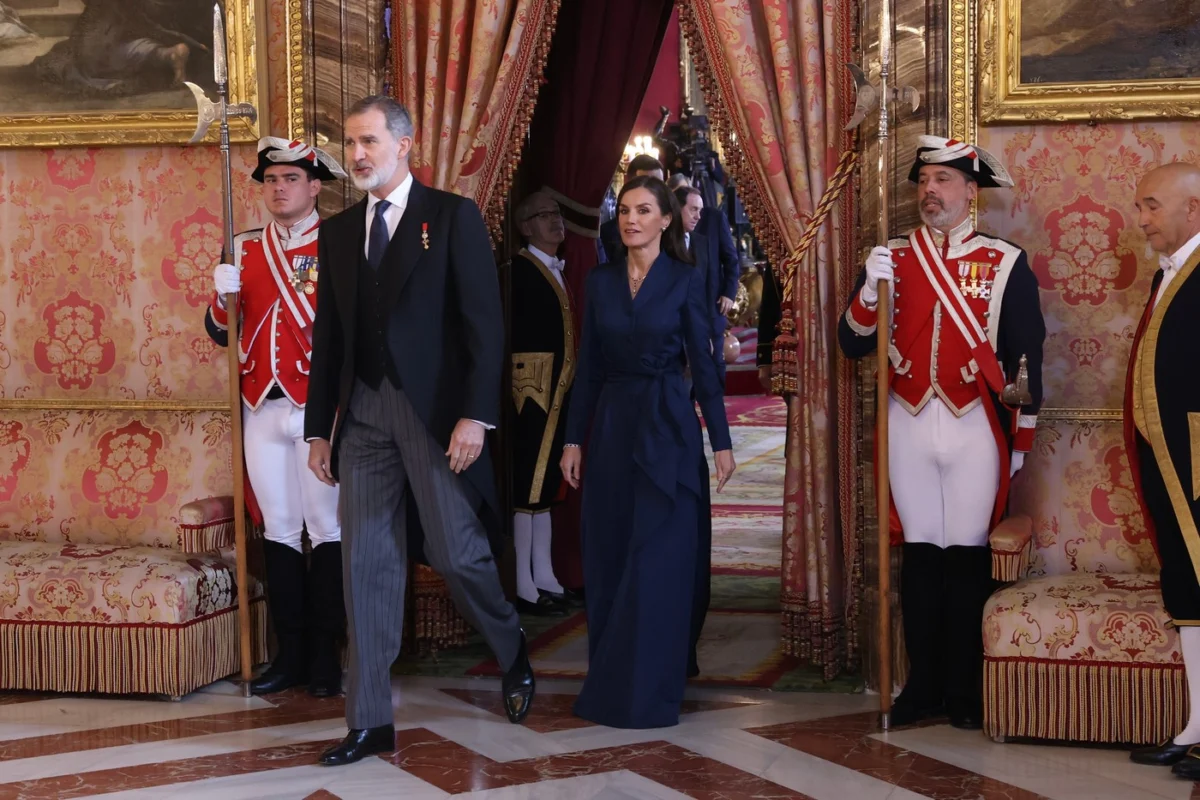
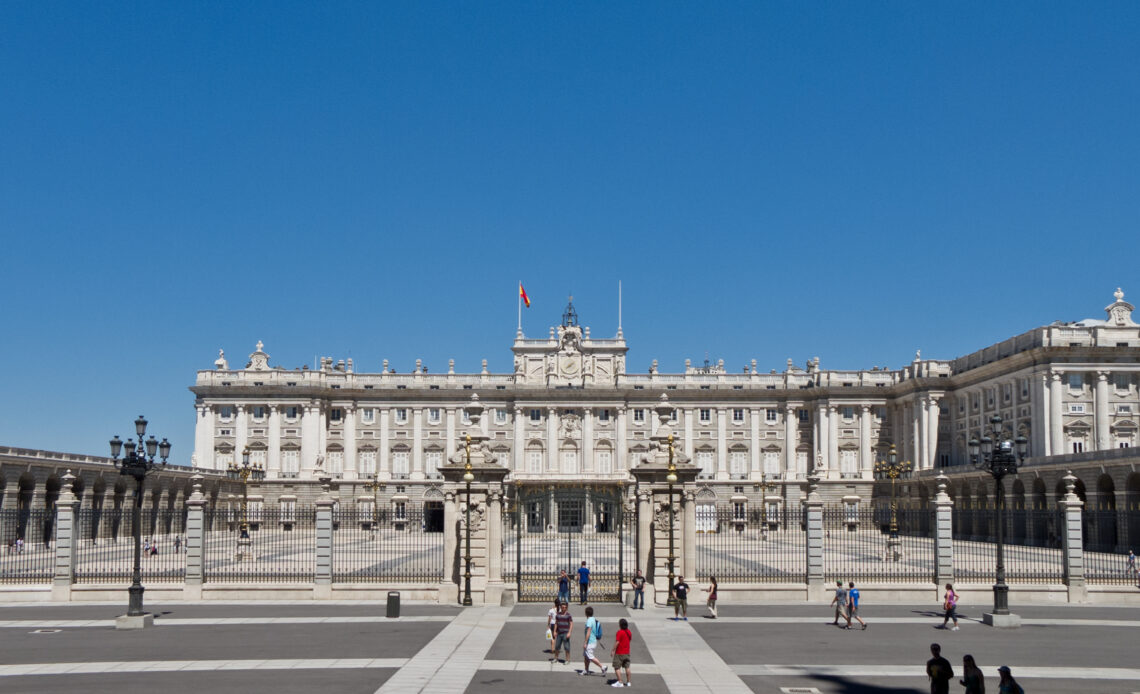
Queen Letizia of Spain orchestrated a moment of significant sartorial and historical resonance at the annual diplomatic reception held in January 2024 at the opulent Royal Palace of Madrid. Her choice of jewelry for this high-profile event was a magnificent diamond and sapphire necklace, a piece that had remained largely unseen by the public for nearly two decades. This rare reappearance marked a significant stylistic statement, drawing attention not only to the exquisite craftsmanship of the necklace but also to its deep personal and familial significance within the Spanish Royal Family. The necklace’s last public outing was on the eve of her wedding to King Felipe VI in May 2004, making its return an event steeped in both personal history and regal tradition.
A Treasured Heirloom Re-emerges
The necklace, a wedding gift from her parents-in-law, King Juan Carlos and Queen Sofia, represents a tangible link between generations of Spanish royalty. Its reappearance at the diplomatic reception, a key event in the royal calendar where the King and Queen host the accredited diplomatic corps, underscored its importance. The reception itself is a formal affair, attended by representatives from the 126 embassies and approximately 800 consulates accredited to Spain, signifying the nation’s diplomatic engagements on a global scale. Queen Letizia’s decision to wear the necklace for such a crucial event highlighted its status as a piece of significant value, both intrinsically and sentimentally.
The design of the diamond and sapphire necklace is characterized by its elegant simplicity, featuring striking blue stones interspersed with brilliant diamonds that cascade down to a substantial pearl pendant. The choice of sapphires carries a particular poignancy for Queen Letizia, as they are the birthstone for September, the month of her birth on September 15, 1972. This personal connection adds another layer of meaning to the jewel. The fact that this very necklace was originally gifted to Queen Sofia for her own wedding further emphasizes its role as a symbol of continuity and the passing down of significant royal treasures through marriage. This tradition is deeply embedded in royal families across Europe, where significant jewels often serve as tangible representations of lineage and marital unions.
A Glimpse into Royal Jewelry Traditions
The Spanish Royal Family’s collection of significant jewels is notable, though sapphires are considered a less common stone compared to the prevalence of diamonds and pearls in many of their tiaras and necklaces. While Queen Sofia possesses a notable ruby necklace that can be converted into a tiara, a piece Queen Letizia has yet to publicly wear, the sapphire necklace stands out for its historical and personal significance. Queen Letizia, known for her sophisticated and often understated approach to jewelry, typically favors pieces that complement her modern aesthetic. However, her willingness to bring out such a historically charged piece suggests a deep respect for tradition and a desire to honor her predecessors.
Among Queen Letizia’s most frequently worn pieces is the Cartier tiara, commissioned for Queen Ena over a century ago. This tiara, affectionately known as "La Buena" or "The Good One" by the royal family, holds a special place in their history. It was retained by the family following their exile in 1931 and became a prominent symbol of the restored monarchy in 1975. Since its re-emergence with the restoration, it has been exclusively worn by Queen Sofia and Queen Letizia. The expectation is that this esteemed tiara will eventually be passed down to Princess Leonor, the heir to the Spanish throne, further solidifying its status as a symbol of future queenship.
A Moment of Royal Grace Amidst a Minor Incident
The diplomatic reception, while a showcase for royal splendor, also provided a brief moment of human interest when one of Queen Letizia’s bracelets unexpectedly came loose as she was greeting guests. The incident, though minor, was handled with characteristic grace. King Felipe VI was observed assisting his wife in refastening the bracelet, a small gesture that offered a glimpse into their partnership and the supportive dynamic within the royal couple. This relatable moment, occurring amidst the formality of the event, added a touch of authenticity to the proceedings.
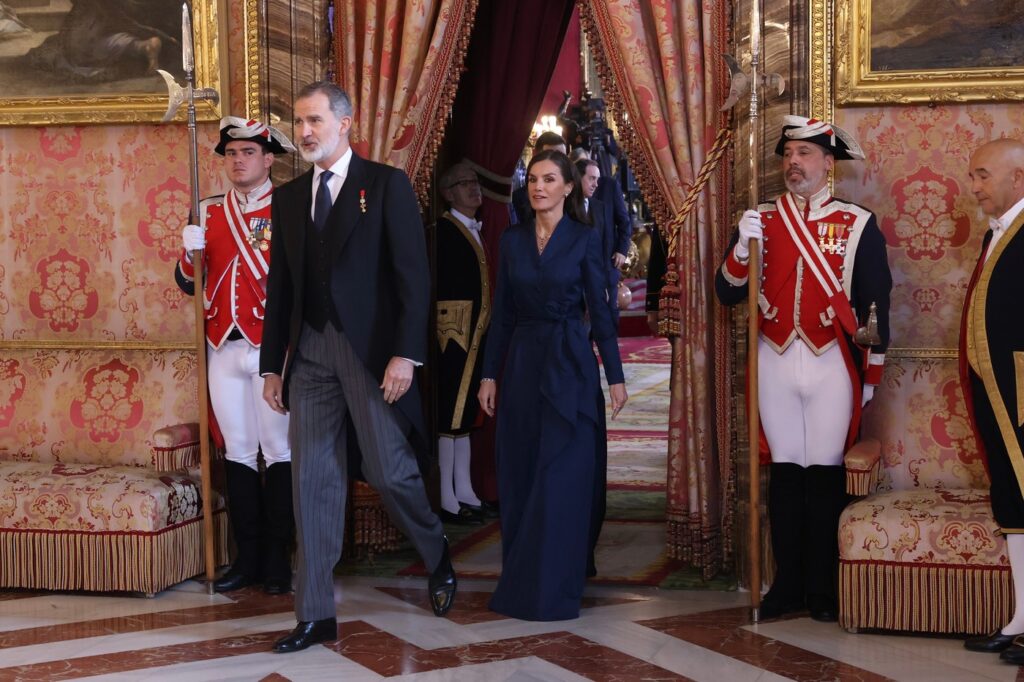
Queen Letizia’s attire for the diplomatic reception adhered to the established protocol of a full-length gown. Her chosen ensemble for that particular year was a navy blue dress, featuring a flattering cross-over neckline and a flowing skirt. The sapphire necklace was strategically worn, its intricate design of twisting diamonds and sapphires, culminating in the pearl pendant, flowing elegantly through the neckline of her dress. This careful coordination of attire and jewelry demonstrated her keen sense of style and her understanding of the nuances of royal presentation.
The Future of Royal Jewels: Princess Leonor’s Debut
The conversation around Queen Letizia’s jewelry choices inevitably turns to the future and the next generation of Spanish royalty, particularly Princess Leonor. As the heir presumptive, Leonor is expected to ascend to the throne, and with that, the mantle of wearing significant royal jewels. Although she is not yet twenty-one, many heirs to the throne in European monarchies make their public tiara debuts in their late teens or early twenties. Princess Leonor’s first public appearance in a tiara is therefore keenly anticipated by royal watchers and the Spanish public alike.
The Spanish Royal Family possesses a collection of diamond tiaras that have historically served as introductory pieces for young royals embarking on their public duties. Among the potential candidates for Princess Leonor’s tiara debut is the Greek design diamond diadem, a piece notably loaned by Queen Sofia to Queen Letizia for her wedding in 2004. Another strong contender is an intricate pearl and diamond creation inspired by seashells, a design favored by both Queen Sofia and Queen Letizia. These potential "starter" tiaras represent not just precious ornaments but also historical heirlooms that carry the weight of royal tradition and future responsibility. The selection of a tiara for Princess Leonor will undoubtedly be a carefully considered choice, symbolizing her readiness to embrace her royal destiny and continue the legacy of Spanish queenship. The careful preservation and eventual passing down of these significant jewels are integral to maintaining the mystique and historical continuity of the Spanish monarchy.
The Significance of the Diplomatic Reception
The annual diplomatic reception is more than just a social gathering; it is a cornerstone of Spain’s international relations. It provides a formal platform for the Head of State and the Queen to engage directly with the global diplomatic community accredited to the country. This interaction is crucial for fostering strong bilateral relationships, discussing matters of mutual interest, and reaffirming Spain’s commitment to international cooperation. The presence of representatives from 126 embassies signifies the breadth of Spain’s diplomatic network and its engagement with countries across the globe. The sheer number of consulates also highlights the extensive consular services provided to Spanish citizens abroad and foreign nationals within Spain.
Queen Letizia’s participation in such events is not merely ceremonial; she actively engages with diplomats, demonstrating her role as a supportive consort and a key figure in representing Spain on the international stage. Her sartorial choices, including the deliberate selection of significant jewelry, are often interpreted as subtle diplomatic signals, reflecting her understanding of the importance of presentation in royal and state affairs. The choice of the sapphire necklace, with its deep historical roots and personal connections, can be seen as a statement of continuity and stability, reinforcing the enduring nature of the Spanish monarchy amidst evolving global dynamics.
The Enduring Allure of Royal Jewels
The reappearance of Queen Letizia’s sapphire necklace serves as a compelling reminder of the enduring allure and significance of royal jewelry. These are not merely adornments but objects steeped in history, carrying narratives of past reigns, royal weddings, and significant state occasions. They are tangible links to the past, symbols of continuity, and often, expressions of familial affection and heritage. For a royal like Queen Letizia, who has carved out a distinct identity as a modern monarch, the decision to wear such a historically rich piece demonstrates a nuanced approach to her role, balancing contemporary sensibilities with a profound respect for tradition.
The meticulous care and preservation of these treasures within royal families underscore their immense value, both monetary and symbolic. The selection of which piece to wear for a particular occasion is often a carefully considered act, imbued with meaning and designed to convey a specific message. In the case of the sapphire necklace, its twenty-year absence from public view only amplified its impact upon its return, transforming it from a forgotten heirloom into a captivating focal point, weaving a rich tapestry of royal history and personal significance into the fabric of a contemporary diplomatic event. The anticipation surrounding Princess Leonor’s future tiara debut further illustrates the public’s fascination with the continuation of these royal traditions, highlighting the enduring power of these glittering symbols of monarchy.




 Yuyun Lusiyani
 Joko Widodo
 Pevita Pearce
 admin
admin
 Lina Irawan