
 Eva Lovia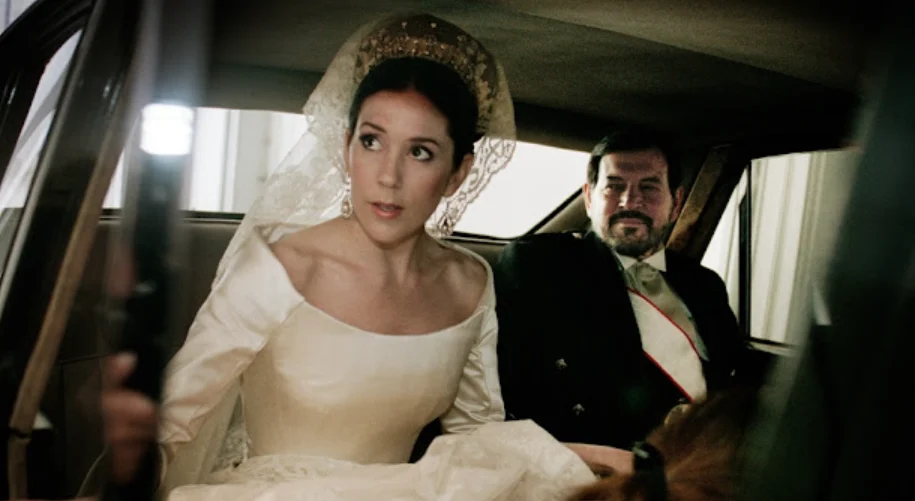
On May 14, 2004, a date etched into the annals of Danish royal history, Professor John Dalgleish Donaldson walked with his youngest daughter, Mary Elizabeth, into the hallowed grounds of Copenhagen Cathedral. This was no ordinary procession; it marked the prelude to a union that would see Mary ascend to the position of Crown Princess of Denmark, marrying the heir to one of Europe’s oldest monarchies. The poignant image captured that day, of father and daughter on the cusp of a life-altering event, has since become an iconic representation of familial devotion amidst the grandeur of a royal wedding, a moment that continues to resonate with its timeless depiction of pride, love, and impending destiny.
The photograph, which has gained significant recognition, freezes a pivotal instant as Mary, then on the precipice of becoming a central figure in Danish society, proceeded towards her nuptials with Crown Prince Frederik. Their serendipitous meeting in a Sydney bar in 2000 had ignited a romance that swiftly captured the public’s imagination. From the moment their relationship became known, Mary was thrust into the international spotlight, becoming a subject of intense speculation regarding her potential future as the Queen Consort of Denmark. The official announcement of her engagement to Frederik in October 2003 initiated a sequence of events that culminated in a wedding celebrated not only for its personal significance but also for its regal splendor. The cathedral itself was a testament to the occasion, filled with European royalty, esteemed politicians, and international dignitaries, all anticipating the arrival of the bride. In this charged atmosphere, the photograph captures a subtle hint of apprehension in Mary’s expression, a natural reflection of the immense gravity of the moment.
A Father’s Steadfast Presence
The skill of a royal photographer immortalized the journey of Mary and her father. The image reveals Mary’s focused concentration, her gaze likely fixed on the immediate steps ahead, preparing for her grand entrance. However, it is the presence of her father that truly anchors the emotional core of the photograph. Professor Donaldson exudes an air of profound calm and immeasurable pride. His stance suggests a readiness to offer unwavering support, a silent promise of protection as the world’s attention converged upon his daughter. This paternal anchor appears to have had a profoundly calming effect. As their car approached the cathedral, navigating through tens of thousands of jubilant well-wishers, Mary presented an image of serene composure, a testament to the strength she drew from her father’s unwavering presence.
The visual narrative of the photograph unfolds with Mary, radiating a quiet grace, stepping out to acknowledge the adoring crowds. Moments later, she reached for her father’s hand, embarking on the final steps into the cathedral. This intimate gesture, a brief, personal exchange on a day of immense public scrutiny, encapsulates the unique bond between a bride and her father. It is a shared experience, a fleeting moment of profound connection that transcends the pomp and ceremony, existing solely between a father and his daughter on one of life’s most significant occasions.
Orchestrated Perfection: The Entrance into Copenhagen Cathedral
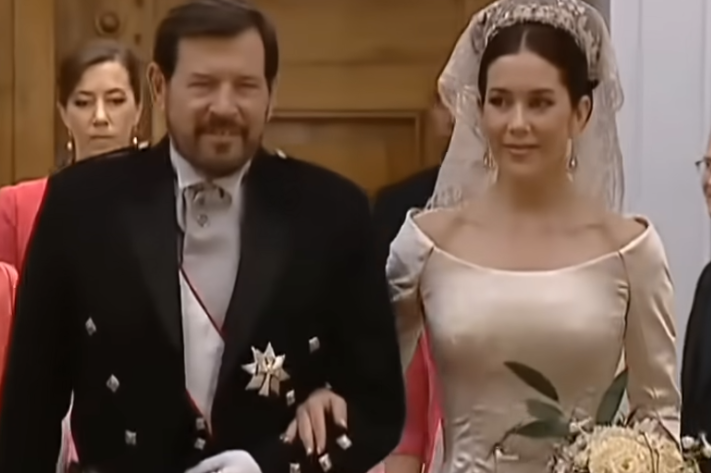
The arrival at Copenhagen Cathedral was a meticulously orchestrated spectacle. In accordance with Danish royal wedding traditions, the majestic anthem "Zadok the Priest" resonated through the sacred space, signaling the bride’s imminent entrance. As the music reached its crescendo, the grand doors of the cathedral swung open, revealing Mary and her father. Professor Donaldson and his daughter timed their walk with remarkable precision, their procession coinciding with the apex of the choir’s rendition of Handel’s iconic piece. They executed a graceful bow and curtsey to Queen Margrethe II, the reigning monarch, at the very moment the music swelled to celebrate royalty. Professor Donaldson, resplendent in his family’s tartan, then took his designated seat in the front row, a proud spectator as his daughter prepared to marry the future King of Denmark.
A Lasting Tribute: Cherished Memories and Profound Loss
The enduring significance of this particular wedding photograph was underscored on their tenth wedding anniversary. Queen Mary chose to share this image, along with a collection of other cherished photographs, released by the Danish Royal House to commemorate the milestone. This act served as a poignant testament to the profound and enduring bond between Mary and her father. The strength of their connection was further highlighted when, following her ascension to the throne, Queen Mary selected another photograph of the two of them to mark her first birthday as Queen of Denmark.
Tragically, this chapter of shared joy was to be overshadowed by profound loss. On April 12, 2026, Queen Mary announced the passing of her beloved father, Professor John Dalgleish Donaldson, who died at his home in Australia following a protracted illness. This news marked the end of an era for the Queen, who had lost her closest confidant and a steadfast pillar of support.
A Father’s Absence, A Queen’s Strength
Professor Donaldson’s health prevented him from attending the historic event in January 2024 when Mary officially became Queen of Denmark. However, from his home in Australia, he would have undoubtedly heard the resounding cheers that echoed through Copenhagen, cheers that were reportedly louder for the new Queen than for any other royal present that day, a testament to her immense popularity and the deep affection she has cultivated among the Danish populace.
Over the two decades since her marriage, Queen Mary has not only become the most popular member of the Danish Royal Family but has also nurtured a new generation of royals poised to embrace their regal responsibilities with confidence and poise. This remarkable journey, from an Australian commoner to a beloved Queen, began with a seemingly ordinary drive to church on a spring day in May 2004. The enduring image of her and her father, a snapshot of love and support on that momentous occasion, remains one of the most cherished and iconic royal wedding photographs of all time, a powerful reminder of the personal foundations upon which public lives are built.
Context and Chronology of a Royal Transformation
The journey of Mary Donaldson to becoming Queen of Denmark is a modern fairy tale, albeit one grounded in reality, determination, and genuine connection.
- September 2000: Mary Donaldson, an Australian marketing consultant, meets Crown Prince Frederik of Denmark at the Slip Inn pub in Sydney during the Olympic Games. Their meeting is described as immediate and impactful, sparking a romance that would eventually lead to a royal union.
- 2001-2003: The relationship between Mary and Frederik develops, initially kept private, then gradually becoming public knowledge. Mary begins to make discreet visits to Denmark, and speculation about her future role in the Danish monarchy intensifies. She undertakes intensive Danish language studies and begins to integrate into Danish society and royal protocol.
- October 8, 2003: The engagement of Crown Prince Frederik and Mary Donaldson is officially announced from Fredensborg Palace. This announcement propels Mary into the global spotlight, with widespread media coverage and public interest.
- May 14, 2004: The wedding of Crown Prince Frederik and Mary Donaldson takes place at Copenhagen Cathedral. The ceremony is a grand affair, attended by royalty and dignitaries from around the world. The photograph of Mary and her father, Professor John Donaldson, walking into the cathedral captures a deeply personal moment amidst the public spectacle. Mary wears a wedding dress designed by Danish designer Uffe Frank, featuring lace from the Royal Danish Court.
- 2004-2024: Over the next two decades, Crown Princess Mary becomes a highly respected and beloved figure within the Danish Royal Family and internationally. She undertakes numerous royal engagements, champions various charitable causes, and is seen as a modern and relatable royal. She and Crown Prince Frederik welcome four children: Prince Christian, Princess Isabella, Prince Vincent, and Princess Josephine.
- January 14, 2024: Following the abdication of Queen Margrethe II, Crown Prince Frederik becomes King Frederik X of Denmark, and Mary becomes Queen Mary. This marks the culmination of her journey from commoner to consort.
- April 12, 2026: Queen Mary announces the death of her father, Professor John Donaldson, at the age of 87. This announcement is met with widespread sympathy.
Supporting Data and Societal Impact
The wedding of Crown Prince Frederik and Mary Donaldson was a significant event for Denmark, not just in terms of royal lineage but also for its symbolic representation of a modern, inclusive monarchy.
- Public Opinion: Polls conducted in the years leading up to and following the wedding consistently showed strong public approval for the union. Mary’s popularity has continued to grow, often surpassing other members of the royal family, a testament to her perceived approachability and dedication. Her role as Queen has further solidified this standing.
- Economic Impact: Royal weddings typically generate significant economic activity through tourism, merchandise, and media rights. While precise figures for the 2004 wedding are not readily available, the event undoubtedly provided a considerable boost to Copenhagen’s tourism sector and garnered extensive international media attention for Denmark.
- Cultural Integration: Mary’s successful integration into Danish society and her adoption of the Danish language and culture have been crucial to her acceptance and popularity. Her efforts to understand and embrace Danish traditions have been widely acknowledged and appreciated.
Analysis of Implications
The enduring legacy of the 2004 royal wedding, and particularly the iconic photograph of Queen Mary and her father, lies in its ability to humanize the monarchy. In an era where public figures are often scrutinized through a lens of detached observation, this image provides a raw and relatable glimpse into a moment of profound familial significance. It underscores that even within the gilded cage of royalty, fundamental human emotions and relationships remain paramount.
Professor Donaldson’s role in the wedding, and his daughter’s consistent acknowledgment of his influence, speaks to the importance of family support systems, especially for individuals navigating extraordinary life transitions. His calm demeanor in the face of immense public attention is a quiet testament to his strength and his daughter’s upbringing. The choice by Queen Mary to repeatedly share images of her father, particularly after his passing, signifies the deep and lasting impact he had on her life and reign. It serves as a reminder that behind the crown and the title, there is a person with personal histories, cherished relationships, and profound losses, making the monarchy more accessible and relatable to the public it serves. The narrative of Mary’s journey also highlights the evolving nature of modern monarchies, where individuals from diverse backgrounds can ascend to the highest positions through love, dedication, and a commitment to public service.



 Yuyun Lusiyani
 Joko Widodo
 Pevita Pearce
 admin
admin
 Lina Irawan