
 Jia Lissa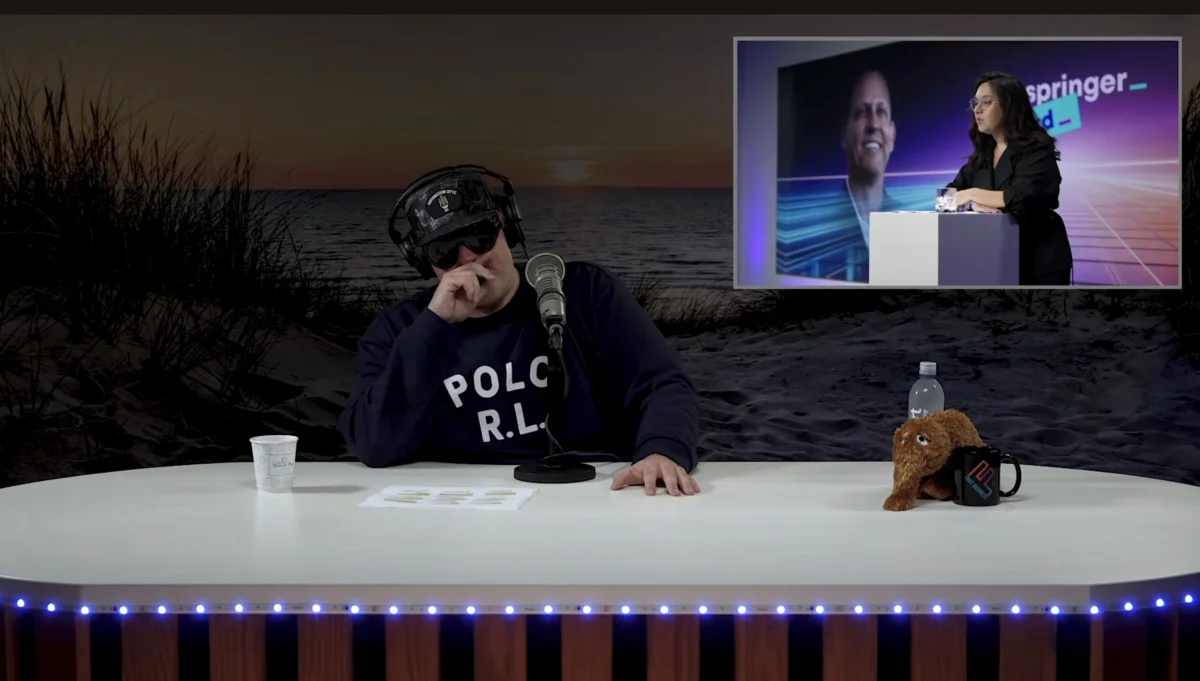
The Axel Springer Award ceremony, held recently in Berlin, Germany, became a focal point for media scrutiny following a presentation by journalist and editor Bari Weiss. The event, designed to honor billionaire venture capitalist and entrepreneur Peter Thiel for his contributions to digital technology and innovation, featured a keynote address by Weiss that attempted to blend humor with political commentary. The subsequent reaction from the audience and the broader media landscape—most notably a detailed critique by comedian Tim Dillon—has highlighted the complex intersection of technology, geopolitical influence, and the shifting boundaries of public discourse.
The Axel Springer Award is a prestigious recognition bestowed by the European media giant Axel Springer SE. Past recipients include influential figures such as Mark Zuckerberg, Jeff Bezos, Elon Musk, and Satya Nadella. The selection of Peter Thiel for the 2024 honor underscored his significant role in the evolution of the digital economy, from his co-founding of PayPal to his early investments in Facebook and the establishment of Palantir Technologies. However, the atmosphere of the evening was marked by a distinct tension, captured in the delivery of Weiss’s introductory remarks and the stoic response of the attendees.
The Context of the Axel Springer Award and Peter Thiel’s Influence
To understand the gravity of the event, it is necessary to examine the stature of the entities involved. Axel Springer SE is one of the largest publishing houses in Europe, owning major titles such as Bild, Die Welt, and more recently, American outlets like Politico and Business Insider. The CEO of Axel Springer, Mathias Döpfner, has long advocated for a close relationship between European media and American technological innovation. In his opening remarks, Döpfner praised Thiel as a "defender of freedom" and a visionary who challenges the status quo of the tech industry.
Peter Thiel’s career is defined by a series of high-stakes ventures that have reshaped global finance and surveillance. As a co-founder of PayPal, he helped pioneer digital payments. Through Founders Fund, he has backed some of the most successful startups of the 21st century. Perhaps most controversially, his company Palantir Technologies provides advanced data analytics to intelligence agencies and military organizations worldwide. Thiel is also known for his unique philosophical leanings, often citing the "mimetic theory" of René Girard and expressing a deep interest in theology and the potential for technological "singularities."
Chronology of the Ceremony and the Weiss Presentation
The ceremony followed a traditional format, beginning with a reception for international dignitaries, tech executives, and media figures. The formal proceedings commenced with a tribute to Thiel’s career, highlighting his role in fostering a "culture of contrarianism." Bari Weiss, the founder of The Free Press and a former opinion editor for The New York Times, was selected to present the award. Weiss’s career has been characterized by her outspoken stance against "cancel culture" and her efforts to build independent media platforms.
During her presentation, Weiss attempted to utilize a comedic framing, which she later described as a "foray into standup comedy." Her remarks included a series of references to Thiel’s reputation in the media. "I want to begin tonight by thanking you all for attending my lecture on the Antichrist," Weiss stated, addressing the audience. She followed this with a disclaimer intended for the press: "For all the media journalists who are watching this or pouring over this transcript, that was a joke. I only talk about the Antichrist at my secret weekly meeting supervised by the Mossad in Tel Aviv."
The response from the room, as captured in video footage of the event, was characterized by a lack of audible laughter. Peter Thiel and other prominent guests remained largely expressionless. Weiss concluded her opening by expressing gratitude to Mathias Döpfner, whom she described as a "true friend and ally."
Tim Dillon’s Analysis and the "Provably True" Critique
The performance was later dissected by comedian Tim Dillon on his program, The Tim Dillon Show. Dillon, known for his satirical takes on the tech elite and media figures, argued that Weiss’s attempt at humor failed because the subjects she joked about were grounded in verifiable facts rather than absurd exaggerations. Dillon’s critique centered on the idea that comedy requires a departure from reality, whereas Weiss’s "jokes" were essentially a recitation of Thiel’s actual professional and intellectual associations.
Dillon pointed out that Thiel has indeed engaged in serious intellectual discussions regarding the concept of the Antichrist, often within the framework of Girardian philosophy and Christian eschatology. Furthermore, the mention of "secret meetings" and the Mossad touched upon the real-world operations of Palantir Technologies. Dillon noted that Palantir maintains significant contracts with the Israeli Ministry of Defense and various intelligence agencies, including the CIA. "You can’t just go out there and say three provably true things and hope everybody laughs because of how ridiculous they are," Dillon remarked. "They’re all provably true! They’re on Wikipedia!"
Supporting Data: Palantir, Intelligence, and Global Security
The references made during the ceremony regarding Thiel’s connections to intelligence agencies are supported by extensive public records. Palantir Technologies, which Thiel co-founded in 2003 with funding from In-Q-Tel (the CIA’s venture capital arm), has become a cornerstone of modern state surveillance and military logistics.
- Government Contracts: According to federal procurement data, Palantir has secured billions of dollars in contracts with the U.S. Department of Defense, the FBI, and the Department of Homeland Security.
- International Relations: In January 2024, Palantir announced a strategic partnership with the Israeli Ministry of Defense to supply technology intended to assist in "war-related missions." This partnership has been a point of contention among human rights organizations and tech critics.
- Financial Performance: Despite the controversies, Palantir’s influence is growing. In its most recent quarterly earnings report, the company showed a significant increase in commercial and government revenue, driven by its new Artificial Intelligence Platform (AIP).
Dillon’s assertion that Weiss was "stating facts" rather than "making jokes" aligns with the reality of Thiel’s business operations. For an audience composed of insiders who are intimately familiar with these contracts and intellectual pursuits, the humor lacked the necessary element of surprise or subversion.
Official Responses and Media Implications
Neither Peter Thiel nor representatives for Axel Springer have issued a formal response to the commentary surrounding the event. However, the ceremony highlights a broader trend in the media landscape: the strengthening of ties between traditional media empires and the "New Right" or "contrarian" tech elite. Bari Weiss’s role as a presenter signals her continued prominence within this sphere, as her platform, The Free Press, often aligns with the ideological interests of the figures celebrated at such awards.
Mathias Döpfner has defended the selection of Thiel, stating that the award is intended to celebrate those who "protect the foundations of the free world through innovation." Critics, however, argue that the alignment of massive data-collection firms like Palantir with major media conglomerates poses risks to privacy and the independence of the press.
Broader Impact and Theoretical Analysis
The intersection of Peter Thiel’s philosophical interests and his technological power remains a subject of intense academic and journalistic inquiry. Thiel’s fascination with the "Antichrist" is not merely a quirk; it is rooted in a specific political theology that views the world as being in a state of perpetual crisis that can only be resolved through decisive, often authoritarian, leadership or technological transcendence.
When Weiss joked about a "lecture on the Antichrist," she was referencing Thiel’s long-standing engagement with the work of René Girard, who theorized that human society is built on "mimetic desire" and the "scapegoat mechanism." In this context, the Antichrist is seen as a figure who mimics the role of a savior but ultimately leads to destruction. For Thiel, these are serious topics of study that inform his views on the future of Western civilization.
The "bombing" of the comedy segment, as described by Dillon, serves as a metaphor for the current state of elite discourse. There is a growing disconnect between the "insider" world of tech-billionaires and media power-players, and the public’s perception of their influence. What Weiss presented as a lighthearted poke at "conspiracy theories" was received by critics as a tone-deaf acknowledgment of the very real and significant power Thiel wields over global security and information flow.
Conclusion: The Convergence of Tech and Narrative
The Axel Springer Award ceremony of 2024 will likely be remembered less for the award itself and more for the revealing nature of the presentation. It showcased a moment where the "New Media" (represented by Weiss) attempted to bridge the gap between "Big Tech" (represented by Thiel) and "Legacy Media" (represented by Axel Springer) using the medium of comedy.
As Tim Dillon’s critique suggests, the failure of the humor was not due to a lack of talent on Weiss’s part, but rather the uncomfortable proximity of the "jokes" to the truth. In an era where the lines between private technology firms and state intelligence services are increasingly blurred, the reality of global influence is often more surreal than any comedic script. The event in Berlin serves as a reminder that the figures shaping the digital future are no longer just business leaders; they are philosophical and political actors whose every move—and every joke made at their expense—is subject to intense scrutiny in an increasingly interconnected world.




 Yuyun Lusiyani
 Ana Megawati
 Joko Widodo
 Eva Lovia
 Pevita Pearce