
 Yuyun Lusiyani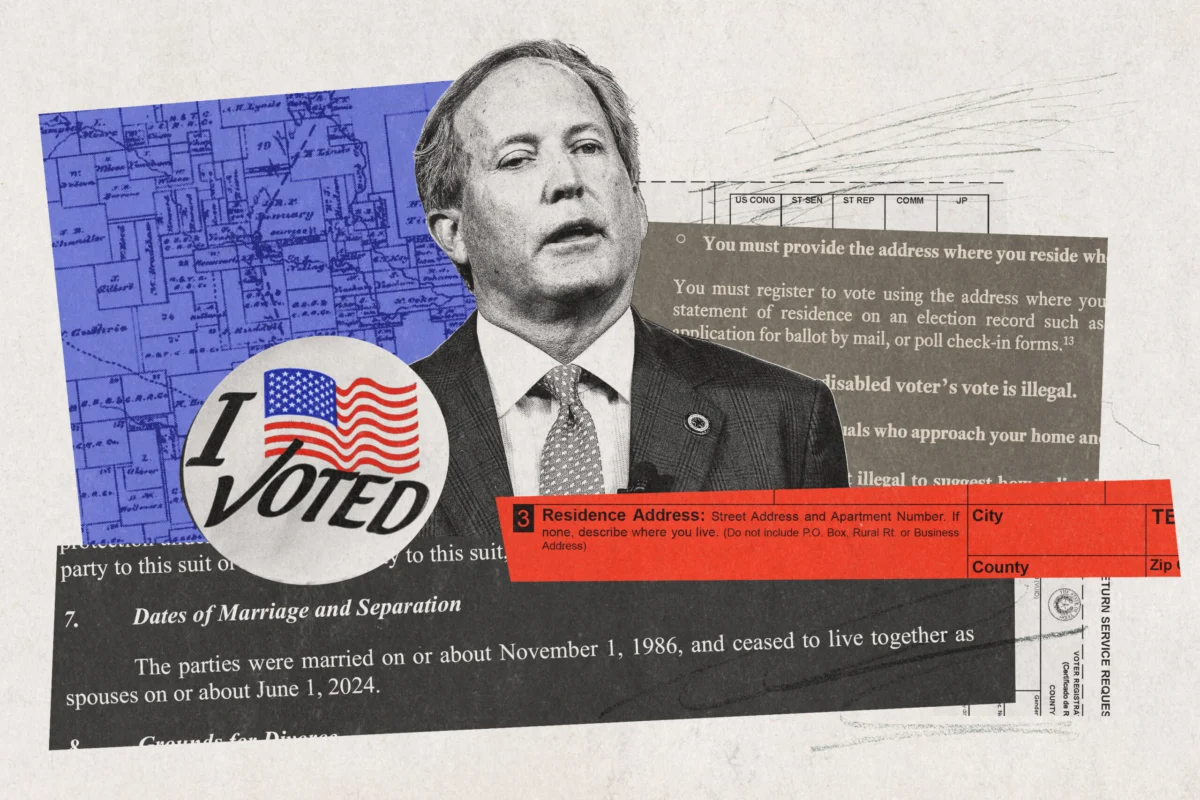
Dallas-area Democrats are demanding that Republican Texas Attorney General Ken Paxton be investigated for illegal voting after ProPublica and The Texas Tribune revealed that he has repeatedly voted while registered at an address where he appears to no longer live, raising significant questions about the state’s top law enforcement official’s adherence to the very election laws he is sworn to uphold and vigorously enforces against others. The controversy centers on allegations that Paxton has cast multiple ballots from a Collin County address where he no longer resides, a practice explicitly prohibited by Texas election statutes, particularly for an individual who has made election integrity a cornerstone of his public platform.
The formal complaint, filed on Tuesday by the Collin County Democratic Party, directly asks the Texas Secretary of State to initiate an investigation into whether Paxton committed election fraud by participating in the May primary runoff election. This particular vote was part of the process where Paxton secured the Republican Party’s nomination for his re-election bid as Texas Attorney General, a position he has held since 2015. The outcome of this complaint could have profound implications, not only for Paxton’s political future but also for the perceived impartiality of the state’s legal and electoral oversight mechanisms.
Background on Attorney General Ken Paxton and Texas Election Law
Ken Paxton has long been a prominent figure in Texas conservative politics, known for his aggressive legal challenges and his vocal advocacy for what he terms "election integrity." As Attorney General, he has spearheaded numerous initiatives and public warnings regarding voter fraud, often emphasizing the strict legal requirements for voter registration and residency. His office has frequently issued statements underscoring that misrepresenting one’s residence on election records is a serious offense. This history creates a stark contrast with the current allegations, leading critics to highlight a perceived hypocrisy.
Texas election law clearly mandates that voters must be registered at their legal place of residence. While exceptions exist for temporary absences—allowing individuals to vote from a previous address if they genuinely intend to return—these provisions are typically applied in cases of short-term relocation for work, military service, or education. The law requires a bona fide intent to return to the registered address. For someone to vote from an address where they no longer live with no clear intent of returning, and especially if they have established a new primary residence, it could constitute a violation of state law, potentially ranging from a misdemeanor to a felony depending on the specific circumstances and proof of intent.
The Core Allegations and Investigative Findings
The catalyst for the current demands for investigation stems from an in-depth report by ProPublica and The Texas Tribune. Published last week, the report detailed that Paxton has voted six times over the past two years while registered at an address in Collin County. This address was previously shared with his wife, State Senator Angela Paxton. However, information unearthed by the investigative journalists, corroborated by a divorce filing from his wife in June 2024 and a source close to the Paxton family, indicates that Paxton had moved out of the Collin County home and had not returned for a significant period leading up to these votes.
The divorce filing, which became public in June 2024, reportedly confirmed that the Attorney General had established a separate residence, effectively severing his ties to the Collin County address long before the most recent votes in question. While the exact timeline of his physical departure from the Collin County home remains a subject of scrutiny, the reporting links him to a property in neighboring Denton County since at least February of this year. This alleged change of primary residence, prior to casting votes from the Collin County address, forms the crux of the illegal voting accusations.
Three election officials, speaking anonymously to ProPublica and The Texas Tribune, stated that Paxton’s actions, as reported, could indeed represent a violation of state election law. They emphasized the difficulty Paxton might face in arguing "intent to return," particularly given the highly public and contentious nature of his ongoing divorce proceedings, which strongly suggest a permanent separation rather than a temporary absence.
Chronology of Events and Official Reactions
The timeline of events surrounding this developing story has unfolded rapidly:
- Early July: ProPublica and The Texas Tribune initially sought answers from Attorney General Paxton regarding his voter registration and residency. Paxton did not provide responses to these inquiries.
- Last Week (prior to Tuesday): ProPublica and The Texas Tribune publish their investigative report, detailing Paxton’s voting record from the Collin County address and the evidence suggesting he no longer lived there.
- Tuesday: The Collin County Democratic Party formally files a complaint with the Texas Secretary of State, requesting an investigation into Paxton for election fraud concerning his vote in the May primary runoff.
- The Day After (Wednesday): The Texas Democratic Party issues a statewide news release, amplifying the accusations and condemning Paxton for allegedly ignoring "bombshell voter fraud accusations" against himself.
- Ongoing: The Texas Secretary of State’s office, under Secretary Jane Nelson (whose last day in the position was Friday of that week), begins the initial review process for the complaint.
Mary Higbe, Vice Chair of the Collin County Democratic Party, articulated the sentiments behind the complaint, noting the blatant contradiction between Paxton’s public stance and his alleged actions. In the complaint, Higbe specifically referenced a warning issued by Paxton’s own office as recently as February, which cautioned voters that "it is illegal to misrepresent your residence on election records." Higbe stated, "For someone who’s made a stand against voter fraud, it’s unconscionable (yet not surprising) that Paxton engages in this behavior. I ask that he be held to the same standards he wishes to hold others to." In a subsequent interview, Higbe emphasized the broader implications, describing the complaint as a critical test of Texas’s system of checks and balances, questioning whether the system "still works." She also voiced skepticism about the likelihood of a fair investigation if Paxton’s office were to handle the matter.
The Texas Democratic Party echoed these concerns, framing the allegations as a profound betrayal of public trust. Their news release underscored the gravity of the situation, particularly given Paxton’s role as the state’s chief legal officer and his consistent focus on prosecuting alleged election irregularities by others.
The Secretary of State’s Role and Conflict of Interest Concerns
The processing of election complaints in Texas involves a specific protocol. Alicia Pierce, spokesperson for then-Secretary of State Jane Nelson, explained that the Secretary of State’s office conducts an "initial review and, if appropriate, refers it to the Office of the Attorney General." Pierce, however, declined to comment on whether a complaint against the sitting Attorney General would be handled differently. She instead pointed to state law, which mandates that the Secretary of State "promptly" refer complaints to the Attorney General if "there is reasonable cause to suspect that criminal conduct occurred."
This established protocol immediately raises significant concerns about a potential conflict of interest. If the Secretary of State’s initial review finds "reasonable cause," the complaint would, by standard procedure, be referred directly to Ken Paxton’s own office for further investigation and potential prosecution. This scenario presents an unprecedented ethical dilemma: the Attorney General’s office would be tasked with investigating its own chief.
San Antonio election lawyer Joaquin Gonzalez, who previously led the voting rights program at the Texas Civil Rights Project, strongly advocated for an alternative approach. Gonzalez stated that Paxton’s situation "seems to meet that threshold" for referral due to suspected criminal conduct. However, he stressed, "The ethical and sort of best practice would be for the attorney general’s office to hire an independent special investigator to look into the complaint." This would ensure impartiality and maintain public confidence in the integrity of the investigative process.
Paxton’s Silence and Campaign Response
Despite the gravity of the accusations and the formal complaint, Attorney General Paxton has maintained a notable silence on the matter. He did not respond to initial inquiries from ProPublica and The Texas Tribune in early July regarding his voter registration and residency. Furthermore, neither Paxton nor his office has provided any comment on the complaint itself or indicated how they would handle a potential referral from the Secretary of State’s office.
Instead, Madison Cercy, a spokesperson for Paxton’s campaign, issued a broad statement that conspicuously avoided addressing the specific allegations of voter registration fraud. Cercy’s statement accused "the political elite" and reporters of delving into the Attorney General’s private life with the intent to "draw the most damning conclusion." The campaign, however, did not clarify or address Cercy’s previous public statements to other news outlets asserting that Paxton "is a lawful, registered Texas voter in full compliance with the law." This general defense, without specific rebuttal of the residency claims, has done little to quell the controversy or satisfy calls for transparency.
Broader Impact and Implications
The allegations against Ken Paxton carry significant weight due to his high-profile position and his consistent championing of stringent election laws. The implications of this controversy are multifaceted:
- Erosion of Public Trust: For a state attorney general, particularly one who has been a vocal proponent of election security and has pursued cases of alleged voter fraud, to face such accusations himself risks severely undermining public trust in the electoral system and the impartiality of law enforcement. It fuels perceptions of a double standard, where powerful officials are held to different rules than ordinary citizens.
- Political Fallout: While Paxton secured his party’s nomination for Attorney General, these allegations could impact his standing with voters, particularly independents and those already skeptical of his past legal troubles. Given his history of facing other legal challenges, including a long-standing securities fraud indictment and a whistleblower lawsuit, this new controversy adds another layer of scrutiny to his public career.
- Legal Precedent and Enforcement: The manner in which this complaint is handled could set a precedent for how similar allegations against high-ranking state officials are investigated in Texas. The call for an independent investigator highlights a systemic challenge when the official in question is the very head of the agency typically responsible for such investigations. Failure to ensure an impartial process could weaken the credibility of election fraud enforcement statewide.
- Checks and Balances: As Mary Higbe noted, this situation tests the integrity of Texas’s system of checks and balances. The Secretary of State’s office is obligated to review the complaint objectively, and if referred, the Attorney General’s office faces immense pressure to either recuse itself or demonstrate an unequivocally fair investigative process. The outcome will be closely watched by legal experts, political observers, and the general public as an indicator of accountability at the highest levels of state government.
The unfolding situation surrounding Attorney General Ken Paxton’s voter registration and residency allegations represents a critical moment for Texas politics and its legal framework. The demands for investigation underscore the principle that all citizens, regardless of their office, must adhere to the law. As the process moves forward, the focus will remain on whether the state’s mechanisms for accountability can deliver an impartial resolution to these serious claims.



 Joko Widodo
 Eva Lovia
 Pevita Pearce
 admin
admin
 Lina Irawan