
 Yuyun Lusiyani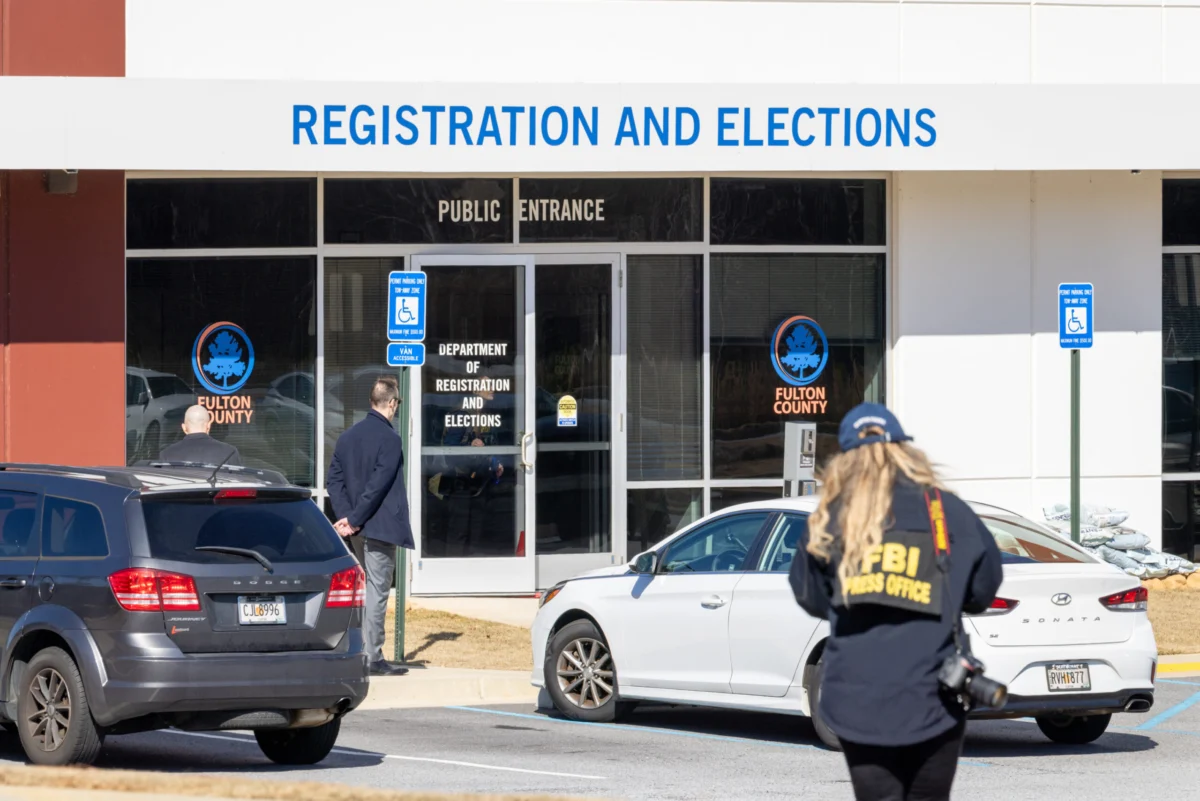
The Federal Bureau of Investigation (FBI) has been exploring the use of artificial intelligence (AI) to assess the validity of signatures on tens of thousands of mail-in ballot envelopes seized from Fulton County, Georgia, marking the latest and perhaps most technologically advanced push in the Trump administration’s unprecedented reinvestigation of the 2020 presidential election results. This initiative, which focuses on comparing signatures on ballot envelopes with those on other election documents like voter registration forms, underscores the lingering political pressures surrounding claims of widespread voter fraud, claims that have largely lacked substantive evidence but continue to fuel scrutiny of the democratic process.
Unprecedented Federal Scrutiny in Fulton County
According to internal communications reviewed by ProPublica and insights from an agency tech specialist familiar with the work, the FBI’s interest in AI-driven signature analysis signifies a significant escalation in its engagement with election integrity questions. This effort is directly tied to former President Donald Trump’s persistent assertions, made without credible evidence, that the 2020 election was "stolen" from him. Georgia, a pivotal swing state, became a focal point for these claims after Trump narrowly lost to Joe Biden by a margin of just 11,779 votes.
The intensity of this federal involvement became clear in January when the FBI conducted a raid on Fulton County, a traditionally Democratic stronghold, collecting an estimated 700 boxes of election materials. Among these were approximately 150,000 mail-in ballots, a significant portion of which—around 116,000—were cast for Joe Biden. This massive collection of documents represents an extraordinary federal intervention into state election administration, a role typically reserved for state and local authorities. The sheer volume of material alone suggests the scale of the investigative undertaking.
Chronology of Contention: From Election Day to FBI Probes
The events leading to the FBI’s current examination of Fulton County ballots unfold as a complex narrative spanning several years:
- November 3, 2020: The U.S. Presidential Election takes place. Due to the COVID-19 pandemic, there is an unprecedented surge in mail-in voting across the country, particularly among Democratic voters.
- Late November 2020: Following his narrow loss in Georgia, then-President Trump begins to amplify claims of widespread voter fraud in the state, specifically targeting the signature verification process for mail-in ballots. He publicly demands "signature check on envelopes now," falsely asserting that a lack of stringent checks led to his defeat.
- Early 2021: Conservative activists and lawmakers in Georgia continue to press allegations of irregularities in Fulton County’s election administration, including claims that local election officials "willfully" ignored signature verification procedures. These claims, detailed in reports by figures like Kevin Moncla, became instrumental in advocating for further investigation.
- March 25, 2021: Georgia Governor Brian Kemp signs the "Election Integrity Act of 2021" (SB 202) into law. This comprehensive bill, partly justified by "concerns about allegations of rampant voter fraud" and "subjective signature-matching requirements," introduces stricter absentee voting rules, replacing signature matching with requirements for voters to provide driver’s license numbers or other state ID.
- January 2026 (date inferred from original context): The FBI raids Fulton County, seizing 700 boxes of election materials, including mail-in ballots, in response to the ongoing allegations. This marks a significant federal escalation of the post-2020 election inquiries.
- Late June 2026 (date inferred from original context): Discussions within the FBI regarding the use of artificial intelligence for signature matching on the seized ballots are actively ongoing. The exact status of this initiative remains uncertain, with the White House and FBI declining to comment on its current state.
- Recent Reports: Simultaneously, the FBI has reportedly mandated the redirection of 260 analysts from field offices nationwide to focus specifically on the Fulton County probe. This massive internal reallocation of resources, reported by The New York Times and MS Now, has even led to some analysts allegedly being fired for refusing to work on the effort. Their work extends beyond signature analysis to include comparing a spreadsheet of 175,000 voters against commercial databases to verify voter eligibility, including whether individuals are still alive.
The Science and Controversy of Signature Verification
At the heart of this federal investigation is the contentious practice of signature matching, a technique whose accuracy has been debated by experts for decades, whether performed by humans or technology.
Traditional signature matching involves election officials comparing a signature on a ballot envelope to one or more signatures on file (e.g., from voter registration forms or driver’s licenses). Officials often have only seconds to make these determinations, relying on visual cues such as the size, slant, and proportions of letters. However, research consistently highlights the inherent difficulties:
- Variability: Signatures are not static. They can change significantly over time due to aging, health events (like a stroke), or even simple changes in writing style or circumstance (a hurried signature at home versus a carefully penned one in a government office). Linton Mohammed, a former president of the American Society of Questioned Document Examiners, emphasized this variability, stating, "Signatures are one of the most difficult forensic sciences, and I don’t think AI is going to be able to do this. Signatures vary — unlike DNA or fingerprints."
- Subjectivity: Human examination is inherently subjective. Different examiners might reach different conclusions based on their individual training, experience, and even biases.
- Scientific Basis: A 2009 report by the National Academy of Sciences critically examined the state of forensic sciences, concluding that "The scientific basis for handwriting comparisons needs to be strengthened." This underscores a long-standing concern about the empirical rigor underlying forensic document examination.
Artificial Intelligence: A New Frontier in Forensic Analysis?
The FBI’s exploration of AI for signature matching represents a novel approach for the bureau. While defenders of signature matching argue that computer analysis has become increasingly accurate and offers a necessary check against fraud, even proponents acknowledge its limitations. David Gerber, Senior Vice President at ParaScript, a company selling signature verification technology to banks and election entities, stated that while the technology can be incredibly advanced, it requires "the right technology with the right people managing the process. Both of those pieces are equally important. If you have bad people running a bad process, I don’t care how good the technology is." He still recommends human review for about 10% of cases.
Experts consulted by ProPublica and the FBI tech specialist largely agree that using AI for ballot signature verification is a relatively new frontier. The bureau has reportedly discussed potential applications with experts across government and considered commercial products from companies like OpenAI or Anthropic. However, skepticism persists regarding the efficacy of general-purpose AI software for such specialized forensic work.
The accuracy of any AI system for signature matching is heavily dependent on several factors:
- Data Quality and Quantity: The quality and number of comparison signatures available are crucial. Internal communications suggest the FBI’s initial analysis might compare only a voter’s registration form signature with the ballot envelope signature—a limited sample that experts like Max Palmer, a professor at Boston University who has studied mail-in ballot signature matching, believe would significantly increase the likelihood of discrepancies. Palmer noted "a high degree of noise" in the materials, questioning if there’s "enough signal, to do better." Certified specialists and high-confidence computer systems in industries like banking typically compare numerous signatures. While the FBI analysis could potentially incorporate additional records like driver’s license signatures, the initial proposed scope is narrow.
- Threshold for Fraud: Ultimately, the "accuracy" of an AI system, particularly in a legal context, depends on the threshold set for evidence of fraud. As an FBI tech specialist explained, "It’s up to the builder of the system to define the guidelines." This introduces a layer of human discretion into what might appear to be an objective technological process.
Internal Dissent and Allegations of Political Pressure
The FBI’s deep dive into Fulton County’s 2020 election has not been without internal controversy. Sources within the agency have expressed grave concerns that the examination’s results could be influenced by political pressures, building on previous efforts by the administration to circumvent long-standing guardrails designed to insulate federal agencies from partisan interference in elections. Some FBI staffers involved in developing the signature analysis strategy are reportedly trying to mitigate this pressure by highlighting the inherent limitations of broad signature analysis, arguing that while signature comparisons have been used in individual fraud investigations, applying them on this scale is unprecedented and fraught with challenges.
Despite these internal warnings, agency leaders have reportedly continued to push forward. The sentiment among some within the FBI is that "whether they find anything or not, they are going to continue" to pursue proof of fraud, according to one source. This suggests a perception that the investigation’s objective might be predetermined, rather than a neutral fact-finding mission. The reported firing of analysts for refusing to work on the probe further underscores the intense internal and external pressures surrounding this politically charged investigation.
Broader Implications for Voter Access and Election Integrity
The reliance on signature matching, whether by humans or AI, has significant implications for voter access and the integrity of elections. Investigations by journalistic organizations and academic research have consistently shown that signature matching disproportionately leads to the rejection of legitimate ballots from certain demographic groups. These include:
- Voters of Color: Studies have found higher rejection rates for ballots cast by racial and ethnic minorities.
- Young and Old Voters: Signatures of younger individuals may be less established, while those of older individuals can change due to age or health.
- New Voters: Individuals newly registered or new to mail-in voting may be more prone to having their signatures flagged.
- Politically Unaffiliated or Disabled Voters: These groups also face higher rejection rates for various reasons, including less familiarity with the process or physical challenges in producing consistent signatures.
One political scientist, testifying as an expert witness in a 2020 lawsuit challenging an Ohio signature-matching law, presented analysis suggesting that for every illegitimate ballot identified, 32 legitimate ballots were blocked. This alarming ratio highlights the potential for widespread disenfranchisement, where the pursuit of a minuscule amount of fraud inadvertently suppresses a far greater number of valid votes.
The controversy surrounding signature matching intensified during the 2020 election, particularly as more Democrats than Republicans opted for mail-in ballots due to the pandemic. The subsequent push by conservative lawmakers for stricter signature-matching laws, exemplified by Georgia’s Election Integrity Act of 2021, directly reflects the partisan divide over election security measures. While proponents argue such measures are necessary to prevent fraud, critics contend they are thinly veiled attempts at voter suppression, particularly impacting demographics that lean Democratic.
Legislative Responses and the Path Forward
Georgia’s Election Integrity Act of 2021 was a direct legislative response to the 2020 election controversies. It fundamentally altered absentee voting procedures, replacing subjective signature-matching requirements with more objective forms of verification, such as requiring mail-in voters to provide their driver’s license number or copies of other state identification. This shift was intended to address concerns about the consistency and fairness of signature matching but also raised new questions about voter access and the administrative burden on voters.
As the FBI continues its unprecedented probe into Fulton County, the use of AI for signature verification stands as a critical test case. The outcome of this investigation, and the methodologies employed, will likely have profound implications for future election administration, the role of federal agencies in state elections, and the ongoing national debate over election integrity versus voter access. The balance between ensuring secure elections and protecting every eligible citizen’s right to vote remains a delicate and politically charged challenge, one that cutting-edge technology like AI is now being brought to bear upon, with uncertain consequences.



 Joko Widodo
 Eva Lovia
 Pevita Pearce
 admin
admin
 Lina Irawan