
 Jia Lissa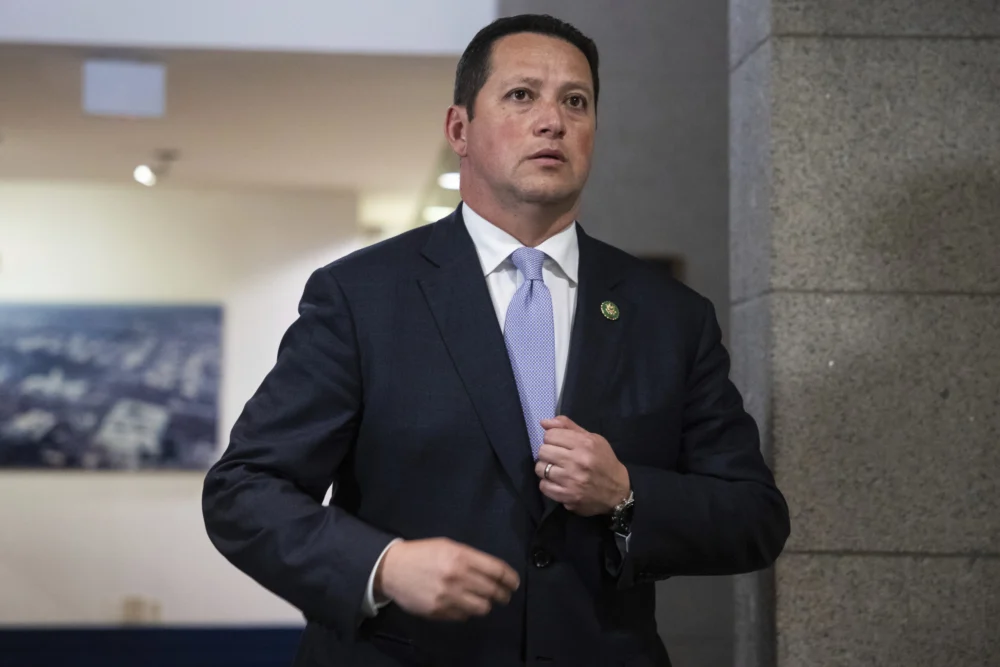
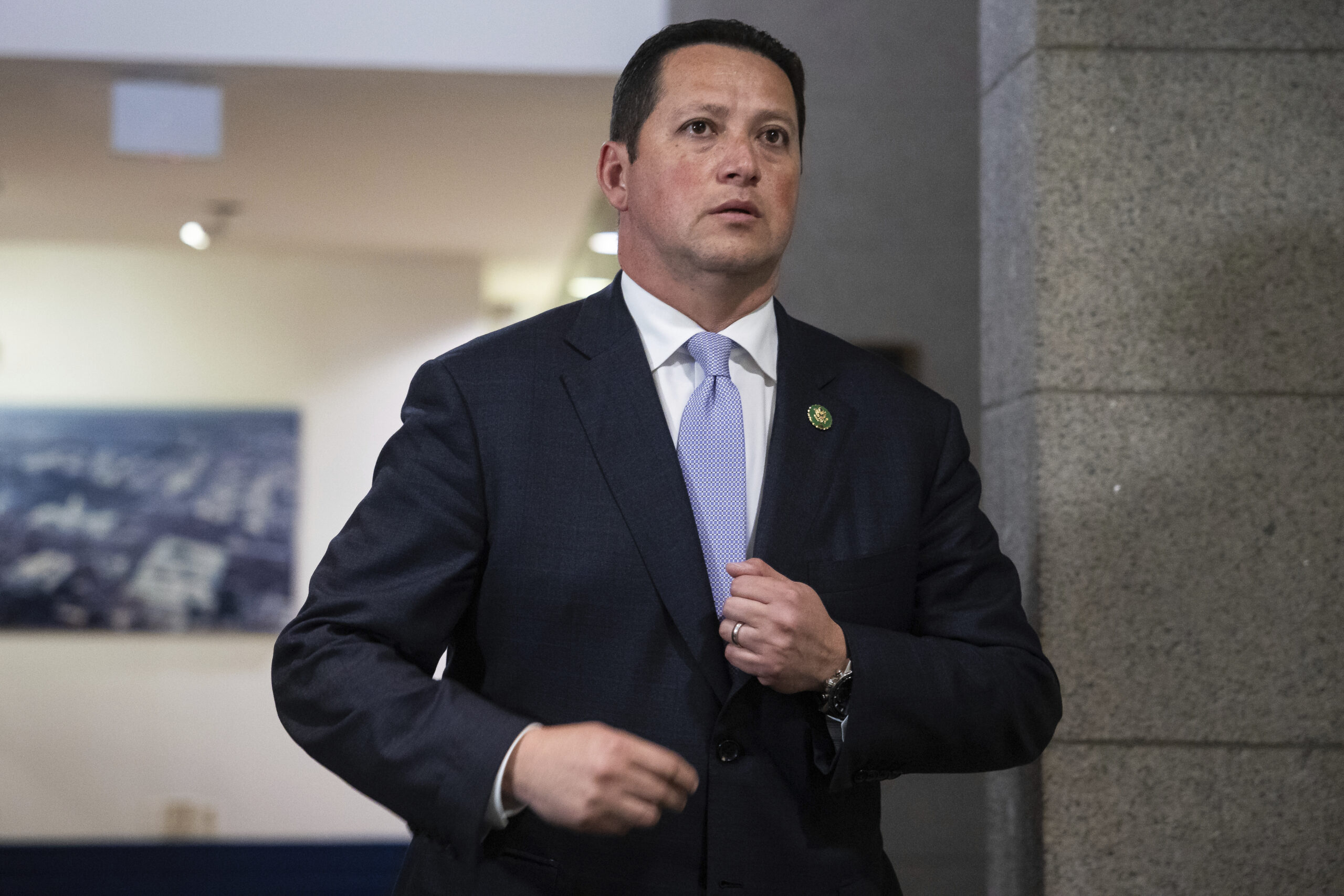
In a move that has sent shockwaves through the Republican Party and the Texas political landscape, United States Representative Tony Gonzales (R-TX) officially announced his withdrawal from his reelection bid on Thursday night. The decision follows a period of intense scrutiny and mounting pressure from House GOP leadership after Gonzales publicly admitted to an extramarital affair with a former staffer who tragically took her own life last year. The withdrawal effectively ends a contentious primary battle for Texas’ 23rd Congressional District, a seat Gonzales has held since 2021, and leaves a significant vacuum in one of the most geographically expansive districts in the country.
The announcement came via a statement posted to social media, in which Gonzales cited a need for personal reflection and a commitment to his family. "After deep reflection and with the support of my loving family, I have decided not to seek re-election while serving out the rest of this Congress with the same commitment I’ve always had to my district," Gonzales stated. While he pledged to finish his current term, the move marks a precipitous fall for a lawmaker who was once seen as a rising star within the centrist wing of the Republican Party.
The Scandal and the Death of Regina Ann Santos-Aviles
The controversy surrounding Representative Gonzales centers on his relationship with Regina Ann Santos-Aviles, a member of his congressional staff. According to reports and statements from her family, the relationship began in May 2024. The situation took a harrowing turn in September of that year when Santos-Aviles doused herself in gasoline and set herself on fire in a public act of self-immolation. She succumbed to her injuries the following day.
The tragedy remained largely out of the national spotlight until her husband, Adrian Aviles, came forward with allegations of the affair. Aviles claimed that his late wife had admitted to the relationship with Gonzales shortly after it began. According to Aviles, he had urged his wife to resign from her position in the Congressman’s office to save their marriage, but she had declined.
The allegations gained significant traction last month when 24Sight News published a series of leaked text messages recovered from Santos-Aviles’s phone. The messages, dated May 2024, depicted Gonzales soliciting a "sexy pic" from his subordinate. The response from Santos-Aviles—"This is going too far, boss"—suggested a breach of professional boundaries and a power imbalance that many ethics experts say violated House rules regarding workplace conduct.
Public Admission and Political Fallout
For months, Gonzales and his office remained largely silent regarding the allegations. However, the pressure reached a breaking point this week. On Wednesday, just twenty-four hours after a primary election that failed to grant him an outright majority, Gonzales admitted to the affair during a public appearance.
"I made a mistake, and I had a lapse in judgment, and there was a lack of faith, and I take full responsibility for those actions," Gonzales said. He attempted to frame the admission as a moment of personal reconciliation, adding, "Since then, I’ve reconciled with my wife, Angel. I’ve asked God to forgive me, which he has. And my faith is as strong as ever."
Despite his attempts at contrition, the admission proved to be the final straw for Republican leadership. Reports suggest that high-ranking members of the House GOP, concerned about the optics of the scandal and the potential for a protracted ethics investigation, exerted significant behind-the-scenes pressure on Gonzales to step aside. The 23rd District is a critical seat for the Republican majority, and leadership reportedly feared that the scandal would hand the seat to Democrats in the general election or cause further internal fracturing within the party.
The Primary Context: The Rise of Brandon Herrera
The withdrawal of Representative Gonzales occurs in the midst of a heated primary cycle. On Tuesday, Gonzales faced a multi-candidate field in the Republican primary. Despite his incumbency, he was unable to secure more than 50% of the vote, triggering a runoff election scheduled for May. His primary challenger, Brandon Herrera, a popular pro-Second Amendment YouTuber known as "The AK Guy," had successfully campaigned from the right, painting Gonzales as too moderate for the district.
Herrera’s campaign capitalized on existing dissatisfaction with Gonzales among the Republican base. Gonzales had previously drawn the ire of the Texas GOP for several high-profile votes, including his support for the Bipartisan Safer Communities Act—a gun control measure passed in the wake of the school shooting in Uvalde, which lies within his district. He also voted in favor of the Respect for Marriage Act, which codified protections for same-sex and interracial marriages. These positions led the Texas Republican Party to formally censure him in 2023, a rare move against a sitting incumbent.
With Gonzales out of the race, Herrera stands as the presumptive frontrunner for the Republican nomination. This shift signals a potential move toward the more populist, hard-right wing of the party for a district that has historically been represented by moderates like Gonzales and his predecessor, Will Hurd.
Ethical Implications and House Rules
The circumstances of the affair have raised serious questions regarding House Ethics rules. Under House Rule XXIII, Clause 18, members of Congress are strictly prohibited from engaging in sexual relationships with any employee of the House who is under their direct supervision. This rule was established to prevent sexual harassment and to ensure that the professional environment of congressional offices remains free from the complexities and potential coercion inherent in romantic relationships between supervisors and subordinates.
Legal and ethical analysts note that the "sexy pic" texts are particularly damning in this context. Because Santos-Aviles was a direct report to Gonzales, the solicitation of explicit imagery could be interpreted as a violation of the House Code of Official Conduct. Furthermore, the tragic nature of her death has intensified the calls for accountability, with critics arguing that the power dynamics of the relationship may have contributed to her mental health crisis.
Chronology of Events
To understand the gravity of Gonzales’s withdrawal, a timeline of the events is essential:
- May 2024: The affair between Representative Tony Gonzales and staffer Regina Ann Santos-Aviles reportedly begins.
- May 2024 (late): Text messages are exchanged in which Gonzales asks for a "sexy pic," and Santos-Aviles demurs, citing professional boundaries.
- September 2025: Regina Ann Santos-Aviles dies by suicide via self-immolation.
- Late 2025 – Early 2026: Adrian Aviles, the widower, begins speaking publicly about the affair and the pressure his wife faced.
- February 2026: 24Sight News publishes the leaked text messages, bringing national media attention to the scandal.
- March 3, 2026: Texas Primary Election Day. Gonzales fails to reach the 50% threshold, forcing a runoff with Brandon Herrera.
- March 4, 2026: Gonzales publicly admits to the affair and asks for forgiveness.
- March 5, 2026: Under pressure from GOP leadership, Gonzales announces his withdrawal from the race and his intent to retire at the end of his term.
The Geopolitical Importance of Texas’ 23rd District
Texas’ 23rd Congressional District is one of the most unique and strategically important districts in the United States. Spanning from San Antonio to El Paso and covering hundreds of miles of the U.S.-Mexico border, the district is a microcosm of the nation’s debates over immigration, border security, and rural economics.
Historically, the district has been a "swing" seat, frequently flipping between Democratic and Republican control. However, following the 2021 redistricting process, the seat was drawn to favor Republicans more heavily. Despite this, the district remains majority-Hispanic, and candidates must carefully balance conservative principles with the needs of a diverse, often moderate constituency.
Gonzales’s departure leaves the Republican Party in a precarious position. While the district leans Republican, the sudden shift in candidates and the cloud of scandal could embolden Democratic challengers. The Democratic primary for the seat is also moving toward a runoff, and national Democratic strategists are likely to view this vacancy as a prime opportunity to flip a seat in their quest to regain the House majority.
Reactions from the Political Community
Reaction to Gonzales’s withdrawal has been swift and divided. Supporters of Brandon Herrera have hailed the move as a victory for the "true" conservative movement in Texas. "The voters of the 23rd District deserve a representative who reflects their values and maintains the highest standards of integrity," a spokesperson for the Herrera campaign said in a brief statement following the news.
Conversely, some moderate Republicans have expressed disappointment at the loss of a legislator who was willing to reach across the aisle on specific issues. However, few have been willing to defend the circumstances of his departure. The consensus among GOP leadership appears to be one of relief that a potentially damaging scandal has been curtailed before the general election cycle begins in earnest.
Analysis of Implications for the 119th Congress
The withdrawal of Tony Gonzales is the latest in a series of high-profile departures from the House of Representatives, contributing to an atmosphere of instability within the chamber. As the GOP navigates a slim majority, the loss of an experienced incumbent—regardless of the circumstances—creates logistical and political hurdles.
For the Republican Party, the focus now shifts to ensuring that the 23rd District remains in their column. The party must decide whether to fully embrace Brandon Herrera or look for ways to moderate his image for a general election audience. For Gonzales, the remainder of his term will likely be spent in a "lame duck" capacity, as his influence within the caucus has been significantly diminished by his admission and subsequent withdrawal.
As the May runoff approaches, the eyes of the political world will remain on West Texas. The legacy of Tony Gonzales will likely be defined not by his legislative achievements or his work on the border, but by the tragic circumstances that led to his exit from public life. The story serves as a stark reminder of the ethical expectations placed on public officials and the profound impact that personal conduct can have on the political trajectory of a nation.



 Yuyun Lusiyani
 Joko Widodo
 Eva Lovia
 Pevita Pearce
 admin
admin