
 Yuyun Lusiyani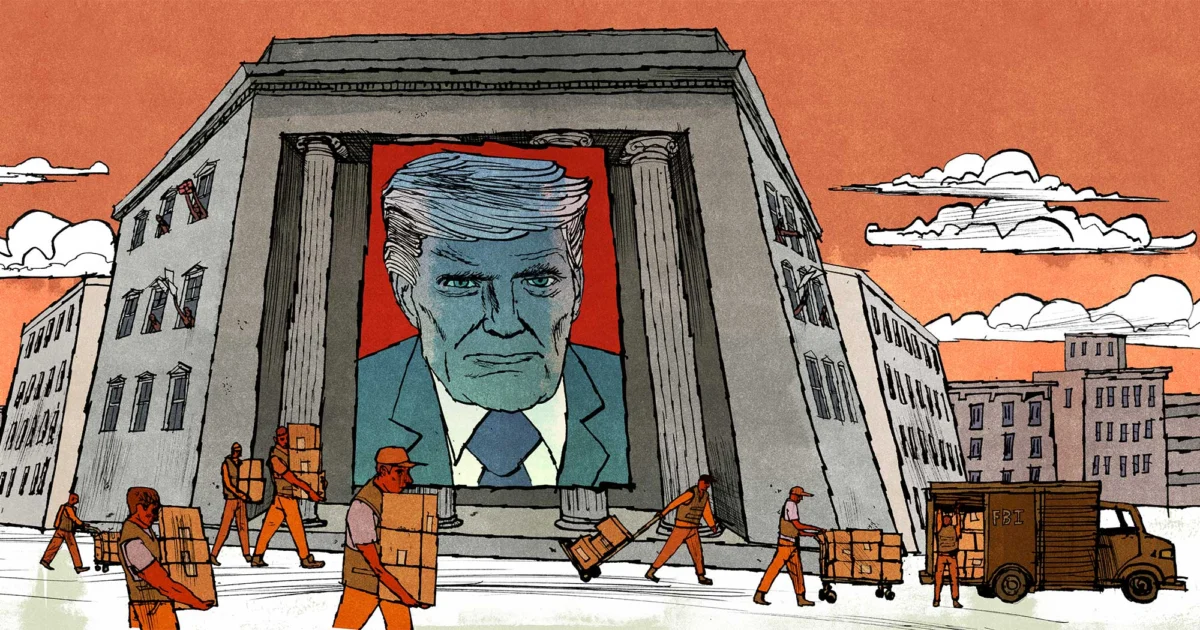
In a stark revelation of the profound shifts within the U.S. federal government, a comprehensive investigation by ProPublica has uncovered the systematic dismantling and replacement of institutional "guardrails" that barely withstood efforts to overturn the 2020 presidential election. While the American democratic system ultimately held firm against unprecedented pressure from then-President Donald Trump, the personnel and structures that defended its integrity have largely been purged or repurposed, raising serious concerns about the vulnerability of future elections.
A Pivotal Moment: Barr’s Confrontation in 2020
The narrative begins in mid-December 2020, a tense period when federal officials tasked with safeguarding American elections convened in a stark, windowless, and fortified room at the Justice Department’s Washington, D.C., headquarters. They had been summoned by Attorney General William Barr, who faced immense pressure from President Trump. Trump’s claims of a stolen election had reached a fever pitch, fueled by an obsession with a conspiracy theory alleging that voting machines in Antrim County, Michigan, had illicitly switched votes from him to Joe Biden. Each passing day saw Trump escalate his demands, pushing for the federal government to intervene and reverse his electoral defeat.
Barr, navigating a treacherous political landscape, brought together experts from the Cybersecurity and Infrastructure Security Agency (CISA) and top FBI officials. His crucial question to the group of approximately ten was whether the 2020 presidential vote could have genuinely been hacked. This previously unreported meeting, as described by several individuals present or briefed on the gathering, was understood by all as a moment of national significance. Barr, who publicly stated there was "no evidence to date" of widespread fraud while privately instructing the FBI to investigate irregularities, sought definitive answers.
The nonpartisan specialists from CISA, corroborated by their FBI counterparts, meticulously explained the Antrim County situation. They detailed how a clerical error during a ballot style update on machines had led to a software glitch, temporarily misallocating votes from Republicans to Democrats. Crucially, they confirmed it was human error, not fraud—a finding soon to be publicly validated by a hand recount of the county’s ballots.
Listening intently, Barr appeared to grasp the unvarnished truth and the personal cost of conveying it to the president. The meeting concluded with Barr turning to his top deputy, making a hand gesture as if tying on a bandana, and declaring his intention to "kamikaze" into the White House.
What followed is now part of history. On December 14, Barr met with Trump in the Oval Office. The president launched into a monologue, citing Antrim County as "absolute proof" of a stolen election. Barr eventually interjected, relaying the CISA experts’ findings. Shortly thereafter, Barr offered his resignation, which Trump accepted. Barr later reflected in his memoir, "If he actually believed this stuff he had become significantly detached from reality," believing he had upheld democratic norms.
The Systematic Erosion: Dismantling the Guardrails
Barr was not alone. Many federal officials, a significant number of whom were Trump appointees, resisted the president’s demands, which only intensified after Barr’s departure. While the January 6, 2021, Capitol riot temporarily delayed the certification of Biden’s victory, the institutional checks and balances of American democracy ultimately prevailed, albeit narrowly. However, ProPublica’s investigation reveals a chilling reality: if faced with similar challenges today, many of those critical guardrails and the dedicated individuals who maintained them would be absent.
The examination scrutinized the federal response to Trump’s attempts to overturn the 2020 election, identifying a network of at least 75 individuals across multiple agencies who worked to safeguard the results. Today, almost all of these officials—many of them career specialists in the departments of Justice and Homeland Security—have either resigned, been fired, or reassigned. This includes the cybersecurity experts who debunked the Antrim County allegations and reported their findings directly to Barr.
This vacuum has been filled by roughly two dozen individuals installed by Trump in key positions related to elections. A striking ten of these new appointees actively participated in efforts to reverse the 2020 vote, while the remainder are close associates of such figures. In several instances, officials have been recruited from activist groups foundational to the "election denial movement," leading experts to warn of a dangerous merger between this movement and the federal government itself.
These newly empowered officials are poised to significantly influence how the administration approaches upcoming elections. With Trump’s approval ratings nearing record lows amid public concerns about the economy, mass deportations, and the war on Iran, and polling suggesting a potentially significant electoral loss for Republicans, Trump has intensified efforts to "nationalize" the 2026 elections, urging Republicans to "take over" the midterms. Democrats, keenly aware of Trump’s past actions, question whether he will accept a "blue wave," especially if it shifts control of a House that impeached him twice.
The Demise of CISA and Other Critical Functions
The dismantling began swiftly after Trump’s return to the Oval Office. Barr, in the aftermath of the 2020 election, likened his experience to playing "Whac-A-Mole" against Trump’s "avalanche" of false claims. Crucial intelligence provided by investigators at DHS’s Cybersecurity and Infrastructure Security Agency (CISA) disproved many of these claims, including those beyond Antrim County.
CISA, ironically created by Trump during his first term to counter cyber threats following Russia’s interference in the 2016 election, quickly became a vital resource. It offered expertise and support to thousands of local election officials grappling with increasingly sophisticated attacks. Post-2020, CISA played a pivotal role in debunking fallacies spread by Trump supporters, launching a "Rumor Control" website and partnering with state officials and technology vendors to issue a joint statement declaring the election "the most secure in American history." Trump retaliated by swiftly firing Chris Krebs, CISA’s director and his own appointee, though Krebs’s defense of the election’s integrity resonated widely.
Beginning in February 2025, DHS leadership initiated the evisceration of CISA. Employees focused on countering disinformation and safeguarding elections were placed on leave. The agency’s other election security work, including assessing local election offices for physical and cybersecurity risks and disseminating sensitive intelligence on threats, was frozen. Ultimately, all three dozen or so CISA employees specializing in elections were fired or transferred. Kathy Boockvar, an elections security expert and former Pennsylvania Secretary of State, lamented, "It took years of dedicated, bipartisan, cross-sector partnership to build the security infrastructure we’ve had, and dismantling CISA leaves a gaping hole. We are making the job of securing our democracy exponentially harder.” A DHS spokesperson defended the changes, citing a "ballooning budget concealing a dangerous departure from its statutory mission," claiming CISA was engaged in "electioneering instead of defending America’s critical infrastructure."
The gutting extended beyond CISA. The Trump administration has systematically discarded or diminished other federal initiatives vital to protecting election integrity and countering foreign interference. The National Security Council’s election security group, which coordinated federal actions related to voting, was eliminated. In August 2025, the Foreign Malign Influence Center, a branch of the Office of the Director of National Intelligence (ODNI) that had thwarted Russian, Chinese, and Iranian interference efforts, was dismantled. While an ODNI spokesperson claimed its functions were absorbed elsewhere, former national security officials, including one from the center, asserted its operations had largely ceased. Caitlin Durkovich, who led the NSC’s election security work during the Biden administration, stated that under Trump, the federal government has "abandoned" its traditional role, leaving "states and localities exposed, without the intelligence support or federal coordination they need."
Reshaping Federal Law Enforcement
The early months of the second Trump administration also saw seismic changes within federal law enforcement agencies critical to election oversight. Kash Patel, the new FBI director, dismantled the public corruption team, previously deployed to monitor criminal activity on Election Day, and the Foreign Influence Task Force. An FBI spokesperson maintained the bureau’s commitment to countering foreign influence.
Furthermore, the Justice Department significantly curtailed the Public Integrity Section’s role, which ensured that departmental inquiries remained free from political influence. After the 2020 election, senior lawyers in this section had warned against FBI investigations into Trump’s fraud claims, fearing reputational damage and partisan appearance. While Barr and his deputies overruled them then, former officials noted the unit’s resistance made it a "roadblock" – a roadblock that no longer exists. A month after Trump’s return, the unit’s top staff resigned when directed to dismiss corruption charges against New York City Mayor Eric Adams. More departures followed, reducing the 36-person section to a mere two, and eliminating the mandate for its review of politically sensitive cases.
Another key DOJ office, the Civil Rights Division’s voting section, historically enforced federal voting rights laws, particularly those combatting racial discrimination. In December 2020, the assistant attorney general overseeing this division was among numerous department leaders who threatened mass resignation if Trump promoted Jeffrey Clark, a staunch supporter of his efforts to overturn the election. This collective threat ultimately prevented Clark’s promotion. However, today, nearly all of the section’s approximately 30 career lawyers have resigned or been transferred. This exodus largely began after Harmeet Dhillon, Trump’s assistant attorney general for civil rights, issued a memo in spring 2025, shifting the section’s mission from ensuring voting rights to enforcing Trump’s executive order on elections. The section has since been restaffed with conservative lawyers, at least four of whom participated in challenging the 2020 vote or worked with those who did. Anna Baldwin, a former appellate attorney for the Civil Rights Division, described it as "a shocking and depressing reversal of the federal government’s role in making real the promise of nondiscrimination in voting and racial equality."
In total, ProPublica found that at least 75 career officials pivotal to election work across DHS, DOJ, and other departments have been forced out or departed.
"Team America": Loyalists at the Helm
Late last summer, with most career specialists purged, a small group of political appointees began convening at the Department of Homeland Security’s headquarters. This group, reportedly dubbing itself "Team America," focused on identifying federal mechanisms to implement Trump’s March 2025 executive order on elections—an effort previously unreported. These individuals represent the new guard in federal election oversight.
Key members included David Harvilicz, a DHS assistant secretary overseeing election infrastructure security, and three of his top staffers. ProPublica previously reported that Harvilicz co-founded an AI company with an architect of Trump’s Antrim County claims. Despite judicial setbacks to the executive order, a former federal official familiar with the group stated there was "not a whole lot of discussion or disagreement" about implementing Harvilicz’s directives.
"Team America" is part of a broader network within DHS, DOJ, and the White House pushing the president’s agenda. Some, like Kash Patel, are well-known; Patel reportedly pressured military officials to investigate voting machine conspiracy theories after the 2020 election. Others, like Harvilicz, are more obscure but wield significant power. These newcomers are driven by Trump’s executive orders and are unlikely to challenge his assertions of widespread fraud.
Many "Team America" members have themselves echoed or spread such debunked claims. Heather Honey, who serves under Harvilicz in a newly created election-focused position, falsely claimed that more ballots were cast in Pennsylvania than there were voters in the 2020 election—a claim Trump cited on January 6, 2021. At least 11 administration appointees, including Honey, have ties to the Election Integrity Network, a conservative grassroots organization led by Cleta Mitchell, a lawyer who assisted Trump’s 2020 efforts. Gineen Bresso, a top official in the White House counsel’s office, coordinated with this network in 2024 as the Republican National Committee’s election integrity chair. Honey and other federal officials have even provided private briefings to the network’s members.
Experts warn that these former activists, who built a movement on the premise of a stolen 2020 election, are now leveraging federal power to reshape future elections. Brendan Fischer of the Campaign Legal Center stated, "The election denial movement is now interwoven within the federal government, and they are working together toward a shared goal of reshaping elections in ways that undermine the freedom to vote. It’s not just last-minute slapdash attempts to overturn the results as in 2020, but more systematic efforts to influence how elections are run months ahead of time."
A DHS spokesperson, responding to questions about Harvilicz and Honey, stated that employees are "focused on keeping our elections safe, secure, and free" and implementing presidential policies, adding that the department hires experts with diverse backgrounds.
Through the fall and winter, as the Justice Department aggressively demanded confidential voter roll information from states, Team America worked to resolve technical issues in using digital tools to identify non-citizens allegedly registered to vote. Honey, with direct White House and senior DHS support, ironed out data-sharing contracts and merged information from various agencies. Initially, voter data obtained by DOJ was slated for analysis using DHS’s Systematic Alien Verification for Entitlements (SAVE) system. More recently, Team America has explored leveraging a more powerful tool from Homeland Security Investigations to enhance its capacity for finding non-citizen voters and pursuing criminal charges. While DHS claims SAVE identified over 21,000 potential non-citizens on voter rolls last year, ProPublica reported vast inaccuracies in these results, with most states identifying only a few to a few hundred potential non-citizens.
Concerns persist among current and former officials and election security experts that Harvilicz and Honey, both having espoused debunked conspiracy theories, are now in positions to control the narrative surrounding the integrity of the vote. Derek Tisler of the Brennan Center for Justice warned, "It’s hard to debunk false claims coming with the seal of the federal government. I certainly worry what damage that could do to voters’ confidence.”
The Fulton County Raid: A "Red Flag"
Perhaps nothing better illustrates the breakdown of the guardrails than the creation of a special White House post in fall 2025 dedicated to reinvestigating Trump’s 2020 loss. In December 2020, White House lawyers had prevented Trump from declaring martial law to seize voting machines—a multi-hour "craziest meeting" that demonstrated the resilience of internal checks. However, the lawyer Trump hired in 2025 as his director of election security and integrity, Kurt Olsen, had actively worked to overturn Trump’s 2020 loss in court and was later sanctioned by judges for baseless allegations about Arizona elections.
Olsen’s work in the second Trump administration has, according to Gary Restaino, a former U.S. attorney, breached the firewall established after Watergate to shield the White House from interfering with DOJ law enforcement decisions. "This is not a constitutional or even a statutory requirement," Restaino said, "but it’s a democracy requirement to make sure that citizens throughout America understand that decisions about life and liberty are being made in an objective and consistent manner.”
In a previously unreported series of events, around late 2025, Olsen flew to Georgia to meet with Paul Brown, head of the FBI’s Atlanta field office. Olsen demanded the FBI seize 2020 ballots from Fulton County, a Democratic stronghold, presenting a report he claimed justified this extraordinary action. Brown and his team assured Olsen of an independent investigation. However, their examination of the report found its allegations had already been investigated by Georgia’s election board, which dismissed many and attributed others to human error, not criminal wrongdoing. The report itself was assembled by a longtime ally of Olsen and participant in the Election Integrity Network with a history of discredited claims.
Based on their investigation, Brown’s team submitted an affidavit to DOJ superiors that failed to build a strong enough case for Olsen’s demands. Soon after, Brown was offered a choice: retire or be transferred. He chose to retire. Olsen did not respond to requests for comment. An FBI spokesperson stated Brown "elected to retire" and that the bureau’s election security work is "entirely consistent with the law."
Brown’s removal, following his refusal to carry out the seizure, has been reported, but Olsen’s direct involvement and the specific details leading to Brown’s retirement are new disclosures. With Brown gone, the case proceeded under his replacement. Trump administration officials further ensured control by having then-Attorney General Pam Bondi select Thomas Albus, U.S. attorney for the Eastern District of Missouri, to prosecute the case, despite it being outside his usual jurisdiction. Albus had reportedly been meeting with Olsen since the White House lawyer’s appointment.
In late January 2026, the FBI conducted an unprecedented raid in Fulton County. The agency’s affidavit, compiled by Albus and Brown’s replacement, cited a version of Olsen’s report as evidence. Ryan Crosswell, a former lawyer in the DOJ’s Public Integrity Section, called Brown’s replacement and Albus’s involvement a "red flag," citing the unusual appointments. "They’re just moving through people until they find someone who’s willing to do exactly what they want,” Crosswell remarked.
The extraordinary raid was also facilitated by the destruction of the Public Integrity Section. Multiple former section lawyers stated they would likely have blocked the Fulton County investigation due to its lack of strong evidence, clear political bias, and violation of departmental directives against actions that could "give an advantage or disadvantage to any candidate or political party." "Based on everything we know, if PIN was still there, we’d say no,” Crosswell asserted. John Keller, former principal deputy chief of the Public Integrity Section, expressed concern that future allegations of irregularities will be handled on a partisan basis. "Without that review and without apolitical, objective, honest brokers involved in the process, there is a much greater risk for intentional manipulation or inadvertent interference,” Keller warned.
Strained Partnerships and Future Risks
The week of the Fulton County raid, half of the nation’s secretaries of state gathered in Washington, D.C., for their winter conference, hoping for answers from high-profile figures like Bondi and then-DHS Secretary Kristi Noem. None appeared, leaving attendees facing an empty podium until the session was abruptly canceled. This breakdown epitomized a growing chasm between state officials and federal agencies that once collaborated closely on election security.
Shenna Bellows, Maine’s Democratic secretary of state, stated that trust between the Trump administration and states is "absolutely demolished." This erosion of trust is exacerbated by the influx of election deniers into top federal roles. Heather Honey, for instance, sometimes represents DHS on cross-departmental calls with state election chiefs—a unsettling reality for those who spent years countering her false claims. On a February call, state officials expressed confusion over whether CISA would still assess election systems for vulnerabilities. Honey affirmed it would, but Bellows had been told otherwise. Two DHS officials told ProPublica that CISA’s remaining staff actively avoids election work, fearing job loss if they engage with state and local officials. "In CISA, elections are a toxic poison,” one stated. A DHS spokesperson countered, asserting continued state-federal cooperation and denying any breakdown in partnership.
The cuts to career election specialists and their divisions have eliminated critical information channels, including Election Day command posts run by the Justice Department and FBI. Jessica Cadigan, a former FBI intelligence analyst, called the dismantling of FBI headquarters’ command post, vital to her cases, "dismantling the brain…They are the ones that piece the whole thing together.” An FBI spokesperson confirmed the agency would maintain capabilities through designated election crimes coordinator experts in field offices.
Jena Griswold, Colorado’s Democratic secretary of state, now views the federal government as adversarial rather than a partner. Colorado is among approximately 30 states sued by the Justice Department for confidential voter roll information. While four courts have dismissed these cases, appeals are ongoing. Griswold has added another lawyer to her staff specifically to counter anticipated actions from the Trump administration. "Donald Trump," she concluded, "has made American elections less safe."
Official Responses and Legal Challenges
The Trump administration maintains its actions are designed to enhance the fairness and security of U.S. elections and prevent ineligible individuals, particularly non-citizens, from voting. White House spokesperson Abigail Jackson stated, "Election integrity has always been a top priority for President Trump. The President will do everything in his power to defend the safety and security of American elections and to ensure that only American citizens are voting in them.” Spokespeople for the DOJ and DHS emphasized their commitment to free and fair elections and close collaboration with states, dismissing contentions to the contrary as false.
Despite these assurances, some guardrails have endured. Judges have blocked key provisions of Trump’s March 2025 executive order attempting to centralize federal control over voting. Additionally, some Republican state officials have resisted Justice Department lawsuits demanding state voter rolls. Late last month, Trump issued another executive order on elections, seeking unprecedented federal control over mail-in voting and voter eligibility. This order is currently being challenged in court by Democrats and voting rights organizations like the ACLU.
Experts agree that 2026 will present an unprecedented stress test for the integrity of American elections. Senator Alex Padilla, a California Democrat leading the pushback against the administration’s election actions, warned, "Our election system withstood Trump’s attacks following the 2020 election, but this will be an even tougher test, with more election deniers having access to federal power than ever before.” The thorough and expansive overhaul of the federal government into what some fear is a vehicle for ensuring election outcomes align with presidential preferences poses a grave and enduring challenge to the foundational principles of American democracy.


 Ana Megawati
 Joko Widodo

 Eva Lovia
 Jia Lissa