
 Eva Lovia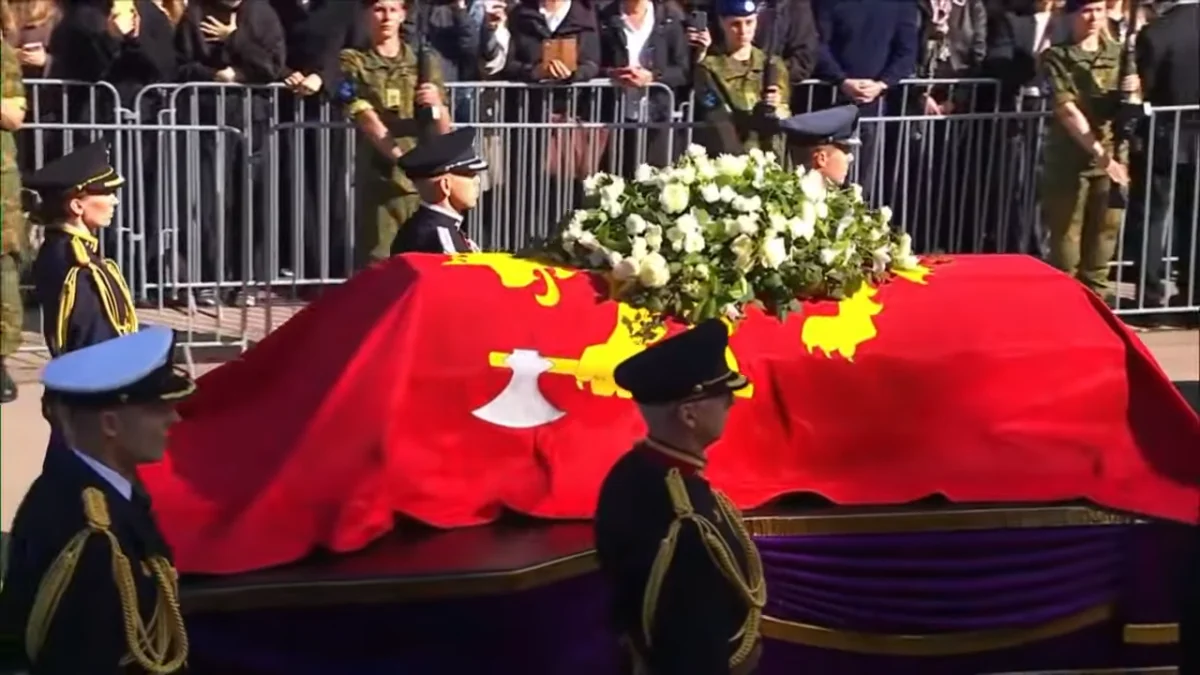
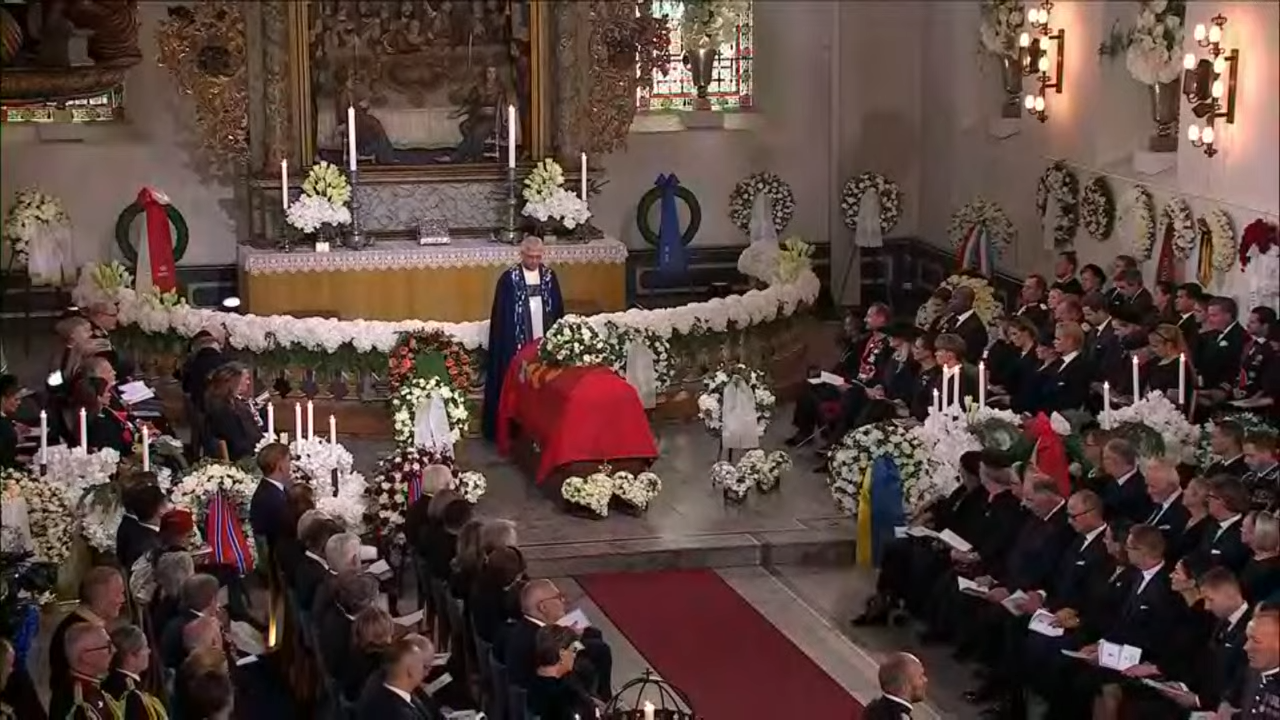
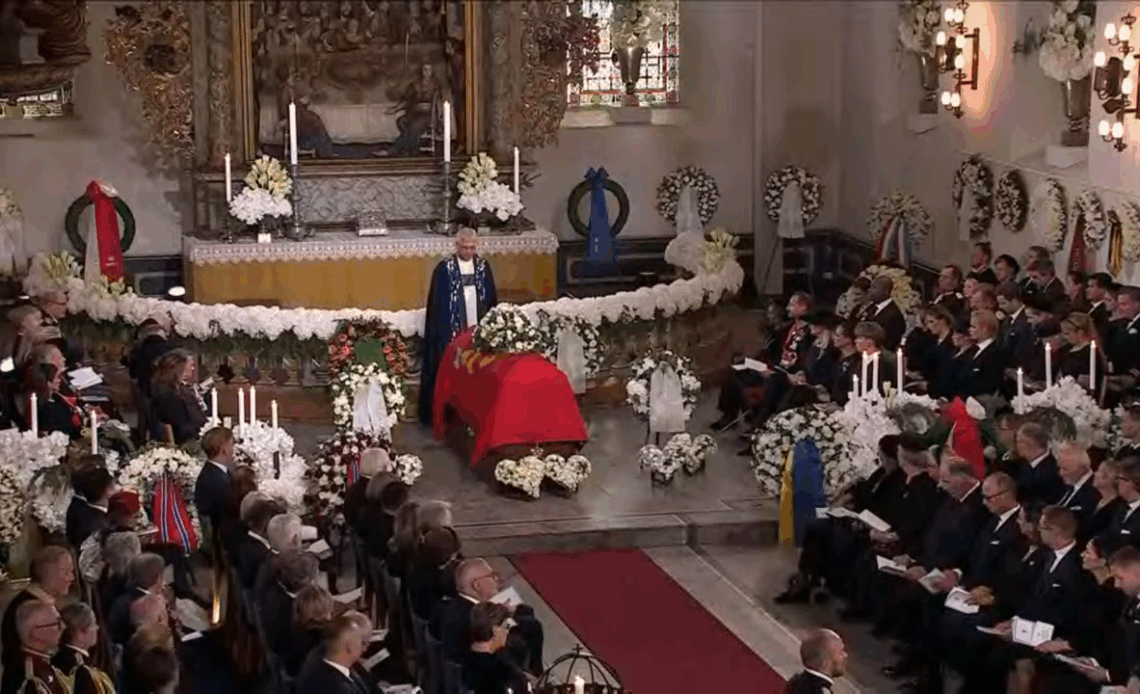
The solemn funeral service for His Majesty King Harald V of Norway concluded at Oslo Cathedral, marking the end of an era for the Norwegian monarchy and a nation deeply united in grief. The ceremony, attended by global dignitaries and members of the royal family, was imbued with profound tributes to the late King, culminating in a deeply personal moment that echoed through the hallowed halls and resonated with the public.
A Lingering Echo of Maternal Love
As the final prayers were offered within Oslo Cathedral, a particularly poignant tribute was paid to King Harald’s late mother, Crown Princess Märtha. The prayer of St. Francis of Assisi, a universally recognized plea for peace and harmony, was recited in Swedish. This deliberate choice served as a tender and deeply meaningful acknowledgment of Märtha’s Swedish heritage, as she was born a Princess of Sweden. The recitation was a powerful echo of the bond King Harald shared with his mother, whom he tragically lost at the tender age of 17. Crown Princess Märtha succumbed to cancer in 1954, leaving a significant void in the young prince’s life. This symbolic gesture underscored the enduring influence of his mother on his life and reign, a sentiment that undoubtedly touched many present and observing the proceedings.
A Life Forged in Adversity and Duty
King Harald’s life was shaped by significant historical events, notably the tumultuous years of World War II. Following the Nazi occupation of Norway, he, along with his two sisters, Princess Ragnhild and Princess Astrid, spent crucial formative years in exile in the United States. This period of displacement and uncertainty, while undoubtedly challenging, forged a resilience and deep appreciation for his homeland. His father, King Olav V, along with his grandfather, King Haakon VII, were instrumental in the Norwegian resistance effort from London, working tirelessly to liberate their occupied nation. The shared experience of exile and the fight for freedom undoubtedly strengthened the familial bonds and instilled a profound sense of duty and patriotism within the royal family. Princess Astrid, now a venerable 94 years old, was present at the funeral, a living testament to the continuity of the royal lineage and a poignant reminder of the historical journey the family has undertaken.
Queen Sonja’s Heartfelt Farewell
The profound impact of King Harald’s passing was visibly etched on the faces of those present, none more so than his devoted wife, Queen Sonja. The 89-year-old Queen was visibly moved to tears during the eulogy delivered by the Prime Minister of Norway, Jonas Gahr Støre. In a moment of profound personal grief and public solemnity, Queen Sonja approached the King’s coffin, carrying a single red rose. Her slow, deliberate walk to lay the flower upon the casket was a deeply emotional and universally understood gesture of love, loss, and enduring marital devotion. This quiet act of remembrance spoke volumes, encapsulating the deep personal connection and shared life that the royal couple had experienced for decades.
The Procession of Mourning
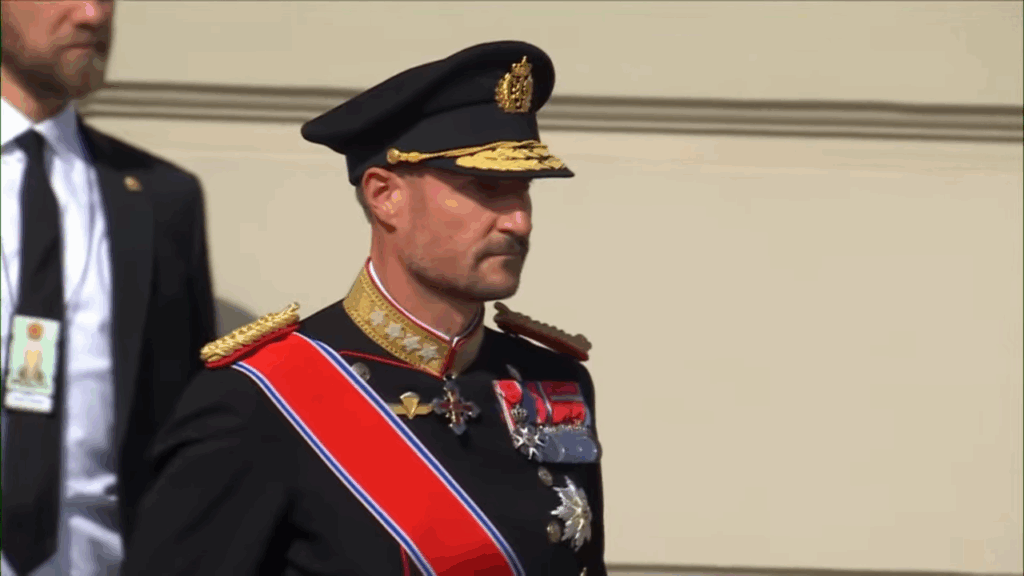
The procession from the Royal Palace to Oslo Cathedral was a somber and dignified affair, led by the new King, His Majesty King Haakon VIII. He walked behind the funeral bier carrying his father, accompanied by his own children, Crown Princess Ingrid Alexandra and Prince Sverre Magnus, as well as his aunt, Princess Märtha Louise. The presence of the younger generation of royals underscored the continuity of the monarchy and the weighty responsibility that now rests upon King Haakon VIII.
The route to the cathedral was lined with thousands of Norwegians, their silent presence a testament to the deep affection and respect they held for their King. The procession also saw the participation of numerous European royals, including the Prince of Wales and Princess Anne from the United Kingdom, highlighting the strong international ties and shared sorrow among the continent’s monarchies. This unified front of mourning emphasized King Harald’s significant role not only within Norway but also on the broader European stage.
A Legacy in Song and Prayer
The funeral service itself was a carefully curated blend of tradition, personal reflection, and national sentiment. A hymn, specially composed for King Harald and Queen Sonja upon their 70th birthdays, was included in the liturgy, serving as a musical testament to their enduring partnership and long service. The inclusion of a version of the beloved hymn "Abide with Me," sung in English, offered a familiar melody of solace and comfort, bridging cultural and linguistic divides. This selection of music aimed to provide a framework for reflection, offering both national pride and personal solace during this period of national mourning.
The Final Resting Place and Public Acclaim
Following the conclusion of the public funeral service at Oslo Cathedral, King Harald was laid to rest in a private ceremony at Akerhus Fortress, a historic and significant site for the Norwegian monarchy. King Haakon VIII, accompanied by King Carl XVI Gustaf of Sweden and King Frederik X of Denmark, walked behind his father’s coffin during this final procession, a symbolic act of honor and familial support.
Later in the afternoon, a moment of connection between the royal family and the public occurred on the balcony of the Royal Palace. King Haakon VIII and Queen Mette-Marit, alongside Queen Sonja and the younger royals, Crown Princess Ingrid Alexandra and Prince Sverre Magnus, appeared to acknowledge the gathered crowds. The immense cheers and applause they received from the public demonstrated the enduring support and affection for the Norwegian royal family, offering a sense of continuity and hope for the future. This public display of appreciation served as a powerful affirmation of the monarchy’s place in the hearts of the Norwegian people.
Historical Context and Succession
King Harald V ascended to the throne in 1991, succeeding his father, King Olav V. His reign was marked by a commitment to modernizing the monarchy while upholding its traditions and constitutional role. He was known for his approachable demeanor, his deep connection with the Norwegian people, and his unwavering dedication to public service. His long and impactful reign saw Norway navigate significant social, economic, and political changes, and he served as a steadying presence and a symbol of national unity.
The succession of King Haakon VIII marks a new chapter for the Norwegian monarchy. As the eldest son of King Harald and Queen Sonja, King Haakon VIII has been prepared for this role throughout his life. His upbringing, education, and involvement in royal duties have equipped him to lead the nation into the future. The presence of his children, Crown Princess Ingrid Alexandra, who is second in line to the throne, and Prince Sverre Magnus, signifies the continuation of the royal lineage for generations to come. This transition, while tinged with sadness, is a testament to the enduring strength and adaptability of the Norwegian constitutional monarchy.
Broader Implications and National Reflection
The funeral of King Harald V is more than just the passing of a monarch; it is a moment of national introspection and collective remembrance. It provides an opportunity for Norwegians to reflect on the legacy of their King, his contributions to the nation, and the values he represented. The widespread public mourning and the respectful conduct of the funeral ceremonies underscore the deep bond between the monarchy and the people of Norway.
The event also serves as a reminder of the historical continuity and stability that the monarchy provides in a rapidly changing world. As King Haakon VIII assumes the throne, he inherits a nation that is deeply proud of its heritage and optimistic about its future. The challenges and opportunities that lie ahead will undoubtedly test his leadership, but the outpouring of support and affection shown during his father’s funeral suggests a strong foundation of public trust and loyalty. The rituals and traditions surrounding the funeral, from the solemn procession to the heartfelt tributes, reinforce a sense of shared identity and national purpose, a crucial element in navigating the complexities of the 21st century. The international attendance further solidifies Norway’s position within the global community and the significance of its monarchy on the world stage.




 Yuyun Lusiyani
 Joko Widodo
 Jia Lissa
 Pevita Pearce
 admin
admin
