
 Eva Lovia
The solemn funeral procession for His Majesty King Harald V of Norway began at noon today, marking a poignant transition for the Norwegian Royal Family and the nation. The ceremony, steeped in tradition and national sentiment, commenced with the King’s funeral bier departing the Royal Palace for the final time, escorted by the esteemed King’s Guard. The route, leading to Oslo Cathedral, became a somber pathway for mourners, dignitaries, and the public alike to pay their final respects to a beloved monarch who reigned for over three decades.
A Solemn Journey to Oslo Cathedral
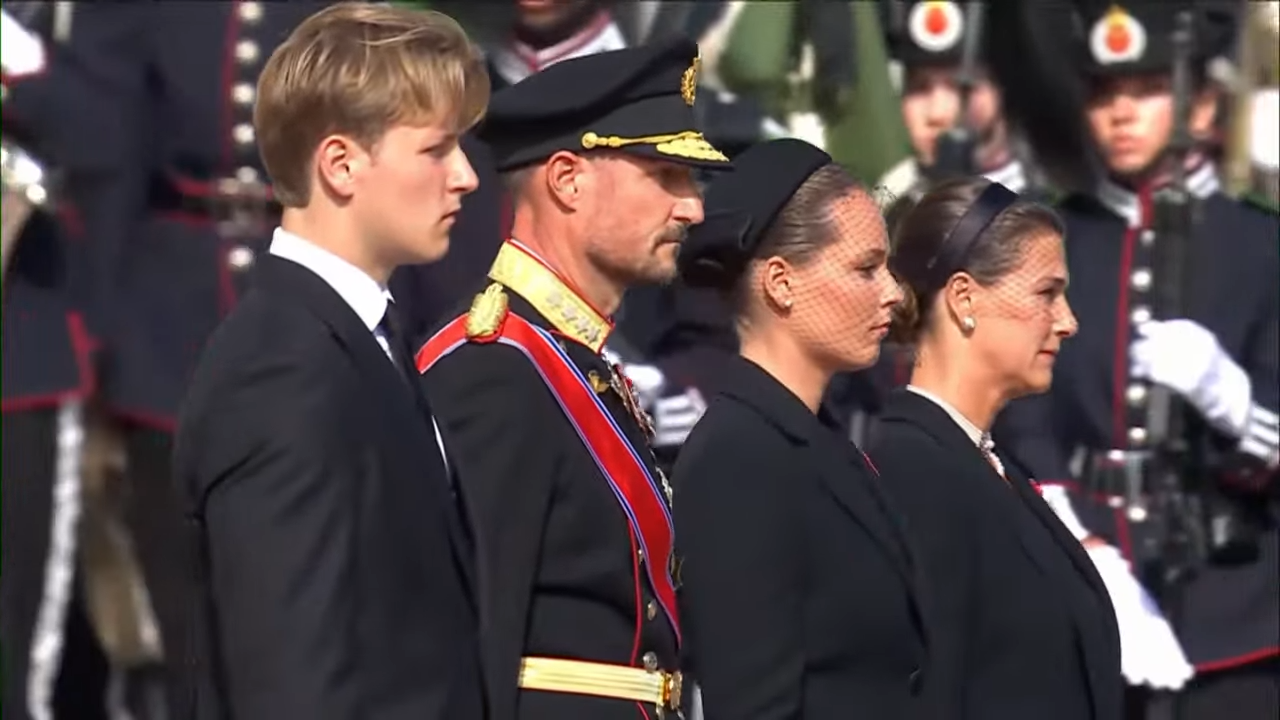
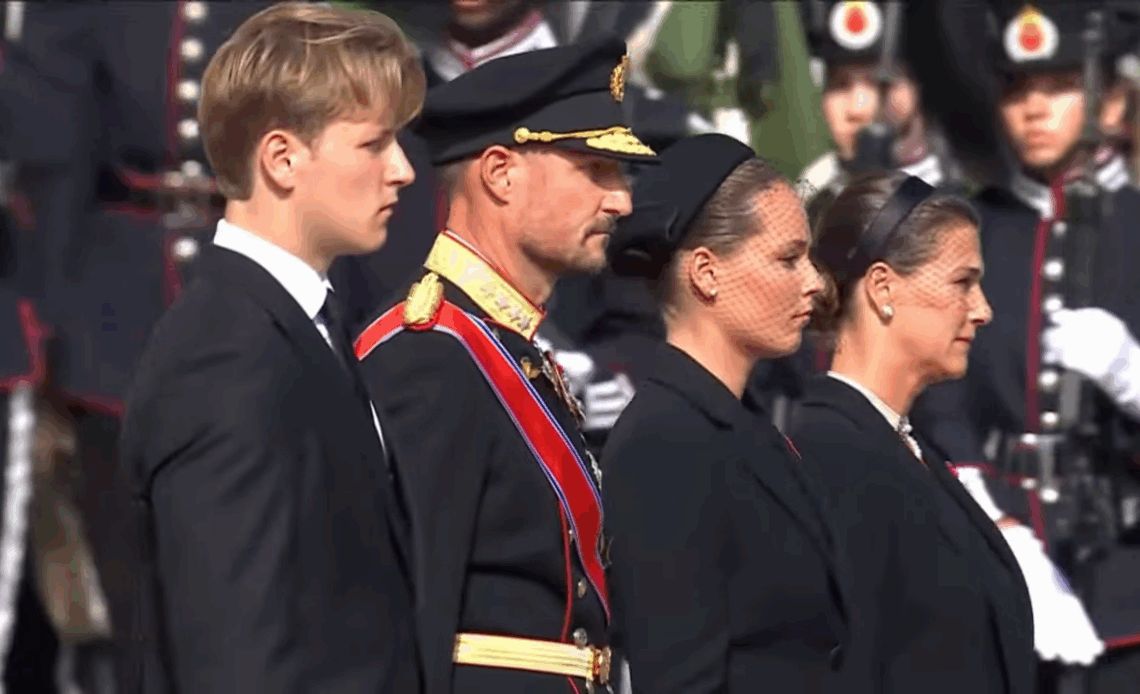
The departure of King Harald V’s funeral bier from the Royal Palace was a moment of profound national significance. The meticulously arranged procession saw key members of the Royal Family leading the solemn journey. At the forefront, King Haakon, Crown Princess Ingrid Alexandra, Prince Sverre Magnus, and Princess Märtha Louise walked on foot, a visible representation of the continuity and future of the Norwegian monarchy. Their measured steps behind the bier underscored the deep personal loss experienced by the Royal Family, while their presence signaled the enduring strength of the institution.
His Majesty The King’s Guard, a unit deeply intertwined with the history and service of the Norwegian Crown, led the procession with military precision and solemnity. The choice of transport for the King’s remains, a Mercedes-Benz G-Wagen, as reported by Norwegian media, reflected a blend of tradition and modern practicality, a characteristic often associated with King Harald’s reign. This detail, while seemingly minor, speaks to the careful consideration given to every aspect of this state funeral, balancing historical reverence with contemporary sensibilities.
Behind the immediate family members walking, Queen Sonja, the King’s devoted wife, and Queen Mette-Marit, his daughter-in-law and the current Crown Princess, followed by car. This arrangement acknowledged their roles and provided a measure of comfort during this intensely public and emotionally charged event. Princess Astrid, the King’s sister, also joined the procession, a testament to the enduring bonds of family and shared history within the Royal House of Glücksburg.
Global and National Tributes
The procession was not solely a family affair but a significant national and international gathering. Members of foreign royal houses were present, signifying the strong diplomatic ties and mutual respect Norway shares with other monarchies. The Swedish Royal Family’s prominent position directly behind the cars carrying Queen Sonja and Queen Mette-Marit highlighted the close historical and familial connections between the Norwegian and Swedish monarchies. This visible display of solidarity from neighboring kingdoms underscored the importance of King Harald’s role not just within Norway but also on the broader European stage.
The attendance of government officials, other world leaders, and heads of state further emphasized the stature King Harald commanded. The brief but notable focus on Ukraine’s President Volodymyr Zelenskyy within the media coverage served as a stark reminder of the ongoing geopolitical landscape and the respect King Harald, as a steadfast defender of democratic values, garnered internationally. His reign, marked by a commitment to peace and diplomacy, resonated deeply, particularly in times of global uncertainty.
A Day of Remembrance and Continuity
The funeral service itself commenced at 1:00 PM at Oslo Cathedral, a landmark of immense historical and spiritual significance for Norway. Presided over by Bishop Olav Fykse Tveit, the service was a solemn occasion, beginning with a moment of silence to honor the late King. The cathedral, a Neo-Romanesque masterpiece, has been the site of numerous royal christenings, weddings, and coronations throughout Norwegian history, providing a fittingly grand and historic setting for this final farewell.
Following the public funeral service, a private ceremony was scheduled to take place at Akershus Castle Church. This more intimate gathering was reserved for members of the Norwegian Royal Family and their royal guests, offering a space for closer communion and personal reflection. Akershus Castle, a medieval fortress and royal residence, carries centuries of Norwegian history, adding another layer of historical gravitas to the day’s events. The final act of the day would involve the return of King Harald’s bier to the Royal Palace, after which he would be laid to rest in the royal crypt, a place of eternal repose for Norway’s sovereigns.
The Reign of King Harald V: A Legacy of Service and Modernity
King Harald V ascended to the throne in 1991, succeeding his father, King Olav V. His reign, spanning over 33 years, was characterized by a deep commitment to his constitutional duties, a genuine connection with his people, and a steady hand guiding Norway through periods of significant social, economic, and political change. Born in 1937, King Harald witnessed firsthand the tumultuous events of World War II, living in exile in Sweden and the United States before returning to Norway after the war. This early experience undoubtedly shaped his understanding of freedom, resilience, and the importance of national unity.
Throughout his tenure, King Harald embraced his role as a unifying figurehead for Norway. He was known for his accessibility, his warmth, and his unwavering dedication to the principles of democracy and human rights. He represented Norway with dignity on numerous state visits and international forums, fostering strong relationships with other nations and championing Norwegian interests on the global stage. His passion for sports, particularly sailing, where he represented Norway in the Olympics, also endeared him to many, showcasing a more personal and active side to the monarch.
The Succession and the Future of the Norwegian Monarchy
With King Harald V’s passing, the Norwegian Crown passes to his son, Crown Prince Haakon, who now assumes the title of King Haakon. Crown Prince Haakon, born in 1973, has been extensively prepared for this momentous responsibility throughout his life. He has undertaken numerous official duties, represented his father on state visits, and actively engaged with various sectors of Norwegian society, demonstrating a deep understanding of the challenges and opportunities facing the nation.
His consort, Crown Princess Mette-Marit, has also played a significant role in public life, advocating for various charitable causes and engaging with contemporary social issues. Their children, Princess Ingrid Alexandra and Prince Sverre Magnus, represent the future of the monarchy. Princess Ingrid Alexandra, as the heir apparent, is being carefully educated and prepared for her future role as Queen, a responsibility she will undertake with the continuity and stability that has defined Norwegian royal succession for generations.
The transition to King Haakon’s reign is expected to be smooth, given the well-established protocols and the Crown Prince’s extensive experience. However, every new reign brings its own unique character and priorities. King Haakon is anticipated to bring his own vision and approach to the monarchy, building upon the solid foundation laid by his father and grandfather. The Norwegian monarchy, while deeply rooted in tradition, has consistently demonstrated an ability to adapt to the evolving needs and expectations of a modern society, a trait that will undoubtedly continue under the new King.
National Mourning and Public Sentiment
The passing of King Harald V has been met with widespread grief and a profound sense of national loss across Norway. Citizens have gathered in public spaces to lay flowers, light candles, and express their condolences. Official mourning periods have been observed, with flags flown at half-mast and public events postponed or cancelled as a mark of respect. The extensive media coverage of the funeral procession and service reflects the deep emotional connection many Norwegians feel towards their monarch.
The monarchy in Norway, as in other Scandinavian countries, holds a unique position. It is seen not as a symbol of privilege or power, but as a unifying force, a guardian of national identity, and a representative of the nation on the world stage. King Harald embodied these ideals, fostering a sense of shared heritage and collective pride. His ability to connect with people from all walks of life, coupled with his steadfast dedication to his duties, has solidified his legacy as a monarch who truly served his people.
Looking Ahead: A New Chapter for Norway
The funeral of King Harald V marks the end of an era, but it also signifies the beginning of a new one. The ascension of King Haakon ushers in a period of transition and renewed purpose for the Norwegian Royal Family. As the nation bids farewell to a beloved King, it also looks with hope and anticipation to the future, confident in the continued strength and resilience of its monarchy and its people. The solemnity of the funeral procession, the dignity of the service, and the palpable sense of national unity all point towards a Norway ready to embrace its next chapter, guided by a new sovereign and a continuing legacy of service and dedication. The events of today are not merely a conclusion but a testament to the enduring spirit of the Norwegian nation and its royal family, poised to navigate the future with the same grace and determination that have defined its past.




 Yuyun Lusiyani
 Joko Widodo
 Jia Lissa
 Pevita Pearce
 admin
admin
