
 Yuyun Lusiyani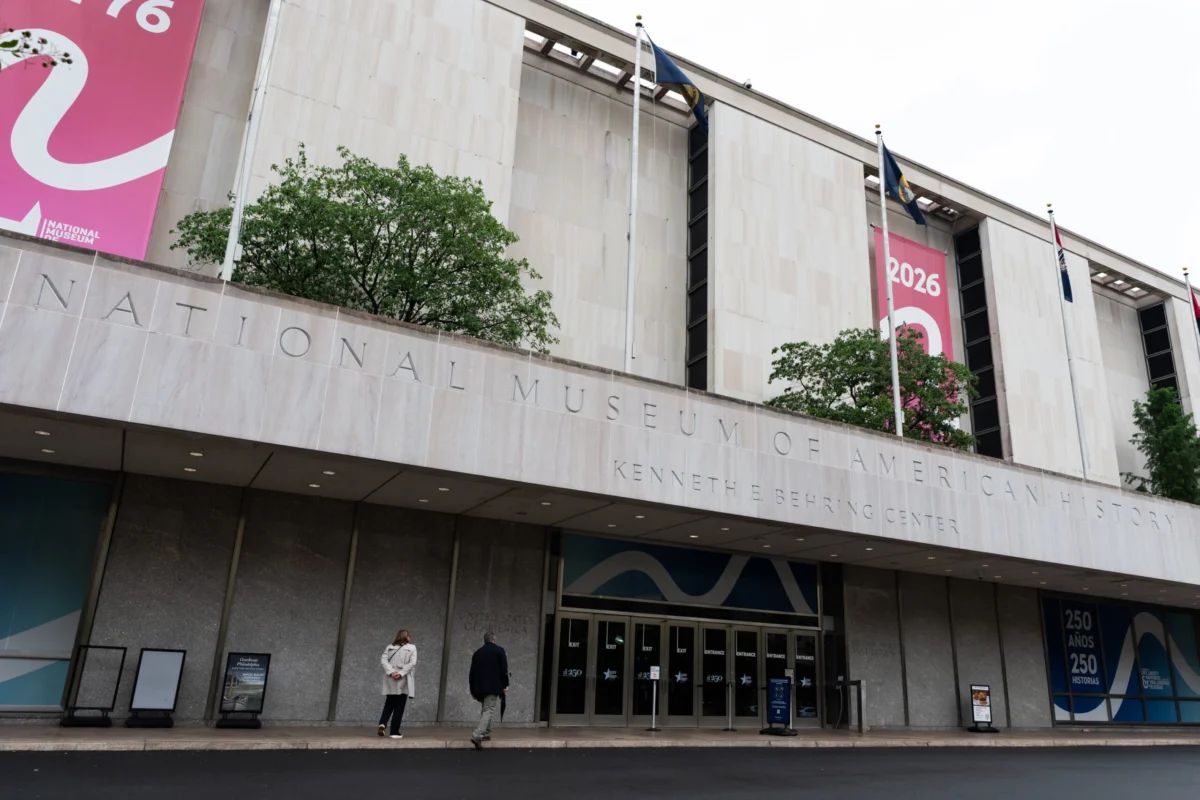
The Smithsonian Institution, a revered beacon of American history and culture, finds itself embroiled in an unprecedented political maelstrom, challenging its long-held institutional independence and sparking a national debate over the interpretation of the nation’s past. The controversy escalated dramatically with the resignation of Smithsonian Secretary Lonnie Bunch on September 8, 2026, at the age of 73, citing "stress" amidst intense pressure from the White House and Republican lawmakers. This departure follows a blistering 162-page White House report released in July 2026, which accused the National Museum of American History (NMAH) of succumbing to "ideological capture" and veering into "extreme political activism." The report, alongside executive orders and contentious congressional hearings, has cast a shadow over the institution as it approaches the nation’s 250th anniversary.
The "Electric Dr. Franklin" Exhibit and the Spark of Controversy
At the heart of the initial White House critique was the National Museum of American History’s exhibit, "The Electric Dr. Franklin," which opened in November 2021. While celebrating Benjamin Franklin’s groundbreaking contributions to electrical science, the exhibit also confronted a less flattering aspect of his legacy, stating, "Benjamin Franklin’s remarkable scientific accomplishments were, in part, enabled by slavery." More controversially, it speculated that Franklin "may have used enslaved people in his electrical research," noting that while he documented experiments with family and friends, he "seldom identified who in particular assisted him." The exhibit, which closed in 2025 but remains accessible online, suggested that "Indentured servants and enslaved people in his household could also have been used, although we may never know for certain." This conjecture—that a revered Founding Father might have subjected enslaved individuals to painful electrical shocks—became a focal point for critics who argued the museum was presenting a divisive and ideologically driven narrative.
A Storied Institution Under Siege

For decades, the Smithsonian Institution, encompassing 21 museums and drawing approximately 15 million visitors annually, largely maintained bipartisan support as the guardian of America’s history, ingenuity, and natural heritage. Occasional controversies, such as the 1995 uproar over the National Air and Space Museum’s planned exhibit of the Enola Gay—the B-29 that dropped the first atomic bomb on Hiroshima—were exceptions rather than the norm. However, this institutional exceptionalism is now severely imperiled. The current conflict transcends mere exhibit disputes, reflecting deeper ideological fissures concerning how the nation’s story should be told.
The Smithsonian’s funding structure underscores its vulnerability to political pressure. Although independent of the executive branch, governed by a 17-member board including the Chief Justice of the Supreme Court and members of Congress, it relies on the federal government for 62% of its budget, receiving over $1 billion annually. Warnings of significant budget cuts from the Trump administration and its allies have amplified the crisis, culminating in Secretary Bunch’s resignation.
A Chronology of Escalation and Political Pressure
The current political offensive against the Smithsonian has unfolded through a series of escalating actions by the Trump administration and its allies:
- March 2025: President Donald Trump signed an executive order declaring that the Smithsonian had succumbed to "divisive, race-centered ideology," directing Vice President J.D. Vance to spearhead efforts to purge "improper ideology" from the institution.
- May 2025: Trump publicly announced the firing of Kim Sajet, director of the National Portrait Gallery, labeling her "a highly partisan person, and a strong supporter of DEI, which is totally inappropriate for her position." Although the Smithsonian asserted Trump lacked the authority to remove Sajet, she resigned to shield the institution from further political fallout.
- August 2025: The White House issued a 120-day ultimatum, demanding the replacement of "divisive or ideologically driven language with unifying, historically accurate and constructive descriptions."
- July 4, 2026: Coinciding with the 250th anniversary of the Declaration of Independence, the White House released its exhaustive 162-page report, "Saving America’s Story," specifically targeting the NMAH and its director, Anthea Hartig, as well as Secretary Lonnie Bunch. The report meticulously detailed perceived ideological transgressions within exhibits and institutional practices.
- Late July 2026: Two House committees held back-to-back hearings, where Republican members vigorously questioned and lambasted NMAH Director Anthea Hartig. During these hearings, exhibits such as a "chrome and rubber crotch harness" from a gay history display and a 6-year-old girl’s diary entry expressing fear about "getting boobs" and wishing for a "nonexistent penis" from the "Girlhood (It’s Complicated)" exhibit were singled out for criticism.
- Late July 2026: Following the hearings, Trump signed another executive order, instructing the Department of the Interior to erect signs outside the museum "warning visitors about the ideological capture" on display. While these signs have yet to materialize, the directive underscored the administration’s intent to publicly brand the institution.
- Late August 2026: Interior Secretary Doug Burgum sent a letter to the Smithsonian’s Board of Regents, declaring that other federal agencies "cannot in good conscience continue to support the Smithsonian under current leadership," hinting at potential funding withdrawals.
- September 8, 2026: Smithsonian Secretary Lonnie Bunch, the first African American to lead the institution, announced his resignation, stating simply, "it has been stressful."
This rapid succession of events underscores a calculated and sustained campaign to reshape the Smithsonian’s interpretive framework, aligning it with the administration’s vision of national history.

The National Museum of American History: A Quest for Narrative Coherence
The NMAH’s susceptibility to these critiques stems, in part, from a long-standing internal struggle over its identity and mission. Opened in 1964 as the National Museum of History and Technology, its initial mandate was to "awaken" a "clear understanding of the inspiring story of the United States." Renamed in 1980, the museum has grappled with balancing its technological heritage with the broader, often contentious, task of telling a comprehensive national historical narrative.
In 1999, conservative critic David Brooks penned a scathing critique in the Weekly Standard, lamenting the museum’s perceived lack of focus on "defining moments" and "prominent figures," accusing it of becoming "a museum of multicultural grievance." This critique prompted a 2001 blue-ribbon commission, led by former Republican White House aide Richard Darman, which in 2002 called for a "transformation," noting the museum’s lack of "aesthetic appeal, organizational coherence, and the perception of substantive balance." The commission recommended a chronological introductory exhibit that would "celebrate America’s remarkable strengths and achievements while also treating fairly and responsibly the ways in which America may have failed to meet the high standards it has proclaimed for itself."
However, implementing these recommendations proved challenging. Museum curators, specializing in material culture and influenced by a broader academic trend away from "great-man-of-history" narratives and strict chronology, resisted what they saw as a potentially triumphalist approach. Former NMAH director John Gray (2012-2018) recounted attempts to enlist leading academic historians to provide an overarching narrative, but they declined, fearing it could fuel an "America-first agenda." The museum’s eventual solution was to divide the national story into thematic subject areas, such as "American Enterprise," "American Democracy," and "Many Voices, One Nation," rather than a unified chronological sweep. This approach, while allowing for diverse stories, has been criticized for feeling "disjointed and disorienting," as noted by visitors and critics alike, contrasting sharply with the clear chronological design of the highly successful National Museum of African American History & Culture (NMAAHC), which opened in 2016.
A "Political Awakening" and Ideological Fault Lines

The internal debate within the Smithsonian intensified significantly after 2020. The dual crises of the COVID-19 pandemic and the widespread protests following the murder of George Floyd prompted a systemic "political awakening" across academia and progressive institutions, including the Smithsonian. Under Secretary Lonnie Bunch, the institution launched "Smithsonian Cares," a digital resource focused on diversity, equity, access, and inclusion (DEAI), and explicitly positioned itself as a "trusted source for critical conversations and helping the nation grapple with important issues like race and identity."
The Biden administration actively encouraged this shift. Meeting minutes from October 2021 reveal the Smithsonian’s Office of Government Relations "brought objects from the National Museum of American History to the White House for a temporary display recognizing Lesbian, Gay, Bisexual, Transgender, and Queer Pride Month." Subsequent reports noted ongoing collaboration with the White House on DEAI efforts, including plans for exhibits marking various identity-focused heritage months. Museums like the National Portrait Gallery revised signage, for instance, for a portrait of Henry Laurens, a Continental Congress delegate, to highlight his wealth derived from chattel slavery. Kim Sajet, former director of the Portrait Gallery, articulated the sentiment: "When Floyd was killed, everyone acknowledged that now is the time to ask: What are the stories that we’re telling and were we being honest and fair in recounting those stories?"
This institutional shift, however, alienated some conservative supporters. Former Republican Congressman Garret Graves, who served on the Smithsonian board from 2023 to 2024, expressed concerns that the institution was operating in an ideological "bubble," disconnected from the broader American populace. He and fellow Republican appointee Adrian Smith often found exhibits to have "an agenda" rather than interpreting history objectively. Graves, in his farewell address to the regents in October 2024, warned against politicizing the Smithsonian, stating, "This is America’s museum and there should not be anything partisan about it." His warnings proved prescient, as Trump won the election shortly thereafter, initiating the current offensive.
Congressional Showdown: Accusations and Defenses
The July 2026 congressional hearings brought the ideological battle into sharp relief. At the House Oversight Subcommittee on Delivering on Government Efficiency, Chairman Tim Burchett (R-TN) began by playing a montage of NMAH Director Anthea Hartig offering tribal land acknowledgements, questioning her commitment to "deeding any of your personal property or property of the Smithsonian to any of these tribes?" Hartig adopted a conciliatory tone, acknowledging the White House report’s concerns but asserting it did not "fairly or accurately characterize the full body of work at the museum," and affirming her love for the United States.

However, Republican members pressed their attack. Burchett displayed images of the "chrome and rubber crotch harness" and the 6-year-old’s diary entry, asking, "Ma’am, I mean, you have pictures of bondage. You have some overtly sexual things up there. I’m not a fan." Rep. Nancy Mace (R-SC) directly questioned, "Are images of sexual fetishes appropriate for children? Yes or no?" Rep. Brandon Gill (R-TX) highlighted the museum’s use of a "Museums as a Site for Social Action Toolkit" for staff training, which reportedly linked "politeness" to "white supremacy culture."
Defenders of the Smithsonian were equally impassioned. Yale historian David Blight, testifying at the hearing, controversially compared the White House’s actions to the German Third Reich’s attempts to control museums, invoking Joseph Goebbels. Rep. Jasmine Crockett (D-TX) opened her remarks with, "Welcome to the White Pride Committee," while Rep. Kweisi Mfume (D-MD) vowed to "sacrifice his life" for the institution, declaring, "We will not let you destroy that museum… unless you find a way to kill all of us and walk over our bodies to change history." The ensuing hearing before the House Administration Committee the next day further cemented the perception that the long-standing bipartisan consensus around the Smithsonian had crumbled.
Implications for America’s "National Treasure"
The battle over the Smithsonian carries profound implications for its future, its leadership, and the very nature of historical interpretation in national institutions. Secretary Bunch’s resignation leaves a critical leadership vacuum at a pivotal moment, with three of nine citizen slots on the Board of Regents already vacant and three more set to open. The composition of this board, which includes Vice President Vance, will be instrumental in selecting Bunch’s successor and charting the institution’s future course. The extent to which Chief Justice John Roberts, who chairs the board, chooses to engage in this politically charged process will also be crucial.
The conflict highlights a fundamental tension: should national museums present a "basic consensus view" of history that is "unifying," as the White House report demands, or should they embrace the complexities, contradictions, and often painful truths of the past, even if it challenges traditional narratives? Critics of the administration argue that this intervention represents an attempt to enforce a sanitized, triumphalist version of history, stifling academic freedom and the pursuit of a more complete understanding of the American experience. They fear that bowing to political pressure could undermine the Smithsonian’s credibility as an objective scholarly institution.

Conversely, the White House and its supporters contend that the Smithsonian, particularly the NMAH, has strayed too far into divisive identity politics, neglecting its foundational mission to inspire and educate a broad public about America’s achievements. They argue that a perceived ideological bias alienates a significant portion of the American population and wastes taxpayer dollars.
As the nation prepares to celebrate its 250th anniversary, the question of how its premier history museum will tell its story remains fiercely contested. The ongoing debate, exacerbated by partisan divides and an assertive executive branch, forces the American people to confront a critical choice: what kind of history do they want preserved and presented for future generations, and who gets to decide? The future of the Smithsonian, a cultural cornerstone, hangs in the balance, serving as a microcosm of the broader culture wars gripping the nation.




 Joko Widodo
 Eva Lovia
 Pevita Pearce
 admin
admin
 Lina Irawan