
 Yuyun Lusiyani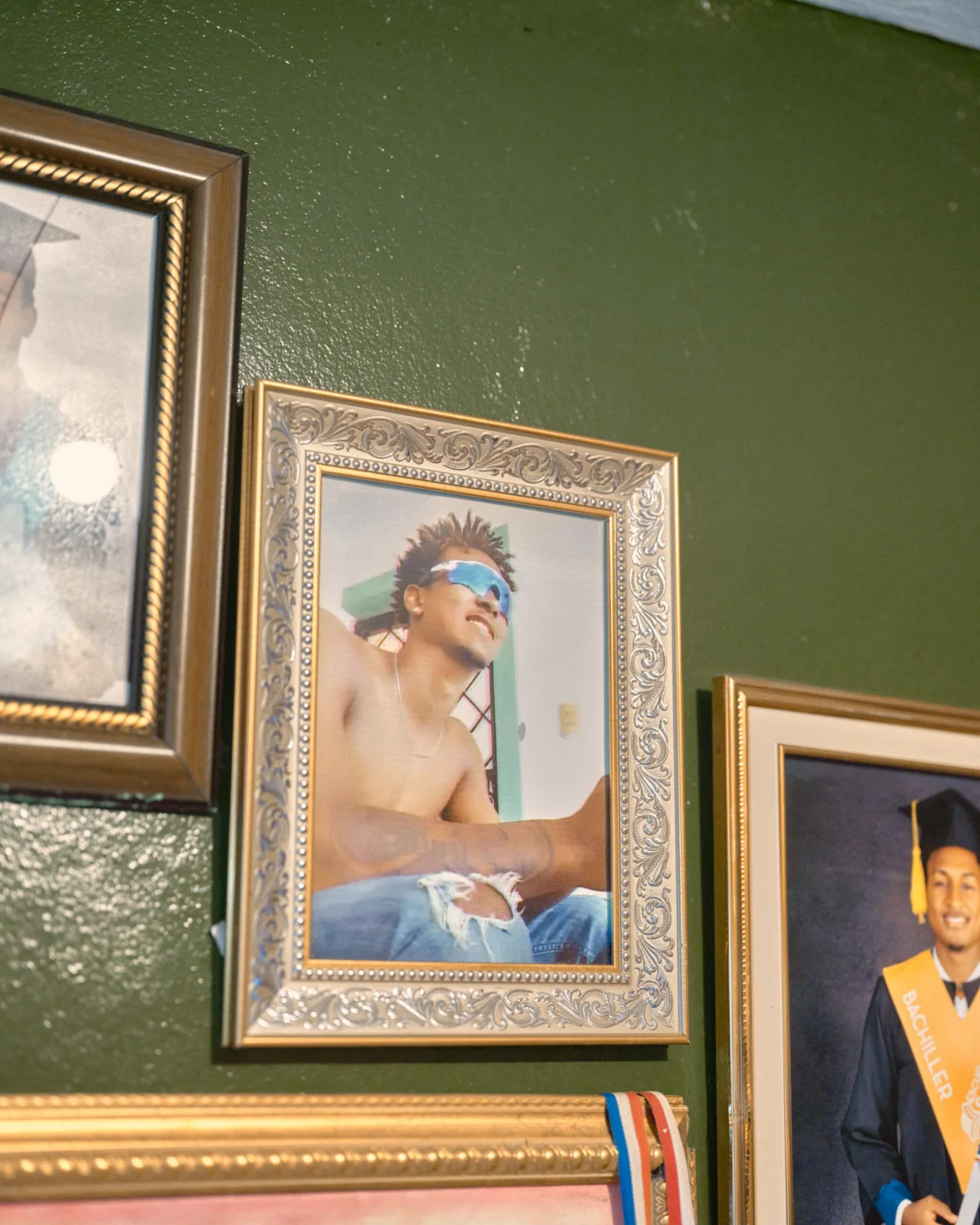
In the pre-dawn hours of September 21, 2020, a desolate stretch of highway along the southern coast of the Dominican Republic bore witness to a tragedy that would expose the intricate web of influence, wealth, and grief within the country’s baseball-obsessed culture. Luis David Saba arrived at approximately 4 a.m. to find a scene already mostly cleared by police and paramedics. The crumpled Jeep Grand Cherokee and the mangled remnants of the motorcycle it had struck were gone, as were the motorcycle’s two critically injured passengers. All that remained were bloodstains, scattered debris, and a somber pile of branches—a local custom used to cover a body left behind. Beneath them lay the lifeless form of his 20-year-old brother, Yohan Saba Mercado. In profound shock, Luis David covered Yohan’s battered body with a sheet, waiting for forensic investigators who never arrived. Hours later, as the sun climbed and traffic flowed past, he abandoned hope, ultimately loading his brother’s body into a van with friends and taking him home.
That same morning, two other families grappled with similar devastation. Deby Beato Charles, 20, and Daniela Perez Garcia, 19, who had been riding on Yohan’s motorcycle, succumbed to their catastrophic injuries. Deby’s brother, Ruben, received his wallet and bracelet from a doctor, confirming his death from a severe head injury and blunt chest trauma. Daniela’s uncle found her unrecognizable at another hospital, her face gravely swollen, having died from head, chest, and hip injuries leading to hypovolemic shock. Funerals for Daniela and Yohan were held that afternoon, during which a name began to circulate among the mourners: Oneil Cruz. A 21-year-old top prospect for the Pittsburgh Pirates, scion of a local baseball family, and recipient of a nearly million-dollar signing bonus, Cruz was identified as the driver of the Grand Cherokee. The families, intimately familiar with the country’s social dynamics, knew what would likely happen next. Soon after the mourners departed Yohan’s mother’s house, Cruz’s mother called, offering condolences and, tellingly, seeking to negotiate.
The Accident and Its Immediate Aftermath

The tragic collision occurred around 11 p.m. on a four-lane highway, notoriously poorly lit and prone to high-speed accidents. Yohan Saba Mercado was driving his secondhand X1000 motorcycle, with Deby Beato Charles and Daniela Perez Garcia riding behind him. None were wearing helmets. A friend on a separate motorcycle accompanied them. As they passed a shuttered snack stand, Cruz’s Jeep Grand Cherokee rear-ended Yohan’s motorcycle, destroying its rear tire and flinging the three friends onto the pavement.
Cruz reportedly called 911. A national police lieutenant responded, but his subsequent court report provided scant details of the accident site or the investigation. Crucially, it lacked forensic analysis, mentioned no tests for alcohol levels of the victims, and made no reference to the second motorcyclist, who later stated he was never questioned by authorities. Cruz claimed he never saw the motorcycle before impact, asserting it had no lights – a point of contention given a post-accident photo of the damaged bike was later used as evidence of missing lights, while Yohan’s brother confirmed the front lights were functional but the rear lights were not. The day after the crash, graphic images of the victims circulated on Facebook, sparking public debate. Opinions were divided, with some predicting preferential treatment for Cruz due to his status, others anticipating the families would seek financial compensation, and many blaming the deceased for being out past the 5 p.m. COVID-19 curfew.
The Victims: Lives Cut Short
Yohan Saba Mercado, Deby Beato Charles, and Daniela Perez Garcia were young adults on the cusp of their futures, hailing from the neighboring communities of Sabana Grande de Palenque and Juan Baron. These areas, characterized by dirt roads and modest homes, stand in stark contrast to the burgeoning wealth of baseball-driven towns like Nizao.

Yohan, the 20-year-old son of separated parents, had a deep sense of responsibility. He spent his early years cared for by his paternal grandmother while his mother worked in Santo Domingo. After his father suffered a stroke, Yohan became a devoted caregiver, even taking him to the beach for exercise. Working as an air conditioning mechanic, his primary goal was to earn enough to install a new, flood-proof roof for his mother’s house. His X1000 motorcycle, a common mode of transport in the Dominican Republic, was also how his friends, including Deby and Daniela, got around.
Deby, also 20, was the third of four brothers, all aspiring pitchers. His mother had moved to Chile for work six years prior, leaving Ruben, the eldest, to take "the reins of the house." Deby spoke with his mother daily, sharing details of his life. He bore her name tattooed within an infinity symbol, a testament to their bond. After failing to make a top-tier baseball academy—the typical path to a major league contract—Deby returned to high school, just days away from graduation at the time of the accident. He also bagged groceries and cared for his younger brother.
Daniela, 19, was described by friends as the life of the party, always dancing and singing. The youngest of four, she lived with her mother, who considered Daniela her best friend, her "chiquita." Many nights, they shared a bed. She had graduated high school and was taking English classes in Santo Domingo, harboring aspirations for a brighter future.
On that fateful night, they were in that exhilarating, uncertain phase between adolescence and adulthood. Daniela had told her mother she was meeting girlfriends at the Nizao River, promising to return early. Videos show her in a red dress, singing salsa at an outdoor bar. Despite the 5 p.m. COVID-19 curfew, young people often disregarded it. They eventually joined Yohan and Deby, heading to Escondido, a bar in Baní known for operating past curfew. The decision to stay out late, an impromptu plan for a night of revelry, tragically sealed their fate.

Oneil Cruz: A Promising Future Threatened
Less than seven miles from the accident site lies Nizao, a small town of 32,000 that has improbably become a hotbed for professional baseball talent, producing stars like Ketel Marte and Hall of Famer Vladimir Guerrero Sr. Oneil Cruz Ureña, at 21, was poised to join this elite company. Signed by the Los Angeles Dodgers at 16, then traded to the Pittsburgh Pirates, he was considered their future shortstop. FanGraphs, a leading baseball statistics website, ranked him among baseball’s top prospects, declaring his potential "what this guy might" achieve. His signing bonus of $950,000 was a testament to his promise and a source of local pride and envy. The accident on that dark highway threatened to shatter this dream before it fully materialized.
The Intervention: Santo Caraballo and the "Fixer" Role
The scandal quickly made headlines in both the Dominican Republic and the United States, but just as swiftly, it vanished from public discourse. This disappearance, it would later be revealed, marked the origin story of Santo Caraballo, who would become a dominant figure in the country’s chaotic baseball ecosystem. Caraballo, then an obscure businessman with political connections—including a patronage position as an ambassador in the ministry of foreign affairs under President Danilo Medina—rose to prominence by "fixing" the Cruz case. He later formed a business partnership with national hero David Ortiz, further cementing his influence.

According to Osvaldo Tamarez, a trainer known as Cabezon, who was close to the Cruz family, the family’s immediate focus after Oneil’s detention was to "pay off" the victims’ families to prevent lawsuits and criminal prosecution. Tamarez, assigned to speak with Daniela’s and Deby’s families, confirmed that another trainer recommended bringing in Santo Caraballo. Caraballo, despite not being a lawyer, operated a legal services firm and, more importantly, possessed the political capital to navigate the intricate Dominican legal landscape. Tamarez stated Caraballo’s primary role was simple: "Fix the problem."
At Cruz’s initial court appearance, barely two days after the accident, his attorney requested a delay to "seek solutions" for the families’ "material hardships." The judge granted a two-day postponement, during which Caraballo and his associates began reaching out to the grieving families.
The Families’ Ordeal and the Settlements
The families’ encounters with Caraballo’s campaign revealed the stark power imbalance and the devastating emotional toll of the negotiations.

Mercedes Garcia, Daniela’s 65-year-old mother, was initially adamant: "Rich people, especially baseball players, like to pay for dead people with money," she told the reporter. "I am poor, but I have honor." All she wanted was for Cruz to acknowledge what happened and apologize. However, she alleges her son, Porfirio, a traffic cop who moonlighted as an Uber driver and was reportedly already working with Caraballo, tricked her into signing documents. In a haze of grief, she signed papers Porfirio partially obscured or did not explain, later co-signed by Daniela’s father, Porfirio Perez, who is barely literate.
The documents, reviewed by the reporter, were contradictory. One, filed in court by Cruz’s attorney, stated the family withdrew all legal claims, criminal and civil, and had received no "pecuniary interest," attributing the accident to "circumstances of life." Another, not filed in court, was a "discharge and legal settlement" signed by Daniela’s parents and Cruz’s mother, stating the parents were paid 900,000 pesos (approximately $15,000, more than twice the average annual income in the Dominican Republic) for "funeral expenses" and "damages caused." Mercedes Garcia and her son Juan Manuel claimed Porfirio controlled the payout, giving them less than $5,000, while Daniela’s father received nothing. Garcia later lamented: "I was buried along with Daniela." Porfirio declined to be interviewed.
For Deby’s family, Ruben, the eldest son, was pressured to make a deal. Tamarez, the trainer, informed him that Daniela’s family had already accepted a million pesos and that Cruz would likely escape punishment regardless. His father echoed this sentiment: Deby was not coming back, so take the money. At Caraballo’s office, Ruben, enraged, confronted him, stating he wasn’t there to "negotiate over his brother’s death like it was a car for sale." Caraballo, seemingly accustomed to such outbursts, calmly pointed out his surveillance cameras before offering 2 million pesos (approximately $34,000), a higher sum due to the additional legal work required as both of Deby’s parents lived abroad.
Deby’s mother, Elena Charles, returned from Chile weeks later, still advocating for Cruz to face a 120-year prison sentence. In a heated exchange with Ruben, she cried, "I told you not to do it!" to which Ruben retorted, "They were going to release him anyway!" Ruben ultimately signed an "act of withdrawal," similar to Daniela’s, attesting Cruz had no intention of causing the accident and that the family withdrew all claims without "any type of pressure [or] pecuniary interest." Caraballo then attempted to persuade Ruben to invest the 2 million pesos with him for a monthly payout, an offer Ruben vehemently rejected. The family placed the money in a bank account; six years later, it remains largely untouched, providing only about $65 a month in interest. Elena Charles articulated the enduring grief and conflict: "For the rest of my life, it’s going to be a conflict."

Genny Mercado, Yohan’s mother, also faced immense family pressure after hearing of the other settlements. As a housekeeper earning about $275 a month, a settlement exceeding several years’ income was significant. Her half-brothers argued rejecting the money would be futile. With Yohan’s father, Pedro Saba, having suffered a second stroke upon learning of his son’s death, Genny became the de facto decision-maker. She hired a lawyer who negotiated a deal, resulting in Mercado and Saba receiving approximately 800,000 pesos ($14,000) after the lawyer’s cut. Mercado used the money to buy rebar and cement for the roof Yohan had promised, stopping work for seven months, rarely leaving home except to visit his grave. "Any family that goes through something like this just wants justice," Mercado stated, adding, "Everyone who kills has to go to jail." But for Cruz, "No one wanted to hurt the future del muchacho." Yohan’s father, too, expressed resignation: "Around here, the police let a lot of things slide, especially when it involves people who have money or connections or whatever else. We’re not going to try to dance around that fact anymore."
The Legal Process and Its Discrepancies
Cruz’s second court date, just days after the accident, saw prosecutors seeking three months of custody. However, the victims’ families were absent, with the court citing an inability to reach two of them. Prosecutors even misidentified the victims in their filings. While they sought charges for reckless driving and causing death, potentially carrying a one-to-three-year prison sentence, a striking omission was the lack of any claim regarding Cruz having consumed alcohol before the accident. This contradicted their earlier press release. When questioned by a Pittsburgh Post-Gazette journalist, a spokesperson for the prosecutors cited a "procedural error" for the absence of a sobriety test, despite Cruz reportedly "smelling of alcohol."
During this hearing, Cruz’s legal team submitted the signed withdrawals from the victims’ families. His attorney, while offering condolences, emphasized Cruz’s "material support" to the families for "basic needs of being human: education, food, clothing, among other matters." The defense also presented numerous testimonials praising Cruz’s character, including from his pastor and a local contractor. Crucially, the attorney highlighted Cruz’s status as one of baseball’s "five highest-rated prospects internationally." The defense dramatically argued that the accident "hurts the whole town, Oneil above all, who for this will have to go to professional therapy so that he can cope with the trauma… For God’s sake, let’s try to ensure that Oneil Cruz Ureña’s mental health is now a priority."

The judge released Cruz on a 2 million pesos ($34,000) bond. Weeks later, Cruz posted a social media photo of himself with Caraballo, grinning at the Miami airport.
Cruz’s Return to Baseball and Caraballo’s Ascendancy
By March of the following year, Cruz was at the Pirates’ spring training facility in Florida. An MLB.com article briefly mentioned the accident, focusing instead on his move to the outfield. In that article, Cruz was quoted expressing his initial fear of not being able to continue his dream, but stated: "However, when things became clear later and everything was solved, I was able to… hope again that I’ll be able to play. Now, I have peace." The press, both in the United States and the Dominican Republic, largely ceased covering the incident.
The "peace" that Caraballo helped deliver Cruz became the foundation of his own ascendancy. Caraballo leveraged the incident to become a feared and powerful operator in the shadows of Dominican baseball, known for his high-powered connections that could make even a deadly crash disappear.

Cruz’s final court appearance was on August 30, 2021, nearly a year after the accident. He attended virtually from the U.S., where he was playing minor league baseball. Despite the families’ withdrawals, prosecutors still held the power to pursue charges, but their case had been severely weakened. They presented only death certificates and a police report offering minimal detail. The judge dismissed the case, ordering the return of Cruz’s bond.
Just over a month later, Oneil Cruz made his Major League Baseball debut with the Pittsburgh Pirates against the Cincinnati Reds, hitting a single that was the hardest recorded by a Pirate, a mark he has since broken multiple times. He is now a fixture of the team, earning $3.3 million this year, with projections for far greater earnings as a free agent in coming seasons.
Broader Implications and Unanswered Questions
The tragic deaths of Yohan Saba Mercado, Deby Beato Charles, and Daniela Perez Garcia, and the subsequent handling of the case, cast a harsh light on the systemic issues prevalent in the Dominican Republic. The swift disappearance of the story from public scrutiny, coupled with the settlements negotiated by Santo Caraballo, underscore a pervasive concern about how wealth and influence can impact the course of justice.

The Dominican legal system, which grants victims or their families significant input on prosecution, can inadvertently create an environment ripe for such "fixes." For families living in poverty, the offer of a substantial sum—even if later withheld or mismanaged by intermediaries—can be an almost irresistible force against the slim hope of achieving justice through a system often perceived as biased against the poor. The total sum of approximately $66,000 distributed among the three families, while life-changing for some, pales in comparison to the multi-million-dollar future secured for Cruz.
This incident also raises ethical questions for Major League Baseball and its teams. While the Pittsburgh Pirates stated they "addressed this matter more than six years ago based on the information available and the outcome of the legal proceedings," the nature of these proceedings—characterized by alleged manipulation of grieving families, a lack of thorough police investigation, and the disappearance of key evidence (like the sobriety test)—suggests a superficial resolution rather than a truly just one. The exploitation of young Dominican prospects by "prestamistas" (moneylenders), a phenomenon Santo Caraballo himself profited from, further complicates the ethical landscape. The ability of powerful figures like Caraballo to operate with impunity, effectively "fixing" criminal cases involving high-value assets like MLB prospects, points to a broader challenge within the Dominican Republic where the dream of baseball can sometimes overshadow fundamental principles of justice and accountability. For the grieving families, the money has not erased the pain, leaving them with unresolved grief, resentment, and the profound regret that their forgiveness was, in effect, purchased.




 Joko Widodo
 Eva Lovia
 Pevita Pearce
 admin
admin
 Lina Irawan