
 Ana Megawati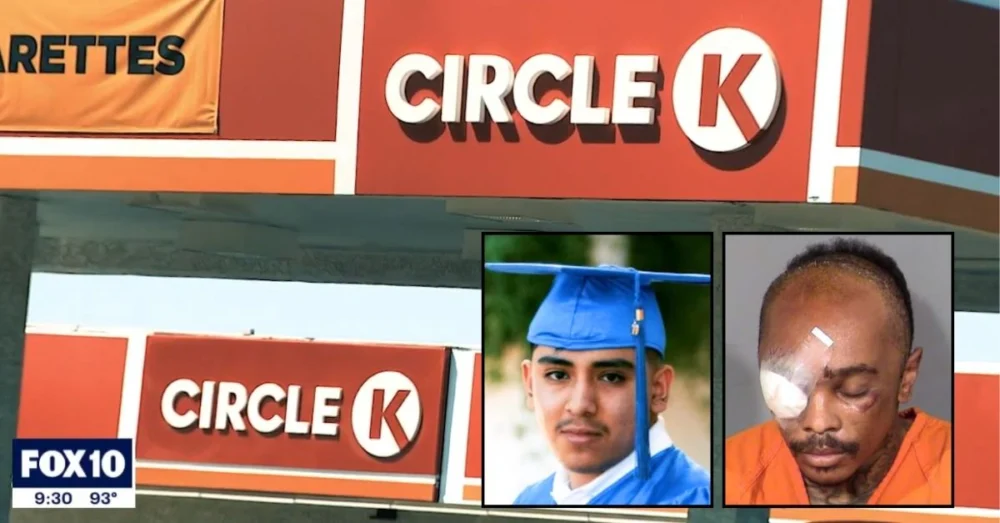
A Phoenix man, Timothy Bell, 35, has been sentenced to 49 years in prison for the unprovoked Christmas Eve 2020 murder of 18-year-old Tyler Cardiel, an honor student and recent high school graduate. Cardiel was shot dead while walking home from an overnight shift at a local Circle K convenience store. Bell, who pleaded guilty to second-degree murder, robbery, and weapons misconduct, told investigators he was angry, tired, and cold from sleeping on the street and decided to kill the first person he encountered. The tragic incident underscored the devastating consequences of random violence and left a family grappling with an unimaginable loss during what should have been a festive holiday season.
The Fateful Christmas Eve: A Night of Unspeakable Tragedy
The evening of December 24, 2020, began like many others for Tyler Cardiel, a diligent young man embarking on his post-high school journey. Having recently graduated with honors, Tyler was working an extra overnight shift at a Circle K convenience store in Phoenix, a common practice for many young adults striving for independence and contributing to their families. His mother, Monique Cardiel, recalled their last moments together, a poignant exchange etched forever in her memory. "It was his first Christmas away from us, so I was sad, and he was walking out the door and I looked at him and I was like ‘you have to go?’ and he was like ‘I’m just going to work. I’ll be back later,’ and he turned around and gave me a hug," she recounted in an interview with local Fox affiliate KSAZ in 2022. This tender farewell would tragically be their last.
After completing his shift, Tyler began the walk home, a routine journey he had likely made countless times. It was during this seemingly innocuous walk that his path intersected with Timothy Bell, a man consumed by anger and despair. Bell, then 35, was reportedly experiencing homelessness and the harsh realities of sleeping on the street, including the biting cold of a December night in Phoenix. According to police reports, Bell confessed to detectives that he was in a rage, tired and cold, and made the chilling decision to shoot the first person he saw. Tyler Cardiel, an innocent young man merely trying to get home, became that person. He was shot and killed without warning or provocation, his life extinguished in a senseless act of violence.
The immediate aftermath of the shooting saw Bell flee the scene. However, he was later found at a hospital, where he was being treated for a self-inflicted gunshot wound. It was there, under questioning by detectives, that Bell divulged the disturbing motive behind his actions, admitting he wanted to kill someone due to his overwhelming anger and frustration. The firearm used in the murder was subsequently identified as stolen, adding another layer of criminality to the already grave charges. Meanwhile, Tyler’s mother grew increasingly anxious as the hours passed without word from her son. Her texts and calls went unanswered, a silence that slowly morphed into a terrifying premonition of disaster. Her worst fears were confirmed when authorities delivered the devastating news of Tyler’s death.
A Life of Promise Interrupted: Who Was Tyler Cardiel?
Tyler Cardiel was more than just a victim; he was a promising young man with a future full of potential that was brutally stolen from him. An honor student, he had graduated from high school less than a year before his death, poised to embark on the next chapter of his life. His mother painted a vivid picture of a devoted son and a virtuous individual. "He was a good kid," Monique Cardiel stated in an interview with KTVK, a local independent TV station. "He had never gotten in trouble. He never went on his first date." These words underscore the profound innocence of a young man who had barely begun to experience life’s milestones.
Tyler’s commitment to his responsibilities, evident in his willingness to work an overnight shift on a holiday eve, spoke volumes about his character and work ethic. He was a cornerstone of his family, and his absence created an irreparable void. The community, upon learning of the circumstances surrounding his death, reacted with widespread grief and outrage, recognizing the immense tragedy of a bright young life extinguished so abruptly and without cause. His story became a stark reminder of the random nature of violence and the preciousness of every young life. The loss of Tyler Cardiel resonated deeply, not only within his immediate family but throughout the broader Phoenix community, serving as a poignant symbol of the innocent lives claimed by senseless acts of crime.
The Perpetrator: Timothy Bell’s Troubled Path
Timothy Bell, 35, presented a stark contrast to his victim. While his stated motives of anger, exhaustion, and the harshness of homelessness offer a glimpse into his state of mind, they in no way justify the egregious act of taking an innocent life. Bell’s confession to police detailed a mind overwhelmed by negative emotions, leading him to a desperate and violent decision. The use of a stolen firearm further highlighted his disregard for the law and the safety of others, demonstrating a pre-existing criminal inclination that escalated to murder.
During his court appearances, Bell made statements that struck many as contradictory to the gravity of his actions. "This is a tragic accident," he claimed before being sentenced. "I’m not the type of person that does this to innocent people," he insisted, adding, "I’m definitely an intelligent Black man and bettering myself every day, but this is a tragic accident. I never meant this to happen to anybody." These attempts to mitigate his responsibility and portray himself in a positive light stood in stark opposition to the cold, calculated decision he admitted to making on Christmas Eve. The court, however, saw through these claims, recognizing the premeditated nature of his decision to harm the first person he encountered, which culminated in Tyler Cardiel’s murder.

The Maricopa County Attorney’s Office, in a statement following the sentencing, accurately characterized Bell as someone responsible for "shooting and killing a stranger on the street with a stolen firearm." This description cut through Bell’s self-serving narrative, emphasizing the deliberate and criminal nature of his actions. Bell’s personal struggles, while potentially contributing to his mental state, could not absolve him of the responsibility for such a heinous crime, nor could they diminish the immeasurable pain he inflicted upon the Cardiel family.
The Judicial Process: Seeking Justice for Tyler
The legal proceedings following Tyler Cardiel’s murder moved through the Arizona justice system with a focus on accountability. Timothy Bell was swiftly identified and apprehended, largely due to his own actions leading him to a hospital and his subsequent confession. He was charged with several serious offenses, including second-degree murder, robbery, and weapons misconduct.
In January, Bell entered a guilty plea to these charges, a decision that spared the Cardiel family the prolonged agony of a full trial. While a plea agreement often involves concessions, in this case, it secured a substantial prison sentence, ensuring Bell would be held responsible for his actions. The sentencing hearing was a crucial moment for both the victim’s family and the pursuit of justice.
Bell received a cumulative sentence of 49 years in prison. This was broken down into 25 years for the second-degree murder charge, 14 years for the robbery charge, and an additional 10 years for weapons misconduct. The sentences were structured to run consecutively, reflecting the severity and multiple facets of his crimes. During the sentencing, Monique Cardiel delivered a powerful victim impact statement, expressing her profound grief and the enduring void left by her son’s death. "My son didn’t deserve this, he deserved to live," she stated, her words resonating with sorrow and a plea for justice. She also acknowledged the broader tragedy, stating, "And the way I see it I didn’t just lose my son — [Bell’s] mom lost him as well because now he’s going to be in trouble and gone." This demonstrated a heartbreaking empathy even amidst her own devastating loss. The outcome of the sentencing provided a measure of justice, though it could never truly heal the wounds inflicted by such a senseless act.
Broader Context: Crime, Homelessness, and Public Safety in Phoenix
Tyler Cardiel’s murder, while a unique tragedy, also serves as a stark illustration of broader societal issues confronting urban centers like Phoenix. The year 2020, marked by the onset of the COVID-19 pandemic, saw shifts in crime patterns across many U.S. cities, including an increase in certain categories of violent crime. According to data from the Phoenix Police Department and the FBI’s Uniform Crime Reporting (UCR) Program, Phoenix experienced an increase in homicides during this period, mirroring national trends. The randomness of Tyler’s killing, stemming from a perpetrator’s despair and anger, highlights the challenges of maintaining public safety in diverse urban environments where various social issues intersect.
Bell’s claim of homelessness and exposure to the elements also brings to light the ongoing crisis of homelessness in Maricopa County. Organizations like the Maricopa Association of Governments (MAG) and local service providers consistently report a significant number of individuals experiencing homelessness, many of whom struggle with mental health issues, substance abuse, and severe economic hardship. While these circumstances are never an excuse for violence, they underscore the complex social fabric that can, in extreme cases, contribute to desperate acts. Addressing homelessness and providing comprehensive support services are crucial for community well-being and, indirectly, for public safety.
Furthermore, the involvement of a stolen firearm in Tyler’s murder points to the persistent issue of illegal gun circulation and gun violence. Data from the Bureau of Alcohol, Tobacco, Firearms and Explosives (ATF) consistently shows that a significant number of firearms used in crimes are stolen. Efforts to reduce gun theft, enhance responsible gun ownership, and strengthen laws against illegal firearm possession are ongoing priorities for law enforcement and policymakers aimed at mitigating such tragedies. The intersection of these factors – violent crime trends, homelessness, and illegal firearms – creates a complex challenge for urban communities striving to protect their residents.
Official Responses and Community Impact
The Maricopa County Attorney’s Office, under whose jurisdiction this case fell, reiterated its commitment to justice following Bell’s sentencing. In an official statement, the office emphasized the profound impact of such acts: "This was a senseless and violent act that took an innocent life and forever changed a family. Our hearts are with the victim’s loved ones as they continue to cope with the unimaginable loss of someone taken too soon." These words reflect the gravity with which the justice system views such crimes and the responsibility it feels towards victims and their families. The Phoenix Police Department, through its diligent investigation, played a critical role in apprehending Bell and gathering the evidence necessary for prosecution, ensuring that accountability was achieved.
Beyond the legal ramifications, Tyler Cardiel’s death sent ripples through the Phoenix community. It served as a somber reminder of the fragility of life and the vulnerability of individuals, even in routine daily activities. For many, it sparked conversations about youth safety, the challenges faced by young workers, and the importance of community vigilance. It also brought attention to the broader societal issues of mental health crises and homelessness, and the urgent need for comprehensive solutions that address the root causes of despair and anger before they manifest in tragic violence. While the sentencing of Timothy Bell brought a measure of closure to the legal process, the profound loss of Tyler Cardiel continues to resonate, a poignant testament to a life of promise cut short and a community forever impacted by a senseless act of violence on a Christmas Eve. The memory of Tyler Cardiel endures as a powerful symbol of innocence lost and a call for continued efforts to build safer, more compassionate communities.


 Yuyun Lusiyani
 Joko Widodo
 Eva Lovia
 Pevita Pearce
 admin
admin
 Lina Irawan