
 Jia Lissa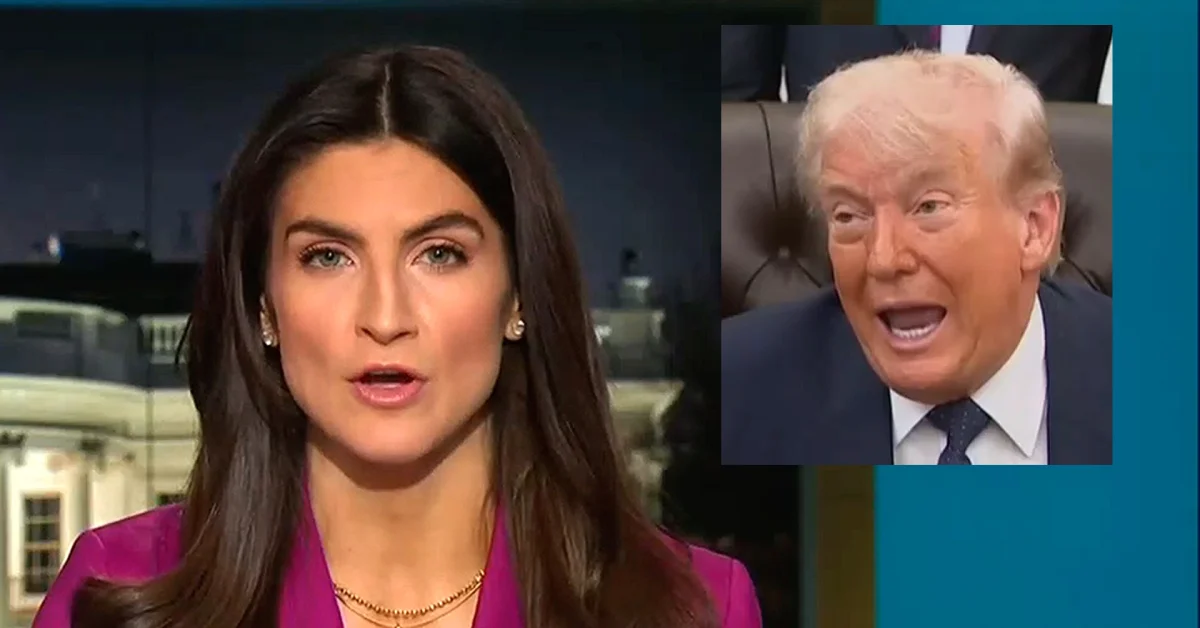
In a wide-ranging and contentious interview with Time magazine published on Thursday, October 1, 2026, President Donald Trump significantly intensified his ongoing rhetorical campaign against CNN anchor Kaitlan Collins. The President’s remarks, which characterized Collins as "crazy" and "unhappy," represent the latest escalation in a long-standing adversarial relationship between the commander-in-chief and one of the most prominent figures in cable news. During the interview, Trump also addressed the ongoing legal battles regarding his administration’s attempts to restrict White House access for several major news organizations, signaling that further exclusions may be on the horizon.
The President’s comments were framed within a broader critique of the American media landscape, a recurring theme of his second term. Trump asserted that he is the victim of a systemic bias, claiming that even his most significant achievements are met with negative coverage. "I never get fair press," Trump told Time. "Doesn’t have to be good. All it has to be is fair. So at a certain point, you say, ‘What’s the purpose of like this crazy Kaitlan Collins?’ She’s a very average person. She’s the most unhappy young person I’ve ever seen. If I did something spectacular by any standard, and they would write about it, they will only write badly."
A History of Friction: The Trump-Collins Timeline
The animosity between Donald Trump and Kaitlan Collins is not a new phenomenon; it is a relationship defined by years of public confrontations and professional friction. Collins, who rose to prominence as a White House correspondent for CNN before becoming the host of the network’s 9 p.m. program, has frequently been the target of the President’s ire due to her persistent questioning style.
The timeline of their public disputes dates back to July 2018, during Trump’s first term, when Collins was barred from an open-press event in the Rose Garden. At the time, the White House claimed her questions regarding the President’s former attorney, Michael Cohen, and Russian President Vladimir Putin were "inappropriate." This incident served as a precursor to the heightened tensions that would characterize their interactions in the years to follow.
The friction reached a new peak in July 2026, during the White House Correspondents’ Dinner. In a speech that many observers described as unusually sharp, Trump launched a personal screed against Collins, comparing her to various cultural figures and criticizing her demeanor. Since that event, the President has frequently mentioned Collins in his social media posts and during campaign-style rallies, often using the "unhappy" descriptor he reiterated in the Time interview.
The Legal Battle Over White House Access
Beyond personal insults, the Time interview touched upon the more substantive policy of the Trump administration regarding media access. Earlier in 2026, the administration announced a formal ban on journalists from CNN, MS NOW, and Politico, preventing them from entering the White House grounds or attending press briefings. The administration justified the move by labeling the outlets as "purveyors of fake news" and "enemies of the people."
This ban was recently met with a significant legal hurdle. A federal judge issued a temporary stay on the exclusion, allowing journalists from the affected outlets to regain access while the case proceeds through the court system. The judge’s ruling cited First Amendment protections and the precedent established in previous cases, such as Sherrill v. Knight, which held that the White House cannot arbitrarily deny press credentials.
In his interview with Time, Trump defended the ban and expressed his dissatisfaction with the judicial intervention. "They are just horrible people, and they’re so bad," Trump said, referring to the journalists from the barred organizations. "So I believe in a free press. I believe in an honest press, but I don’t believe in fake news."
The President also suggested that the list of banned organizations could soon grow. He specifically pointed to The New York Times as a potential candidate for exclusion, citing their reporting on the economic situation in Iran. "The New York Times keeps writing about how well [Iran is] doing," Trump remarked. "They have no money. They have no value of money. They have nothing going, and just fake news, fake news, and maybe they’ll be next."

Supporting Data: Media Trust and Polarization in 2026
The President’s rhetoric comes at a time of profound polarization in the American media landscape. According to 2026 data from the Pew Research Center, trust in national news organizations has reached a historic low, with a sharp divide along partisan lines. Approximately 78% of self-identified Republicans report "very little" or "no" trust in mainstream television news, while 64% of Democrats maintain a "fair amount" of trust.
Furthermore, ratings data for cable news shows a deeply fractured audience. Collins’ program on CNN remains a top performer for the network, particularly among younger demographics in urban centers. Conversely, the President’s preferred outlets and social media platforms continue to dominate the media diet of his core supporters. This "siloing" of information provides the context in which Trump’s attacks on journalists like Collins are received. For his base, the attacks are seen as a necessary challenge to a biased establishment; for his critics, they are viewed as an assault on the freedom of the press.
Reactions from Media Advocacy Groups and Legal Experts
The reaction to the Time interview from media advocacy groups was swift and critical. The White House Correspondents’ Association (WHCA) issued a statement shortly after the interview’s publication, defending Collins and the broader principle of press access.
"The President’s personal attacks on individual journalists are beneath the dignity of the office and serve only to undermine the constitutional role of the free press," the WHCA statement read. "Kaitlan Collins is a dedicated professional who performs a vital service by asking tough questions of those in power. Furthermore, the threat to ban additional news outlets like The New York Times is a direct challenge to the First Amendment. We will continue to fight for the right of all journalists to cover the White House without fear of retribution."
Legal experts have also weighed in on the implications of the President’s comments. Constitutional scholars note that while a President has the right to express his opinion about the media, using the power of the state to punish specific outlets for their coverage is a different matter.
"The Supreme Court has historically been very skeptical of any government action that discriminates against speakers based on the content or viewpoint of their speech," said Professor Elena Rodriguez of the Georgetown University Law Center. "If the administration attempts to expand its ban to include The New York Times because the President dislikes their reporting on Iran, they will likely face another immediate and successful legal challenge."
Broader Impact and Implications for Democracy
The ongoing conflict between the Trump administration and the press has broader implications for the functioning of American democracy. The role of the "Fourth Estate" is to act as a check on government power, a role that requires access to officials and the ability to report without government interference.
Analysis of the current political environment suggests that the administration’s strategy is twofold. First, by delegitimizing specific journalists and outlets, the administration creates a "shield" against negative reporting; if a story is critical, it is dismissed as "fake news" from an "unhappy" or "crazy" source. Second, the threat of revoking access serves as a form of pressure on newsrooms, potentially leading to self-censorship or a softening of critical coverage to maintain access to the White House.
However, the strategy also carries risks. The legal defeats the administration has suffered in the courts reinforce the independence of the judiciary and the strength of constitutional protections. Moreover, the constant friction with the press ensures that the President’s relationship with the media remains a central issue of his term, often overshadowing policy announcements or legislative goals.
As the legal battle over White House credentials moves toward the appellate courts, the rhetoric from both the President and his media targets shows no signs of cooling. The Time interview confirms that Donald Trump views his conflict with Kaitlan Collins and the broader press corps not merely as a series of skirmishes, but as a fundamental battle over the narrative of his presidency. With the potential for more outlets to be added to the administration’s "blacklist," the final months of 2026 are poised to be a definitive period for the future of press freedom in the United States.


 Yuyun Lusiyani
 Ana Megawati
 Joko Widodo
 Eva Lovia
 Pevita Pearce