
 Yuyun Lusiyani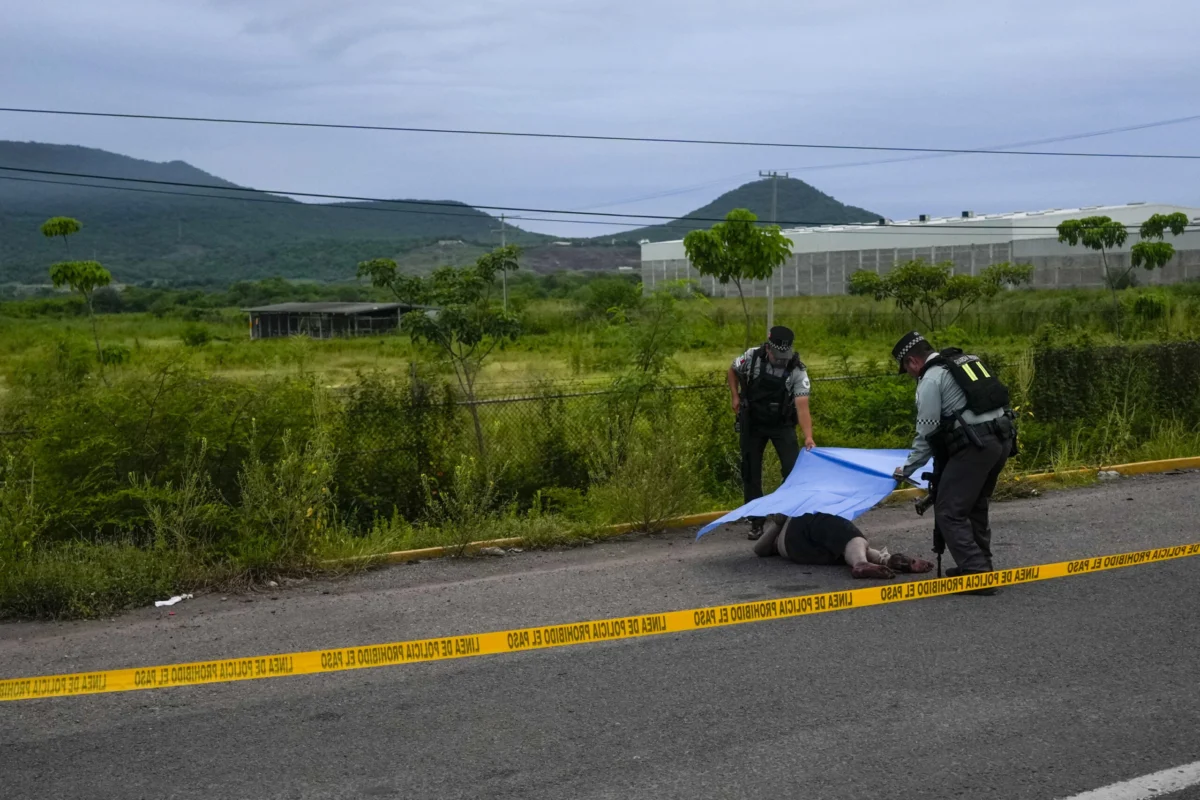
After months of escalating tensions between the United States and Mexico, primarily fueled by the Trump administration’s assertive stance and threats of unilateral action against Mexican drug traffickers, the two nations are now poised for a potentially unprecedented diplomatic and security showdown. At the heart of this burgeoning crisis is President Claudia Sheinbaum’s steadfast refusal to arrest and extradite Mexican officials who have been indicted in the United States on charges of drug corruption. This defiant position marks a significant departure from previous cooperation efforts and threatens to redefine the intricate dynamics of U.S.-Mexico bilateral relations.
The Indictments and Mexico’s Firm Rejection
On April 29, the U.S. Justice Department publicly announced indictments against ten current and former Mexican officials, accusing them of complicity in the illicit drug trade. While a comprehensive presentation of evidence from U.S. prosecutors is still awaited, the initial announcement sent shockwaves through Mexico City and Washington D.C. Among the most prominent figures named is Rubé́n Rocha Moya, the sitting governor of Sinaloa state, a region historically synonymous with Mexico’s powerful drug cartels. Rocha Moya is not only a key ally of President Sheinbaum but also a high-profile member of her ruling leftist political party, the National Regeneration Movement (Morena).
President Sheinbaum has adopted an unyielding stance against extraditing Rocha Moya and the other nine individuals charged in a New York federal court. A senior Mexican official, speaking anonymously due to the sensitivity of the matter, confirmed this resolve: "She is very clear about this. She has decided no." This categorical rejection places the Trump administration in a critical test of its policy objectives in Mexico, forcing a direct confrontation over the deep-seated corruption that has long underpinned Mexico’s vast illegal drug trade.
A History of Cooperation and Its Shifting Tides
For years, the U.S. has pressured Mexico to intensify its fight against organized crime. The Trump administration, in particular, has consistently elevated the drug issue, often coupling it with implicit or explicit threats of severe economic penalties should Mexico fail to align with U.S. counter-narcotics efforts. This pressure had, until recently, yielded significant operational successes.

Following a period under Sheinbaum’s political mentor, former President Andrés Manuel López Obrador, where there was a perceived strategic disengagement from direct confrontation with drug mafias, President Sheinbaum’s administration had notably ramped up security operations. Mexican security forces, working in close collaboration with U.S. intelligence and law enforcement agencies, achieved notable victories. These included the destruction of numerous clandestine drug laboratories, the seizure of substantial caches of narcotics, and the successful killing or capture of several high-ranking cartel bosses. Furthermore, Sheinbaum’s government had bypassed the formal extradition treaty process to hand over at least 92 accused traffickers sought by the United States, a move that demonstrated a pragmatic approach to cooperation. Crucially, these extraditions occurred without the vocal concerns regarding the sufficiency of U.S. evidence that are now being cited in the Rocha Moya case.
However, U.S. officials privately concede that despite these intensified efforts, the bilateral counter-drug campaign has largely focused on tactical strikes and short-term gains. It has lacked a cohesive, longer-term strategy aimed at fundamentally undermining organized crime groups, confronting pervasive corruption at its roots, or substantially strengthening Mexico’s beleaguered criminal justice system.
The U.S. Strategic Dilemma: Push or Placate?
To many senior Trump administration officials, particularly within the Justice Department and the White House, tackling high-level corruption is not merely a desirable outcome but a crucial next step in the broader war on drugs. These officials, who spoke on condition of anonymity to discuss internal policy deliberations, contend that U.S. prosecutors must aggressively pursue these cases, especially if Mexico is unwilling to act domestically. The argument is that systemic corruption enables cartels to operate with impunity, rendering other enforcement efforts less effective.
Yet, this aggressive stance is not universally embraced within U.S. policy circles. Some diplomatic and intelligence officials express considerable caution, viewing President Sheinbaum’s political position as potentially precarious. They fear that a forceful demand for her to confront her own party’s entrenched "old guard" could backfire, potentially prompting a significant rollback in Mexico’s crucial cooperation on both drug enforcement and immigration policies. The delicate balance between demanding accountability and preserving strategic partnership forms the crux of the U.S. policy debate.
López Obrador’s Shadow and Morena’s Concerns
The U.S. policy debate is further complicated by a persistent question that continues to preoccupy Mexico’s political establishment: To what extent does President Sheinbaum truly exercise independent authority from her powerful political mentor, former President Andrés Manuel López Obrador? López Obrador, who founded the Morena party, remains an immensely influential figure within Mexican politics, often referred to as a "comandante" by his loyalists.

After maintaining a relatively low profile regarding Mexico’s evolving relationship with Washington, López Obrador abruptly re-entered the public discourse on June 3. In a blistering attack, he dismissed the New York indictments as a mere pretext, claiming U.S. officials were deliberately using drug corruption allegations to weaken Morena and bolster the right-wing opposition in Mexico. He asserted that this was an attempt to reinstall a "submissive, corrupt, mafioso and cruel government" more amenable to Washington’s "interventionist designs."
President Sheinbaum, while attempting to respectfully minimize the impact of her predecessor’s strong words, has done little to dispel suspicions about López Obrador’s continued influence. Current and former Mexican officials privately acknowledge that his public missive, despite its supportive tone towards Sheinbaum, reinforced the perception that he continues to pull strings within her administration.
Many analysts of Mexican politics believe Sheinbaum’s unyielding response to the Rocha Moya indictment is rooted in a profound fear: that if any of the accused officials were to cooperate with U.S. authorities in the Sinaloa case or other ongoing investigations, the Trump administration could then target other high-ranking Morena leaders, including key allies of López Obrador himself. Eduardo Guerrero, a Mexican security expert, articulated this concern, stating, "I think the message from Andrés Manuel was, ‘Claudia, you have to stop this or they are going to destroy us.’" However, Guerrero also warned of the reciprocal risk: "But the longer she waits to turn Rocha over, the tougher the punishment from the United States is going to be."
The Sinaloa Nexus: Rocha Moya and the Cartel’s Reach
Rubé́n Rocha Moya’s election as governor of Sinaloa in 2021 was contentious from the outset. A former teachers’ union organizer and a close confidant of then-President López Obrador, Rocha Moya was known for his political acumen. However, his campaign was heavily criticized by opposition parties and civic groups who alleged blatant interference by criminal gangs. Reports detailed widespread intimidation of voters, ballot box stuffing, and the kidnapping and threatening of numerous opposition candidates. Despite detailed complaints lodged with Mexico’s electoral authorities, both López Obrador and Sheinbaum staunchly defended Rocha Moya. While Rocha Moya himself denied any direct ties to the mafias, he controversially suggested during a television interview that it would be "impossible to govern the state without somehow coordinating with them. You have to find a way to do it." This statement raised immediate red flags about the depth of cartel influence within the state’s political fabric.
The allegations of Rocha Moya’s links to drug traffickers exploded dramatically in July 2024. In a stunning turn of events, a son of Joaquín Guzmán Loera, the infamous imprisoned drug lord known as El Chapo, kidnapped his father’s long-time partner in the Sinaloa cartel, Ismael Zambada García, also known as "El Mayo." The son, Joaquín Guzmán López, then reportedly flew Zambada across the U.S. border, delivering him to U.S. agents on an airstrip in New Mexico, before surrendering himself to authorities.
In a statement released by his lawyer, Zambada claimed he was abducted outside Culiacán, the Sinaloa state capital, after being lured to a meeting with Rocha Moya and a Sinaloa congressman, Hé́ctor Cué́n. Zambada alleged that the purpose of the meeting was for him to mediate a dispute between the two officials. Instead, he claimed betrayal by Guzmán López, while Cué́n, whom Zambada described as "a longtime friend," was murdered. Rocha Moya vehemently denied any involvement in the episode, stating he was traveling in Los Angeles at the time. A spokesperson for the Sinaloa state government, from which Rocha Moya has since taken a leave of absence, declined to comment on the accusations.

Following these dramatic surrenders, both Joaquín Guzmán López and his brother Ovidio, who was extradited to the United States in 2023, have reportedly provided federal prosecutors with extensive accounts of their relationships with various Mexican government figures. Law enforcement officials indicate that at least one of their former lieutenants has also cooperated. Investigators in New York further obtained detailed ledgers of the cartel’s bribe payments, which were extensively referenced in the indictment against Rocha Moya.
U.S. officials revealed that following Zambada’s capture, López Obrador’s government made repeated inquiries for information on what Zambada and the "Chapitos" (as Guzmán’s sons are known) might be revealing to U.S. investigators. However, prosecutors largely held back, only fully revealing their hand with the formal indictment. The indictment explicitly stated, "As he had promised, since he was elected governor, and in exchange for the Chapitos’ support in his election, Rocha Moya has allowed the Chapitos to operate with impunity in Sinaloa." It further detailed that Rocha Moya had personally met with the Chapitos’ leaders, allowed them to appoint corrupt law enforcement officials within his administration, accepted bribes, provided operational impunity, arrested their rivals, facilitated their release from jail, and warned them of U.S.-supported law enforcement operations. Rocha Moya has consistently denied these grave allegations.
Sheinbaum’s Defiance and the Precedent of Cienfuegos
Barely a day after the New York federal court unsealed the indictment, President Sheinbaum publicly dismissed the U.S. evidence as insufficient. She suggested that the suspects could be investigated within Mexico but affirmed that her administration would not act without "overwhelming and irrefutable proof" of their guilt. This stance is particularly contentious because provisional arrest requests, often a precursor to formal extradition, are typically granted as a matter of routine international legal cooperation. Under existing treaties, the requesting country usually has 60 days to present more detailed evidence after an initial arrest. However, Sheinbaum argued that the indictment and other Justice Department documents provided to Mexico did not meet the threshold to justify the U.S. request for arrest.
Initially, some U.S. diplomats harbored skepticism about the New York prosecutors’ heavy reliance on imprisoned traffickers as primary witnesses in such a politically sensitive case, according to officials familiar with the matter. However, this calculus has reportedly shifted with recent developments.
In a significant turn, Gerardo Mérida, the former Sinaloa secretary of public safety and one of the accused, surrendered to U.S. marshals at the Arizona border on May 11. Mérida, a retired army general accused of receiving over $100,000 monthly from the cartel while in office, initially pleaded not guilty in New York. However, an official familiar with the matter indicated that Mérida later signaled a willingness to cooperate with the investigation in exchange for leniency. Sarah Krissoff, Mérida’s court-appointed attorney, did not respond to requests for comment on his status. A second suspect, former Sinaloa finance secretary Enrique Díaz Vega, is also believed to have surrendered to U.S. authorities, though the Justice Department has not officially confirmed this. Nicholas Biase, a spokesperson for the U.S. attorney for the Southern District of New York, declined to comment on the status of either suspect.
Months prior, current and former U.S. officials recalled that Sheinbaum’s influential security chief, Omar García Harfuch, had privately assured American diplomats of the Mexican president’s commitment to tackling corruption and her readiness to prosecute officials from her own party to demonstrate her resolve. Since the Rocha Moya indictment, however, Sheinbaum’s rhetoric has dramatically shifted, accusing Washington of egregious interference in Mexico’s internal affairs. "An action of this magnitude has no precedent in the history of our bilateral relationship," Sheinbaum declared at a political rally in late May. "When they dictate from abroad who is guilty and who is not, that is no longer cooperation. We are talking about interference!"

Aides close to President Sheinbaum have begun to subtly suggest that Mexico could indeed scale back anti-narcotics cooperation if Washington pushes too aggressively on the Rocha Moya case, according to two U.S. officials. While the ultimate feasibility of such a threat remains to be seen, similar tactics have proven effective for Mexico in the past. A notable precedent occurred in late 2020 when U.S. agents arrested Mexico’s former defense minister, Gen. Salvador Cienfuegos Zepeda, in Los Angeles. Former Attorney General William Barr controversially dropped the case and returned Cienfuegos to Mexico after López Obrador threatened to severely curtail Mexico’s counter-drug cooperation.
Despite this American concession, López Obrador capitalized on the incident to dismantle several joint counter-drug programs and pushed through a new national security law that significantly restricted the operations of U.S. agents in Mexico. Later, with the Biden administration primarily focused on maintaining Mexico’s cooperation on immigration, López Obrador completely abandoned the so-called Mérida Plan, the 14-year bilateral initiative aimed at jointly combating drug trafficking and strengthening the Mexican criminal justice system.
Broader Implications and an Uncertain Future
The current standoff signals a critical juncture in U.S.-Mexico relations. Jorge G. Castañeda, a former Mexican foreign minister, drew a stark contrast between the current U.S. administration and previous ones. "But these guys are not Biden," he remarked in an interview, referring to the Trump administration. Castañeda noted that while Sheinbaum’s predecessors could generally rely on U.S. leaders to prioritize Mexico’s stability above other interests, "Trump just doesn’t care." This perception of a less predictable and more transactional U.S. approach adds another layer of complexity to an already tense situation.
The implications of this confrontation are far-reaching. For the United States, a failure to secure the extradition of officials indicted for drug corruption could severely undermine its anti-narcotics strategy, particularly its efforts to target the structural corruption that enables cartels. It could also set a dangerous precedent, emboldening other nations to resist U.S. extradition requests for politically connected individuals. For Mexico, Sheinbaum’s defiance, while potentially bolstering her domestic political standing and asserting national sovereignty, risks alienating a crucial security partner. A significant reduction in bilateral anti-narcotics cooperation could weaken Mexico’s capacity to combat increasingly powerful and violent cartels, potentially leading to greater instability and violence within its borders.
Furthermore, the dispute could impact broader economic and immigration cooperation, areas where both nations have vital shared interests. The U.S. relies heavily on Mexico for managing migration flows, and any disruption in this cooperation could have significant consequences at the border. Economically, the two countries share one of the world’s most integrated supply chains, and prolonged diplomatic friction could introduce uncertainty for businesses.
As the Trump administration steps up its rhetoric and potential actions, and President Sheinbaum stands firm on her refusal, the coming months will reveal whether this diplomatic impasse can be resolved through negotiation or if it will devolve into a more profound rupture, with unpredictable consequences for both nations and the broader regional security landscape. The high-stakes game of political will and national sovereignty versus international law enforcement cooperation is set to define a new chapter in U.S.-Mexico relations.

 Jia Lissa
 Joko Widodo
 Eva Lovia

 Pevita Pearce