
 admin
admin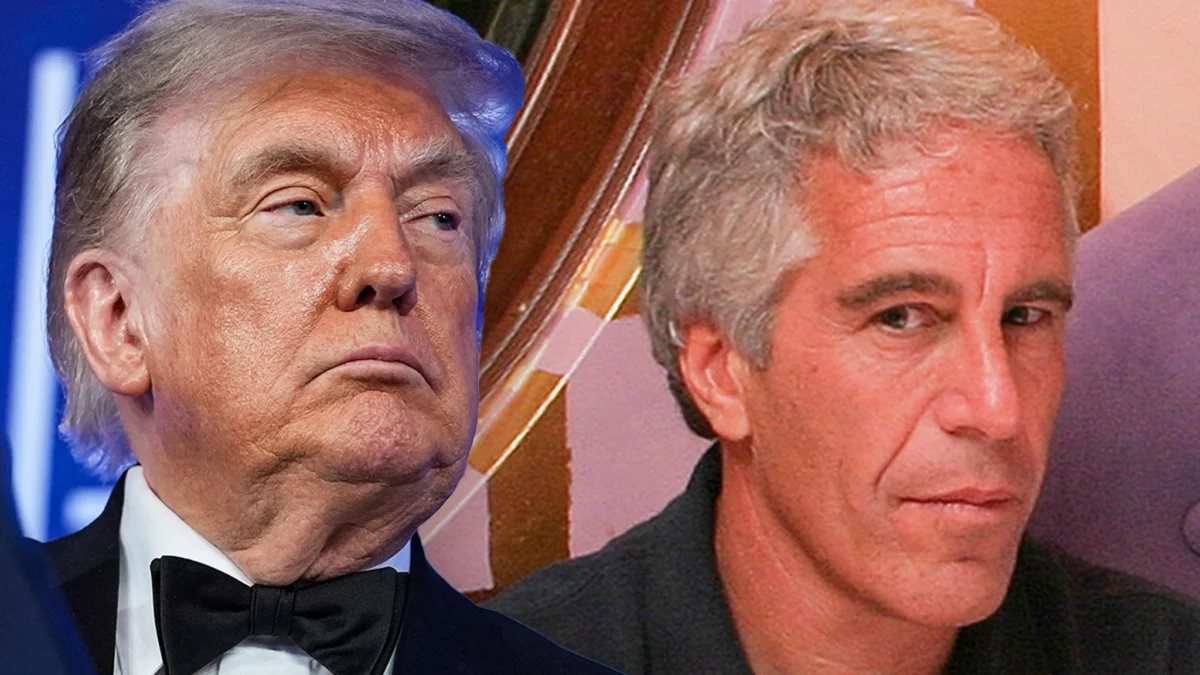
The usually convivial atmosphere of the White House Correspondents’ Dinner, a traditional gathering celebrating journalism and the free press, was punctuated by a moment of palpable tension and widespread discomfort on Friday night, July 24, 2026, as President Donald Trump reacted to the mention of Jeffrey Epstein. The incident unfolded during the presentation of the prestigious Katharine Graham Award for Courage and Accountability, which was bestowed upon The Wall Street Journal for its groundbreaking investigative reporting into President Trump’s past associations with the late convicted financier and sex offender, Jeffrey Epstein.
The Illustrious Setting: A Night for Media and Politics
The White House Correspondents’ Dinner, held annually in Washington D.C., serves as a unique intersection of media, politics, and celebrity. Hosted at the Waldorf Astoria hotel, the event typically features a blend of humor, tributes to journalistic excellence, and a rare opportunity for the President to engage, often playfully, with the press corps. Historically, the dinner has been a platform for presidents to deliver witty remarks and for journalists to be recognized for their contributions. However, under President Trump’s administration, the relationship between the White House and the press has often been strained, with the President famously having boycotted the dinner during previous terms. His attendance at the 2026 event was already a subject of considerable media attention, setting a complex backdrop for the evening’s proceedings. The dinner, designed to underscore the importance of a free and robust press, became a stage for a stark illustration of the ongoing tensions and the critical role of investigative journalism in a politically charged environment.
An Award for Courage: The Wall Street Journal’s Epstein Investigation
The focal point of the evening’s tension emerged when CNN anchor Wolf Blitzer, serving as the presenter for the Katharine Graham Award, began to detail the achievements of the recipient: The Wall Street Journal. The award, named after the legendary publisher of The Washington Post, honors journalistic endeavors that demonstrate exceptional courage and commitment to accountability, often in the face of significant pressure. Blitzer lauded The Journal for its "big scoop" on President Trump’s past relationship with Jeffrey Epstein, a story that, according to Blitzer, was instrumental in triggering the subsequent release of the extensive "Epstein files" – thousands of pages of documents that might otherwise have remained hidden from public scrutiny.
The Wall Street Journal’s investigation delved into the intricacies of Trump’s connections with Epstein, shedding light on interactions and associations that predated Epstein’s public scandals and subsequent arrests. The reporting was characterized by its meticulous detail and its willingness to pursue a sensitive story involving a sitting president. Central to their findings was the revelation of a provocative letter allegedly bearing Trump’s signature, included in a photo album given to Epstein for his 50th birthday. This letter reportedly featured a drawing of a naked woman, adding a salacious and controversial dimension to the already complex narrative of their relationship. The Journal’s decision to publish this story, despite the significant legal and political ramifications, underscored the very essence of the Katharine Graham Award.
The President’s Reaction: Smiles, Shrugs, and a $20 Billion Lawsuit
As Blitzer recounted the details of The Wall Street Journal’s brave reporting, the camera, and indeed many eyes in the room, turned to President Trump, seated nearby in the packed ballroom. Blitzer did not shy away from detailing the extraordinary pressures faced by the newspaper. He explicitly mentioned that President Trump had filed a staggering $20 billion lawsuit against The Wall Street Journal in response to their reporting. This lawsuit, a significant legal challenge, was already a subject of intense debate regarding its implications for press freedom.

However, the revelation that truly amplified the awkwardness of the moment was Blitzer’s disclosure that the lawsuit filed by the President included the home address of Khadeeja Safdar, one of the primary reporters on the groundbreaking Epstein story. Blitzer further informed the audience that Safdar’s family had been forced to relocate as a direct consequence of their personal address being made public through official legal channels. This detail sent a ripple through the room, highlighting the very real and personal risks undertaken by investigative journalists.
In response to these deeply serious revelations, President Trump’s demeanor was notably understated and, for many, perplexing. He was observed to "just smiled and shrugged his shoulders" after Blitzer’s announcement. This seemingly casual reaction to the news of a journalist’s family being forced to move due to a lawsuit he initiated was widely perceived as dismissive and insensitive. The contrast between the gravity of Blitzer’s statements and the President’s placid expression created a profound sense of discomfort among attendees and observers.
The "Awkward" Handshake and Its Optics
The moment reached its climax when Khadeeja Safdar, the journalist whose safety had been directly impacted by the President’s lawsuit, approached the stage to accept her award. After Blitzer presented the honor, President Trump reportedly rose from his seat, walked over, and shook Safdar’s hand. This interaction, captured by cameras and described by many as "awkward," presented a striking tableau. On one side stood the journalist, honored for her courage in investigating the President, whose legal actions had directly endangered her. On the other, the President, who had initiated the lawsuit and appeared outwardly unperturbed by its consequences for Safdar.
The handshake symbolized a tense and complex dynamic: the formal recognition of journalistic excellence juxtaposed with the aggressive legal and personal challenges posed by the subject of that journalism. It forced a public confrontation, however brief and silent, between accountability and power, between the pursuit of truth and the attempt to suppress it. For many, the interaction was a visual representation of the deep chasm that often exists between political leadership and the Fourth Estate.
The Broader Context: Jeffrey Epstein, The Files, and Presidential Denials
The backdrop to this moment is the enduring and deeply unsettling saga of Jeffrey Epstein. A wealthy financier with connections to numerous powerful figures, Epstein was convicted of sex offenses and later died in jail while awaiting trial on new charges. His death sparked widespread conspiracy theories and an intensified focus on his network of associates. The "Epstein files" refer to a trove of documents, court records, and testimonies related to Epstein’s activities and the individuals implicated in his orbit. Their release has been a significant public interest event, promising to shed further light on a dark chapter.
President Trump’s past relationship with Epstein has been a recurring subject of media scrutiny. Prior to this dinner, President Trump had publicly declared the Epstein Files to be a "hoax," a statement that directly contradicted the findings of The Wall Street Journal’s reporting and Wolf Blitzer’s assertion that the Journal’s work had "triggered the release" of these very files. This public dismissal of the files as a fabrication underscored a broader pattern of challenging established narratives and questioning the legitimacy of investigations that touch upon his past. The juxtaposition of his past denial with Blitzer’s statement at the dinner further highlighted the contentious nature of the Epstein topic for the President.
Implications for Press Freedom and Journalistic Safety
The events at the White House Correspondents’ Dinner carry significant implications for press freedom and the safety of journalists. The inclusion of a reporter’s home address in a presidential lawsuit, leading to their forced relocation, represents a serious escalation in tactics aimed at intimidating the press. Such actions are widely condemned by press freedom organizations as having a chilling effect on investigative journalism, potentially deterring reporters from pursuing stories critical of powerful figures due to fear for their personal safety and that of their families.
The Katharine Graham Award itself, by recognizing Safdar’s work, served as a powerful counter-narrative, reaffirming the journalistic community’s commitment to courage and accountability even in the face of direct threats. The evening became a stark reminder of the essential, yet often perilous, role of a free press in a democratic society. It highlighted the responsibility of media organizations to uphold their duty to inform the public, and the challenges they face when powerful individuals seek to silence or discredit them through legal means or personal intimidation.
Public Reaction and Future Ramifications
The "awkward Epstein moment" at the White House Correspondents’ Dinner is likely to resonate for some time, shaping public discourse around journalistic integrity, presidential accountability, and the boundaries of political engagement with the media. For supporters of President Trump, his reaction might be interpreted as a defiant dismissal of what they perceive as politically motivated attacks. For critics, it will likely reinforce concerns about his administration’s approach to the press and his personal conduct.
The incident underscores the continuing public fascination and concern regarding the Jeffrey Epstein scandal and the persistent questions surrounding the associations of prominent figures. It also places a renewed spotlight on the White House Correspondents’ Dinner itself, questioning its future role as a forum for both celebration and confrontation in an increasingly polarized political landscape. The 2026 dinner will undoubtedly be remembered not just for its toasts and roasts, but for a singular, deeply uncomfortable moment that laid bare the ongoing struggle between power and the press. The image of the President smiling and shrugging while a journalist, whose family was uprooted by his actions, received an award for courage, serves as a powerful and enduring symbol of this complex relationship.


 Yuyun Lusiyani
 Joko Widodo
 Eva Lovia
 Pevita Pearce

 Lina Irawan