
 admin
admin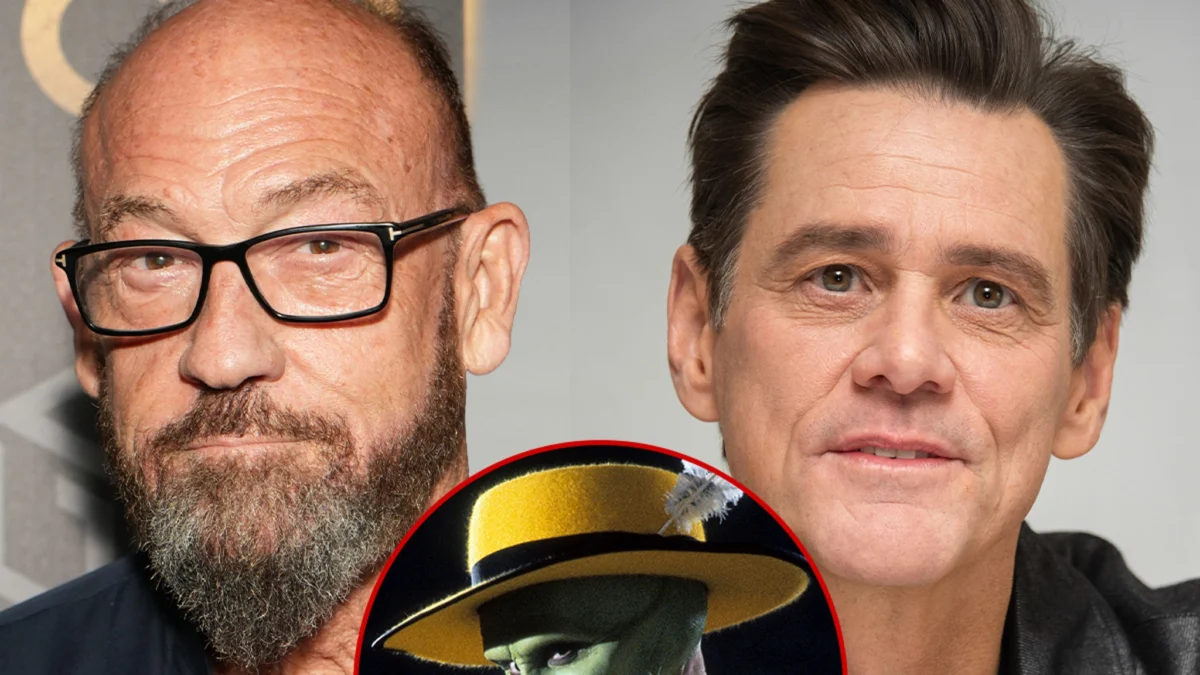
Filmmaker Chuck Russell, the visionary director behind the 1994 blockbuster The Mask that famously catapulted Jim Carrey into global superstardom, has passed away unexpectedly at the age of 74. News of his death, which occurred Wednesday at his San Diego-area home following an unspecified medical emergency, has prompted a deeply personal and heartfelt tribute from Carrey, who credits Russell with fostering an unparalleled creative environment that defined a pivotal moment in his career.
Jim Carrey, in a statement provided to TMZ, expressed profound sorrow over Russell’s sudden passing, emphasizing the unique connection they forged during the production of The Mask. "I consider it a privilege to have worked with Chuck Russell, who, during the shooting of ‘The Mask,’ created an ebullient, childlike atmosphere of wonder and camaraderie on his set," Carrey stated. His words painted a vivid picture of a director who transcended mere instruction, instead cultivating an inspiring and playful spirit that permeated every aspect of the film’s creation. Carrey continued, "The entire cast and crew were touched and inspired by his playfulness. Every one of us has been many years blessed by that buoyant and timeless moment. I consider ‘The Mask’ one of the jewels of my creative life. Thank you, Chuck." This tribute underscores not only Carrey’s personal admiration for Russell but also the enduring professional legacy of a film that remains a cornerstone of 90s cinema.
The Genesis of a Blockbuster: Crafting The Mask‘s Unique Vision
The profound impact Chuck Russell had on Jim Carrey’s career cannot be overstated, particularly when considering the landscape of Hollywood comedy in the early 1990s. The Mask was a gamble, an adaptation of a darker, more violent comic book series from Dark Horse Comics, reimagined by Russell into a vibrant, anarchic comedy. Russell’s directorial vision for the film was ambitious: to blend live-action performance with cutting-edge visual effects, all while maintaining a comedic tone that could showcase Carrey’s unparalleled physical comedy.
Carrey, at the time, was a rising star known for his energetic performances on In Living Color and the recent, unexpected success of Ace Ventura: Pet Detective. However, The Mask offered a different canvas. It required him to embody a character that was literally larger than life, transforming from the mild-mannered Stanley Ipkiss into a cartoonish, green-faced id unleashed. Russell’s genius lay in understanding how to harness Carrey’s boundless energy and rubber-faced expressions, integrating them seamlessly with groundbreaking CGI. He didn’t just direct Carrey; he collaborated with him to push the boundaries of performance and special effects in a way that had rarely been seen.
The "ebullient, childlike atmosphere" Carrey described was crucial. Filming a movie that relied so heavily on nascent digital effects could have been a sterile, technical process. Instead, Russell fostered an environment where creativity flourished, encouraging improvisation and a sense of wonder. This approach allowed Carrey to fully immerse himself in the exaggerated reality of the Mask character, making the impossible seem not only plausible but hysterically funny. The camaraderie on set, a direct result of Russell’s leadership, translated into the film’s infectious energy, making it resonate deeply with audiences worldwide.
Chuck Russell’s Illustrious Directorial Legacy: A Career Across Genres
Born in Chicago, Illinois, Chuck Russell cultivated a distinguished career as a film director, screenwriter, and producer, leaving an indelible mark across various genres. A proud alumnus of the University of Illinois Urbana-Champaign, Russell’s journey in filmmaking began with a strong foundation, which he soon applied to genre-defining projects.
He made his directorial debut in 1987 with A Nightmare on Elm Street 3: Dream Warriors. This entry in the iconic horror franchise is widely regarded by fans and critics alike as one of the strongest sequels, praised for its imaginative dream sequences, enhanced special effects, and a more engaging narrative that expanded the lore of Freddy Krueger. Russell not only directed but also co-wrote the screenplay, demonstrating his early talent for crafting compelling genre narratives. The film was a critical and commercial success, grossing over $44 million on a modest budget, solidifying Russell’s reputation within the horror community.
Following this success, Russell continued his foray into horror, writing and directing the cult classic remake of The Blob in 1988. This film, known for its practical effects and visceral creature design, garnered a dedicated following for its faithfulness to the original B-movie spirit while updating it for a modern audience. The Blob showcased Russell’s ability to handle intense visual storytelling and maintain suspense, skills that would prove invaluable in his later, more effects-heavy productions.
The pivot to The Mask in 1994 marked a significant shift in Russell’s career trajectory, proving his versatility beyond the horror genre. The film’s immense success, grossing over $351 million worldwide against a $23 million budget, established him as a director capable of helming large-scale blockbusters that blended intricate storytelling with spectacular visuals. This film not only became a cultural phenomenon but also a testament to Russell’s ability to inspire groundbreaking performances and technical innovation.
Russell continued to direct high-profile action films, including Eraser (1996), starring Arnold Schwarzenegger, which earned over $242 million globally. He also directed The Scorpion King (2002), a spin-off from The Mummy franchise starring Dwayne "The Rock" Johnson in his first leading role. The Scorpion King further demonstrated Russell’s knack for crafting entertaining action spectacles, grossing over $180 million worldwide. His filmography also includes Collateral Damage (2002) and I Am Wrath (2016), showcasing a consistent engagement with action and thriller elements. His final directorial and writing credit was the 2024 remake of the 1986 horror film Witchboard, bringing his career full circle back to the genre where he first made his mark.
Innovations in Visual Effects: A Groundbreaking Achievement
One of the most significant aspects of Chuck Russell’s legacy, and particularly his work on The Mask, lies in his pioneering efforts in visual effects. The film was not just a comedic triumph; it was a technical marvel that pushed the boundaries of what was possible with computer-generated imagery (CGI) in mainstream cinema. Russell’s collaboration with George Lucas’s Industrial Light and Magic (ILM), the renowned visual effects company, was instrumental in creating the film’s iconic look and feel.
At a time when CGI was still in its relative infancy – Jurassic Park had only just premiered the year before, dazzling audiences with its photorealistic dinosaurs – The Mask ventured into new territory. Instead of aiming for realism, Russell and ILM used CGI to achieve exaggerated, cartoonish effects that were perfectly integrated with live-action performance. This was a radical departure, allowing Carrey’s character to stretch, contort, and perform physics-defying feats reminiscent of classic Looney Tunes cartoons, but with a level of seamlessness previously unimaginable.
The "groundbreaking digital technologies" employed involved extensive planning and execution to combine Carrey’s physical comedy, prosthetics, and digital enhancements. ILM artists meticulously crafted the transformations, the stretchy, elastic movements, and the vibrant, expressive face of the Mask. For instance, the famous scene where the Mask pulls out a giant mallet from his pocket, or his rapid-fire costume changes, were feats of early CGI that captivated audiences and critics alike. This pioneering work earned The Mask an Academy Award nomination for Best Visual Effects, a testament to the technical ingenuity and artistic vision that Russell championed.
The film’s success in blending live-action with such dynamic, character-driven CGI demonstrated the vast potential of digital effects beyond mere spectacle. It showed that CGI could be a powerful tool for enhancing character, comedy, and narrative, rather than just a standalone attraction. This approach influenced countless films that followed, broadening the scope of what filmmakers considered achievable with special effects, particularly in the realm of fantastical and comedic storytelling.
Jim Carrey’s Ascendance to Stardom: The "Triple Crown" of 1994
The year 1994 is often cited as Jim Carrey’s breakout year, a truly unprecedented period in Hollywood history where he released three major blockbusters in rapid succession: Ace Ventura: Pet Detective, The Mask, and Dumb and Dumber. While Ace Ventura first introduced Carrey as a leading man, it was The Mask, directed by Chuck Russell, that solidified his unique brand of physical comedy and cemented his status as a global phenomenon.
Prior to 1994, Carrey had gained recognition for his sketch comedy on In Living Color and a few smaller film roles. However, the triple release transformed him from a comedic actor to a bona fide movie star capable of opening films. Ace Ventura: Pet Detective, released in February 1994, surprised many with its box office success, earning over $107 million worldwide against a $15 million budget. It showcased Carrey’s outrageous humor and signature facial contortions.
Just five months later, in July 1994, The Mask hit theaters. This film allowed Carrey to fully unleash his physical prowess and comedic genius, amplified by Russell’s directorial vision and ILM’s visual effects. The character of Stanley Ipkiss, and especially his alter-ego the Mask, became iconic. Carrey’s performance was lauded for its energy, creativity, and seamless integration with the groundbreaking special effects. The Mask‘s global gross of over $351 million made it one of the highest-grossing films of the year and cemented Carrey as a household name.
The hat trick was completed in December 1994 with the release of Dumb and Dumber. Directed by the Farrelly Brothers, this buddy comedy further showcased Carrey’s ability to inhabit deeply silly, yet endearing characters. It too was a massive commercial success, earning over $247 million worldwide.
This unprecedented "triple crown" year was pivotal. The Mask, in particular, was crucial because it demonstrated Carrey’s versatility and his ability to carry a big-budget, effects-driven movie. It proved he could adapt his comedic style to different narrative demands while retaining his distinct appeal. The film allowed him to explore a broader range of comedic expression, from slapstick to more nuanced character development, all within a visually spectacular framework. Without Russell’s guidance and the creative environment he fostered, The Mask might not have achieved its groundbreaking status, and Carrey’s trajectory might have taken a different path. It provided the platform for him to showcase the full extent of his talent, leading to subsequent successful roles and a sustained career as one of Hollywood’s most beloved comedic actors.
The Enduring Cultural Impact of The Mask
Beyond its box office success and technical achievements, The Mask has left an enduring cultural footprint that continues to resonate decades after its release. The film’s vibrant aesthetic, memorable catchphrases ("Ssssmokin’!"), and Jim Carrey’s iconic performance have cemented its place in popular culture.
The character of the Mask became instantly recognizable, spawning an animated television series (which ran from 1995 to 1997), video games, and a vast array of merchandise. Its influence can be seen in subsequent comedy films that have attempted to blend over-the-top character transformations with special effects, though few have achieved the same level of critical and commercial success. The film’s unique blend of humor, action, and romance, filtered through a fantastical lens, created a formula that was both innovative and widely appealing.
Moreover, The Mask played a significant role in demonstrating the commercial viability of comic book adaptations that weren’t strictly superhero stories. While it departed significantly from the darker tone of its source material, it proved that properties from independent comic publishers could be successfully adapted for a mainstream audience. This opened doors for a wider range of comic book films in the years that followed.
Chuck Russell’s vision for The Mask transcended mere entertainment; it contributed to the evolution of comedic filmmaking and special effects integration. The film’s lasting popularity, frequently appearing on "best of the 90s" lists and remaining a favorite for re-watches, is a testament to the timeless quality of the story and the extraordinary talent brought together by Russell’s direction. It remains a vibrant example of how a director’s creative leadership can foster an environment where performers and technicians alike can push boundaries and create something truly unforgettable.
A Life Remembered: Chuck Russell’s Final Chapter
Chuck Russell’s unexpected passing in his San Diego-area home marks the end of a prolific career that spanned several decades and left an indelible mark on cinematic history. He was 74 years old.
Russell is survived by his beloved wife of 19 years, Ania. He also leaves behind his three children, Logan, Riley, and Carlyn, as well as his former wife Patti Rao, and his sister Anne Jacob. The news of his death has undoubtedly sent waves of sadness through the film community, particularly among those who had the privilege of working with him or were impacted by his creative output.
From the terrifying dreams of Elm Street to the zany antics of Edge City, Chuck Russell consistently demonstrated a profound understanding of genre filmmaking, a keen eye for visual spectacle, and an ability to draw out memorable performances from his actors. His contributions to horror cinema, his groundbreaking work in integrating visual effects with comedic performance, and his overall dedication to storytelling have secured his place as a respected figure in Hollywood. His legacy will undoubtedly live on through the films he directed and the countless artists he inspired.
RIP.



 Yuyun Lusiyani
 Joko Widodo
 Eva Lovia
 Pevita Pearce

 Lina Irawan