
 Jia Lissa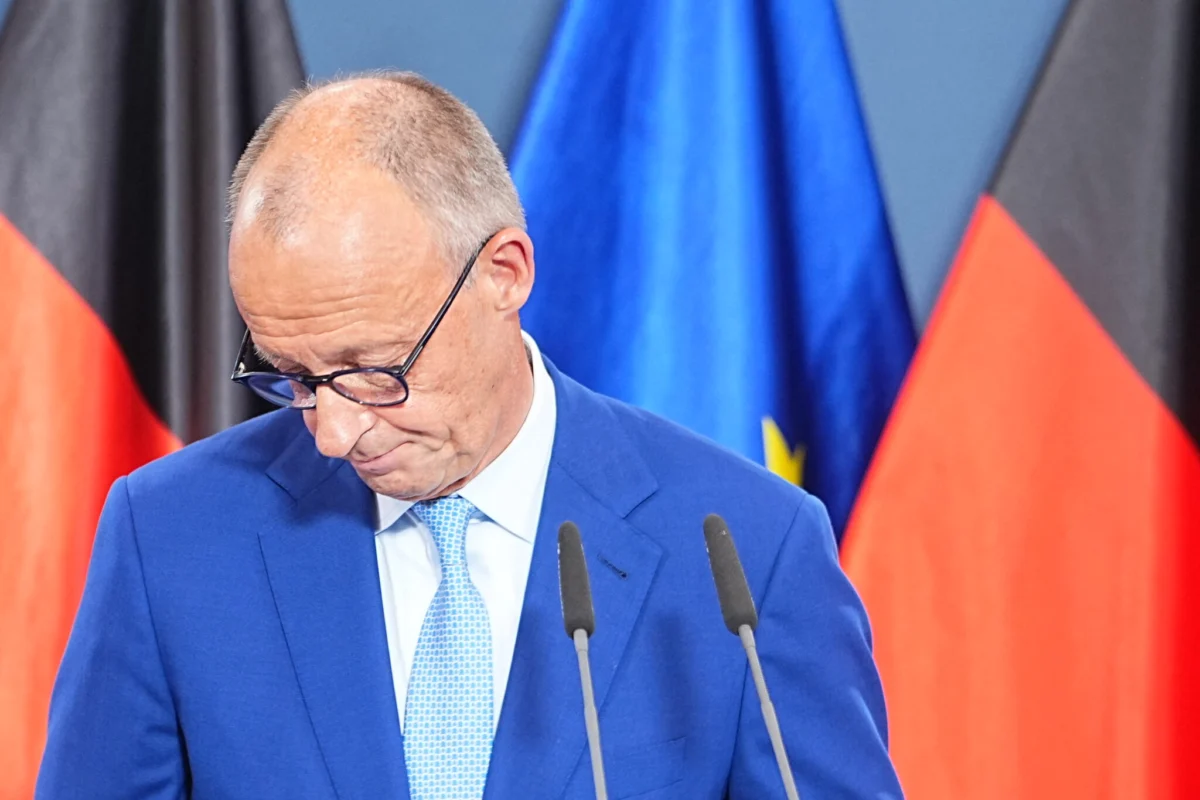
The political landscape of Germany underwent a seismic shift on Sunday as Chancellor Friedrich Merz’s administration faced what he termed a "disaster" following a series of devastating state election results. In a historic blow to the center-right Christian Democratic Union (CDU), the far-right Alternative for Germany (AfD) surged to a dominant victory in the northeastern state of Mecklenburg-Western Pomerania. Simultaneously, the CDU experienced a catastrophic collapse in support, falling below the critical threshold required for parliamentary representation. These results, coupled with a disappointing showing in the capital city of Berlin, have ignited a fierce debate over the future of Merz’s leadership and the stability of the current federal government.
The election in Mecklenburg-Western Pomerania saw the AfD secure a commanding 38.3% of the vote, marking a significant milestone for the populist party. The center-left Social Democrats (SPD) trailed behind with 35.4%, while the CDU suffered its worst performance in any German state election since the end of World War II, plummeting to a mere 4.9%. This figure is particularly damaging as it falls below the 5% electoral hurdle (Sperrklausel) mandated by German law for a party to enter the state parliament. Consequently, for the first time in the state’s post-war history, the CDU will have no legislative presence in Mecklenburg-Western Pomerania.
The Magnitude of the CDU Collapse
The failure of the CDU to reach the 5% threshold in Mecklenburg-Western Pomerania is being viewed by political analysts as a watershed moment in German politics. Historically, the CDU has been one of the two "Volksparteien" (people’s parties) that have anchored German democracy. To be excluded from a state legislature entirely signals a profound alienation of the party’s traditional voter base.
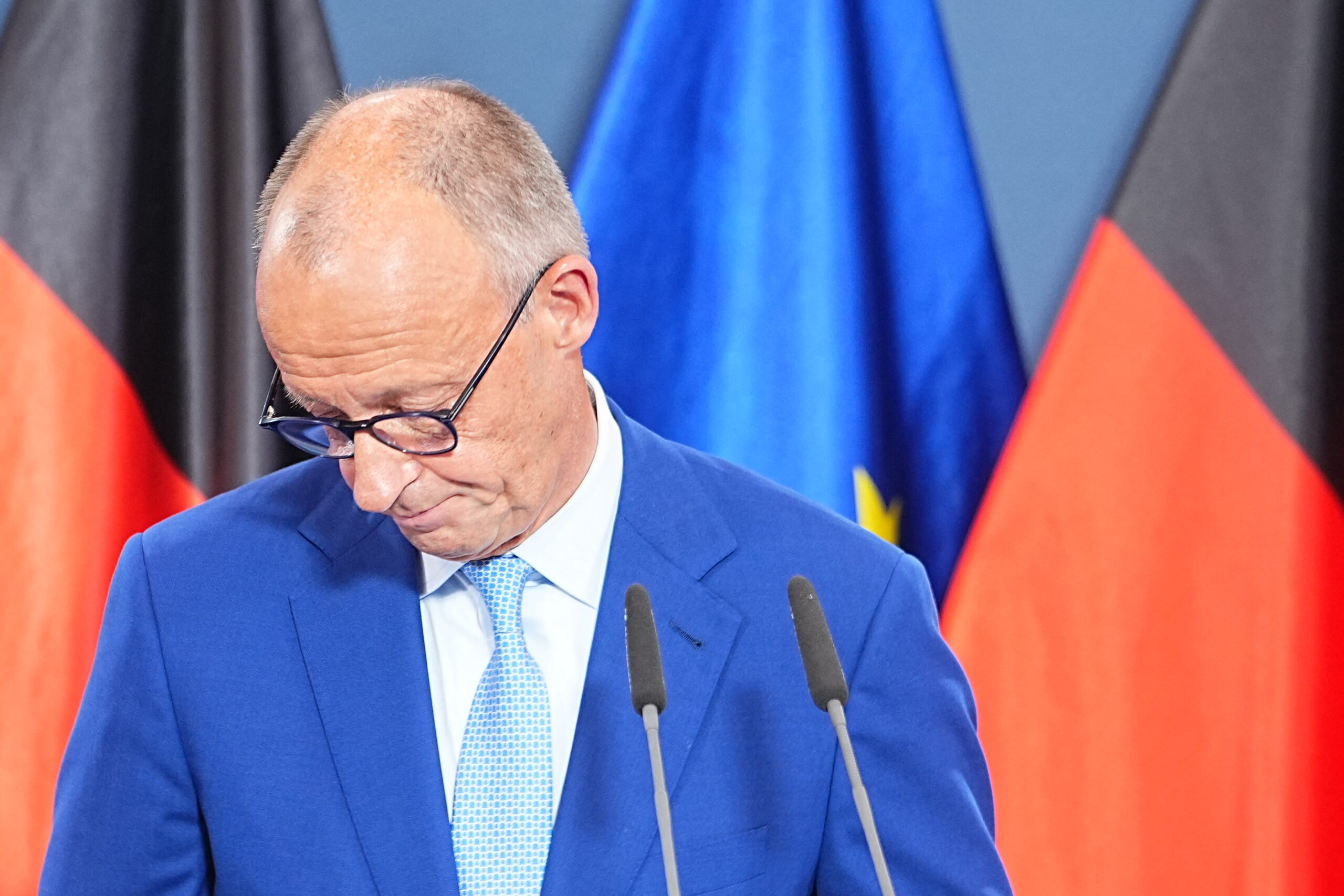
Chancellor Merz, addressing supporters and the media in the wake of the results, did not attempt to minimize the scale of the defeat. "We cannot sugarcoat the result in Mecklenburg-Vorpommern," Merz stated. "It is a disaster. The CDU fought hard, but in the end, it was the CDU that got crushed in the polarization between the Social Democratic Party and the AfD." Merz’s admission reflects a growing concern within the party that its attempt to position itself as a moderate, reform-oriented force is being drowned out by the increasingly binary choice presented to voters: the status quo represented by the SPD or the radical change promised by the AfD.
The disaster in the northeast followed a similar trend observed just two weeks prior in Saxony-Anhalt, where the AfD also inflicted a heavy defeat on the CDU. This pattern suggests that the AfD’s momentum is not localized but is part of a broader national trend of dissatisfaction with the federal government’s handling of key issues such as economic stagnation, energy costs, and migration policy.
Fragmentation and Shift in Berlin
While the results in Mecklenburg-Western Pomerania provided the most dramatic headline, the election in Berlin further illustrated the fragmentation of the German electorate. In the capital, the Left party (Die Linke) emerged as the largest force, securing 25.3% of the vote. The CDU, which had hoped for a strong showing to offset losses elsewhere, finished second with approximately 19%.
More concerning for the Chancellor was the performance of the AfD in the capital. The party increased its share of the vote to more than 16%, a sharp rise from its previous showing in Berlin. This growth in a traditionally liberal and cosmopolitan urban center indicates that the AfD’s appeal is expanding beyond its traditional rural and eastern strongholds. The rise of the AfD in Berlin, combined with the strength of the Left party, suggests a city—and a country—increasingly divided between ideological extremes, leaving the centrist CDU struggling to maintain its relevance.
The AfD’s Ascent and Alice Weidel’s Challenge
The AfD’s leadership has moved quickly to capitalize on the election results. Alice Weidel, the party’s co-leader, used a victory press conference to directly challenge Chancellor Merz’s authority. She declared that the AfD has now "overtaken the CDU" as the primary alternative for German voters.
"People want a change of policy," Weidel asserted, framing the results as a referendum on Merz’s tenure. She described the Chancellor as "strongly damaged" and argued that the CDU’s path forward is untenable under his leadership. "I believe the CDU cannot continue with Friedrich Merz, with a weak chancellor," she added.
The AfD’s strategy has increasingly focused on portraying the CDU as a "soft" version of the left-wing parties, arguing that only the AfD offers a genuine departure from the consensus politics of the last two decades. By successfully siphoning off conservative voters who feel the CDU has moved too far to the center, the AfD has effectively dismantled the CDU’s monopoly on the right side of the political spectrum.
Chronology of a Political Crisis
The current crisis facing the Merz government can be traced back through a series of escalating challenges over the past year:
- Economic Stagnation (Early 2026): Germany’s industrial sector, long the engine of the European economy, faced continued headwinds due to high energy prices and declining global demand. The government’s reform agenda, aimed at modernization, was criticized for being too slow to provide immediate relief to households.
- The Saxony-Anhalt Defeat (Early September 2026): Two weeks before the Mecklenburg-Western Pomerania vote, the AfD secured a major victory in Saxony-Anhalt, signaling that the "firewall" (Brandmauer)—the policy of mainstream parties refusing to cooperate with the AfD—was failing to prevent the party’s growth.
- The Double Blow (September 20, 2026): State elections in Mecklenburg-Western Pomerania and Berlin resulted in the CDU’s historic exclusion from the former and a weak second-place finish in the latter.
- The Leadership Challenge (Post-Election): Immediate calls from opposition leaders and murmurs of discontent within the CDU began to circulate, questioning whether Merz can lead the party into the next federal election.
Analysis of the 5% Threshold and Democratic Stability
The 5% threshold was originally designed in the post-war era to prevent the political fragmentation that plagued the Weimar Republic, which allowed small, extremist parties to destabilize the government. Ironically, this same mechanism has now resulted in a major, moderate party being excluded from a state parliament, while an extremist party thrives.
Data from the Mecklenburg-Western Pomerania election shows a significant "tactical voting" pattern. Many voters who previously supported the CDU appear to have migrated to the SPD in an attempt to prevent an AfD victory, while others moved directly to the AfD out of protest. This "polarization squeeze" left the CDU without a clear constituency. In a state where every percentage point matters, the loss of just a few thousand votes was enough to trigger the 5% exclusion rule, creating a vacuum in the center of the state’s political map.
Broader Implications for the Merz Government
Chancellor Merz has vowed to continue with his reform agenda despite the electoral setbacks. He has consistently argued that Germany’s economic problems require structural changes that may be unpopular in the short term but are necessary for long-term survival. "The answer cannot be to go back to the good old days," Merz warned during his post-election remarks, suggesting that he views the populist surge as a reaction to the discomfort of necessary transition.
However, the political reality is that Merz’s ability to govern is severely hampered by these results. A Chancellor whose party is losing its status as a national force faces significant hurdles in passing legislation through the Bundesrat (the upper house representing the states). Furthermore, the psychological impact of the 4.9% result in Mecklenburg-Western Pomerania cannot be overstated; it shatters the aura of the CDU as the "natural party of government."
The implications extend beyond Germany’s borders. As the largest economy in the European Union, Germany’s political stability is a cornerstone of regional security and economic policy. A weakened Chancellor and a surging far-right party raise concerns in Brussels and other European capitals about Germany’s future role in EU integration, climate policy, and support for international alliances.
Future Outlook
The immediate future for Friedrich Merz involves a difficult balancing act. He must manage internal party dissent from those who believe the CDU must move further to the right to reclaim voters from the AfD, while also maintaining the support of moderate voters who are wary of radicalism.
The AfD, meanwhile, is likely to use its newfound leverage to demand a greater role in state-level governance, further testing the "firewall" established by the mainstream parties. If the CDU continues to fail to meet the 5% threshold in other regions, the party may face an existential crisis that could lead to a total realignment of the German political system.
As the dust settles on this "disaster" Sunday, the central question remains: can the centrist traditionalism of the CDU adapt to an era of intense polarization, or is the rise of the AfD a permanent fixture of the new German political order? For Chancellor Merz, the window to provide an answer is rapidly closing.



 Yuyun Lusiyani
 Ana Megawati
 Joko Widodo
 Eva Lovia
 Pevita Pearce