
 Yuyun Lusiyani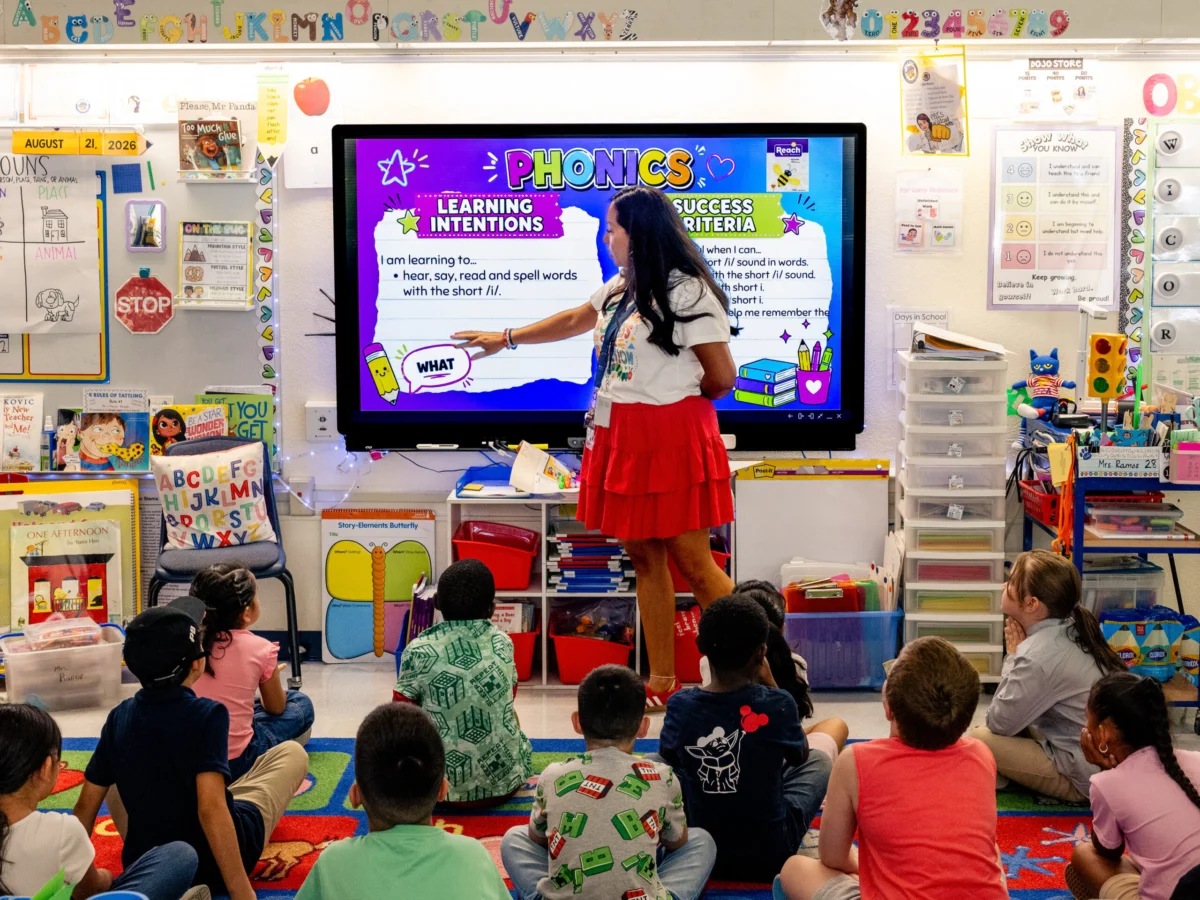
At John B. Wright Elementary School in Tucson, Arizona, the daily rhythm of second grade includes the clear, amplified voice of Samantha Ramos, a veteran teacher of 15 years specializing in English as a Second Language. Her recent phonics lesson, a dynamic session focusing on the short "i" sound, saw students mimicking her gestures – a hand to the shoulder for "w," an elbow for "i," and a hand for the double "l" – before collectively sounding out "will," then repeating the process for "dig," "wig," and "fit." This interactive approach is a cornerstone of the "structured English immersion" (SEI) program, a unique and often contentious educational mandate in Arizona, the only U.S. state maintaining English-only laws for its public schools. However, a recent, dramatic change in how students exit this program has ignited a fierce debate among educators, linguists, and civil rights advocates, raising serious questions about the long-term academic well-being of tens of thousands of Arizona’s most vulnerable students.
Arizona’s Unique English-Only Mandate
Arizona’s educational landscape for English Language Learners (ELLs) is largely defined by Proposition 203, a 2000 ballot initiative that effectively banned bilingual education in public schools. This initiative cemented the "structured English immersion" (SEI) model as the state’s sole approach. Under SEI, students identified as learning English are required to spend a significant portion of their school day – typically two to four hours – receiving instruction exclusively in English. These students, predominantly Spanish-speaking Latino children, are often segregated from their native English-speaking peers during this time. The ultimate goal is for them to pass the Arizona English Language Learner Assessment (AZELLA), proving sufficient fluency to transition into mainstream classrooms.
Critics of the SEI model have long argued that this "English-only" approach, while aiming for rapid English acquisition, inadvertently curtails students’ access to core subjects like math and science. By dedicating extensive daily blocks to English instruction, valuable time for foundational academic learning is reduced, potentially hindering their overall academic success and future college readiness. Nearly 1 in 10 students enrolled in Arizona public and charter schools report speaking a language other than English at home, underscoring the vast number of children impacted by these policies.
A History of Controversy: The AZELLA Test

The AZELLA test, administered each spring, measures students’ progress in reading, writing, speaking, and listening. However, its history is fraught with controversy and past federal interventions. Between 2006 and 2012, during the first two terms of then-Superintendent of Public Instruction Tom Horne, federal investigations by the U.S. Departments of Justice and Education determined that the AZELLA version in use was "not a valid measure of English language proficiency and readiness." This led to the premature reclassification of at least 28,000 students, who were removed from SEI programs despite lacking adequate proficiency in reading and writing.
These federal officials contended that placing non-proficient students in mainstream classrooms where they struggled due to language barriers violated their civil and educational rights. Arizona subsequently entered into a voluntary settlement agreement, emphasizing the legal requirement for educational agencies "to take appropriate action to overcome language barriers that impede students’ equal participation in instructional programs." The state was mandated to identify affected students, offer remedial reading and writing services, and comprehensively revamp the AZELLA test. A second voluntary settlement four years later further compelled the state to raise the proficiency threshold for the test and implement more rigorous retesting standards.
Adding to these concerns, a 2012 study by Ida Rose Florez, a psychologist and former professor and researcher at Arizona State University, concluded that the AZELLA test was "ineffective and obsolete" and its results could be arbitrary. Florez stated that there was "no evidence the test could accurately differentiate between children who need English-language services and those who don’t." She further criticized its fundamental development, telling Arizona Luminaria and ProPublica, "What I examined, and what I saw, was a test that was absolutely not developed correctly. I don’t see any basis for validity whatsoever."
The Sudden Surge in Proficiency: 2026 Changes
For three consecutive school years, including 2025, AZELLA passing rates statewide remained stubbornly low at 12%. In 2025, out of over 118,000 students who took the test, just over 14,000 were reclassified as proficient. However, the 2026 results have painted a drastically different picture. The statewide reclassification rate for 2026 surged to 26%, more than doubling the previous year’s figure. This unprecedented jump saw approximately 30,000 students out of nearly 113,000 test-takers reclassified as proficient and subsequently removed from English-language services for the current school year. At the Tucson Unified School District, where Ramos teaches, the percentage of proficient students more than doubled, from 10% in 2025 to 24% in 2026.
This sudden increase, however, does not reflect a miraculous leap in student fluency. Instead, it is a direct consequence of the Arizona Department of Education (ADE) lowering the passing scores required for the AZELLA. Deputy Superintendent Margaret Dugan, who chaired the group that advocated for Proposition 203 and has served with Tom Horne during all three of his terms as superintendent, explained the rationale. She stated that the ADE had skipped a crucial step in 2020 when the last major change to the test was made, following a State Board of Education decision granting more flexibility in English instruction. Due to COVID-19, native English speakers were not initially tested to establish a baseline for that new version of AZELLA.

When this belated baseline testing was conducted with 600 native English speakers, nearly half failed the test. Adela Santa Cruz, who leads the Office of English Language Acquisition overseeing the AZELLA, noted, "With a native not being able to pass that test at a high percentage, there’s something that was just quite awry." She attributed the plateauing 12% pass rate among English learners to these underlying issues.
Based on these findings, education officials adjusted the grading criteria, reducing the minimum score needed to pass all four components: reading, writing, speaking, and listening. Previously, students needed a combined score of at least 1,000 out of a possible 1,405. For 2026, the minimum passing scores were lowered, ranging from 962 for high schoolers to 944 for kindergartners. Anju Kuriakose, the director of psychometrics at the ADE, announced these changes in April, expressing her "hope is that all of you will see an increase in proficiency." However, Kuriakose also revealed that half of the native speakers tested to inform these changes were in kindergarten and first grade, while students in fifth grade or higher constituted less than one-fifth of the test-takers. This detail reignited concerns raised by Florez’s 2012 study, which found that scoring guidelines based too heavily on native-speaking kindergartners, without sufficient data from older children with more advanced language skills, could artificially inflate pass rates. Florez sees similar methodological flaws in the 2026 adjustments.
Expert Concerns and Long-Term Repercussions
The decision to lower passing scores, approved by outgoing Superintendent Tom Horne, has drawn sharp criticism from education experts who warn of severe, lasting harm to tens of thousands of Arizona students. Katie Bernstein, an applied linguist and professor of early childhood education at Arizona State University, articulated these fears, stating, "If you’re put in a class where you don’t understand what’s going on at all, you’re not learning language or content. And so those are the worst outcomes of all, are students who are not given any language services." Education researchers echo this sentiment, pointing out that students learning English already constitute the lowest-performing group on standardized tests, and prematurely removing them from specialized instruction could further exacerbate their academic struggles and hinder their long-term success.
The current situation eerily mirrors past events that prompted federal investigations. The departments of Justice and Education previously intervened when Arizona’s reclassification practices were deemed to violate students’ civil and educational rights. Bernstein cautions that "What’s happening now could be a repeat of that."
Tom Horne, though unavailable for an interview regarding the specific changes, has consistently defended Arizona’s structured English immersion program. In a 2024 interview, he boasted that reclassification rates were highest during his first terms (2003-2011), claiming to have brought the rate "up to 31% in three or four years" through SEI implementation and intensive teacher training. However, an Arizona auditor general’s report in 2011 questioned the validity of test results during Horne’s tenure, concluding that "because data is either unavailable or unreliable, the effect of SEI models is unknown." Horne lost his bid for reelection in the July Republican primary and is set to leave office in December.

The Human Cost of Policy Shifts
For families, these policy shifts carry profound implications. Juana Casas was relieved when her son, Arturo, a fourth grader at John B. Wright Elementary, passed the AZELLA this spring after three years in SEI classes. Her relief stemmed from a painful past experience: her oldest daughter struggled significantly with English and fell behind her classmates. To prevent a repeat, Casas and her husband sought after-school tutoring for Arturo, and his two older sisters actively helped him learn English at home. Casas, speaking in Spanish, shared, "I couldn’t help my oldest daughter, and she really struggled. Their two experiences are totally different. Arturo doesn’t speak Spanish very well because they’ve always spoken to him just in English so that he wouldn’t have to struggle like my oldest struggled." This poignant anecdote highlights the immense pressure and proactive measures many families undertake to navigate Arizona’s English-only system.
The academic disparities faced by English learners are stark. In 2025, standardized reading tests for all Arizona third graders revealed a 31% gap between ELLs and other students. Similarly, the standardized math exam for eighth graders in 2025 showed a 23% disparity. These gaps contribute to lower graduation rates and reduced postsecondary attainment for English learners, underscoring the critical need for effective language acquisition support.
Broader Impact and Financial Fallout
The debate over English-only policies extends beyond Arizona. While Proposition 203 proponents argue for faster English acquisition and quicker integration into mainstream classes, extensive research offers a counter-narrative. Ample studies indicate that students educated under English-only policies often exhibit larger achievement gaps compared to those in bilingual or multilingual education programs. These alternative models reinforce a student’s primary language while simultaneously accelerating learning in academic subjects and a second language.
A landmark 32-year study spanning 16 states, conducted by researchers Virginia Collier and Wayne Thomas, analyzed various language-learning models, including structured English immersion. Their findings concluded that "the key to accelerated progress is for English learners to receive peer-equivalent, grade-level bilingual schooling." Florez, the former ASU professor, succinctly summarizes her critique of Arizona’s approach: "The fundamental problem with the AZELLA is that it’s trying to measure a system that should never be in place to begin with." Bernstein further emphasizes the lack of pedagogical justification for Arizona’s stance: "There is no linguistic, educational, economic, or research-based reason why we shouldn’t have dual-language programs in the state. And so I think that potentially leaves politics as the only answer to why."

The surge in AZELLA pass rates also carries significant financial implications for school districts. Patricia Sandoval-Taylor, the Tucson Unified School District’s director for language development, explains that state law mandates teachers to track reclassified students’ progress for two years, intervening with additional support like tutoring or summer school if needed. Crucially, Arizona schools do not receive additional funding for these post-reclassification services, unlike the dedicated funding provided for students still classified as non-proficient in English. Furthermore, a portion of the district’s funding for English learners is directly tied to the number of students enrolled in structured English immersion. Consequently, the increased number of students passing the 2026 AZELLA will directly translate to less funding for TUSD in the 2027 school year. "They’re not going to have the direct services to ensure they become fully English proficient," Sandoval-Taylor warns, highlighting a potential long-term resource deficit for students who may still need support.
Back in Samantha Ramos’s second-grade classroom, the dedicated teacher continues to assess her new students’ abilities, adjusting her methods to meet their diverse needs. Teaching English learners, she notes, comes with additional responsibilities but no extra pay. Despite the systemic challenges, Ramos believes this is where she can make the greatest impact. For her, celebrating when students pass the AZELLA and are reclassified as English proficient remains important. "I think they need to be celebrated because they’re going above and beyond," she said. Reflecting on the prior, more stringent scoring, she added, "Before they did the change to the cut scores, it was like, ‘Well, they passed this really incredibly difficult test that even English speakers couldn’t even pass themselves.’" While the celebration is warranted for the individual student, the broader implications of lowered standards and reduced support for Arizona’s English learners continue to cast a long shadow over their educational futures.




 Joko Widodo
 Eva Lovia
 Pevita Pearce
 admin
admin
 Lina Irawan