
 Jia Lissa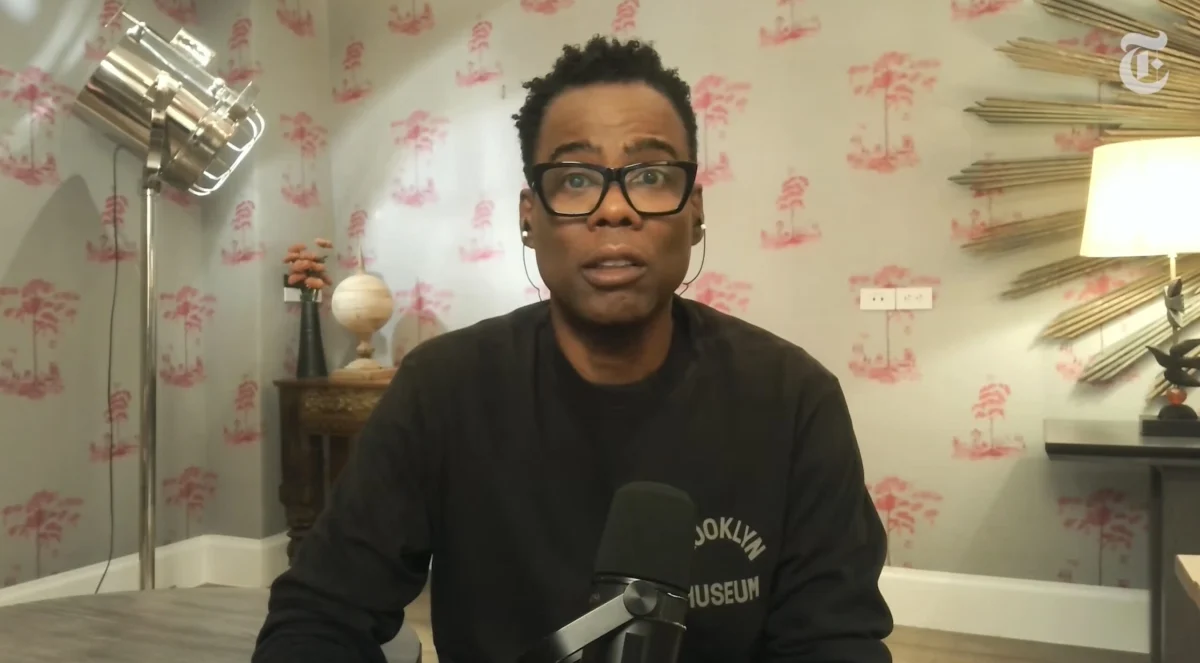
Chris Rock, the veteran comedian, filmmaker, and cultural critic, has sparked a renewed debate regarding the trajectory of modern social justice movements, comparing the current state of "wokeness" to the Salem witch trials of the late 17th century. During an extensive conversation on the Saturday edition of The Interview, a New York Times podcast hosted by David Marchese, Rock articulated a nuanced, albeit provocative, critique of how social accountability has evolved into a bureaucratic institution. The discussion, which touched upon his upcoming film Misty Green, delved into themes of redemption, the loss of forgiveness in the digital age, and the mechanical nature of modern cultural policing.
Rock’s commentary comes at a pivotal moment in his career. Having navigated the fallout of the 2022 Academy Awards and released his landmark Netflix special Selective Outrage, the comedian has increasingly positioned himself as a voice against ideological rigidity. In this latest interview, he balanced an acknowledgment of the necessity of social progress with a warning about the dangers of institutionalizing moral outrage.
The Salem Analogy and the Institutionalization of Outrage
The centerpiece of Rock’s critique was a comparison he labeled a "half a joke" concerning the Salem witch trials. Rock argued that while initial efforts to identify and rectify social wrongs are often legitimate and necessary, the process eventually becomes self-sustaining and prone to excess once it is institutionalized.
"The Salem Witch Hunts. I’m sure the first three witches they caught were actually f*cking witches," Rock told Marchese, using a hyperbolic metaphor to suggest that early targets of social justice movements often deserved the scrutiny they received. However, he posited that the momentum of such movements eventually creates a "witch office" with "overhead."
In sociological terms, Rock’s observation mirrors the concept of "mission creep," where an organization or movement expands its goals beyond its original mandate to justify its continued existence. Rock suggested that once a movement becomes an institution, it requires a constant supply of offenders to maintain its relevance and funding. "Now you gotta start lying. Now, you gotta fcking make sht up ’cause you got overhead," Rock explained. This perspective suggests that the "canceled" individuals of the current era may, in some instances, be victims of a system that has run out of legitimate targets but remains hungry for public trials.
A Theological Shift: The Old Testament vs. The New Testament
Central to Rock’s argument is the concept of forgiveness, a theme he explores in his upcoming directorial effort, Misty Green. The film reportedly follows the story of a disgraced actress seeking a path back to relevance, a narrative that mirrors the real-world experiences of many public figures in the "cancel culture" era.
Rock utilized a biblical analogy to describe the current cultural climate, comparing "wokeness" to the Old Testament. He noted that while it is vital for marginalized voices to be heard and for advocacy to exist, the current framework lacks a mechanism for redemption.
"The problem is we’re in the Old Testament right now," Rock said. "The Old Testament has no forgiveness. The Old Testament didn’t work, so they had to write a remix called the New Testament."
This comparison highlights a growing concern among cultural critics that modern social media-driven accountability focuses almost exclusively on retribution and permanent exile rather than rehabilitation. Rock emphasized that his personal philosophy regarding friendship is rooted in this need for grace. Discussing a friend who had been "canceled," Rock recalled telling another associate, "If you’re only friends with your friends when they’re good, they’re not your friends." He clarified that this stance does not equate to condoning abusive behavior but rather insists on the human capacity for change and the necessity of loyalty during times of failure.
Contextualizing the Post-George Floyd Era
The interview also touched upon what Marchese described as "Woke 1.0," the period of intense social and institutional upheaval following the 2020 murder of George Floyd. This era saw a rapid adoption of Diversity, Equity, and Inclusion (DEI) frameworks across corporate America, academia, and the entertainment industry.
Rock acknowledged the positive intentions of this era, stating, "It’s great that marginalized people have a voice; it is great to advocate for anybody that feels marginalized." He further added that he was "glad that all of this stuff happened" because "it needed to happen." However, his critique lies in the "crazy" excesses that he believes occurred when these sentiments became institutionalized mandates rather than organic social shifts.
Data from the Pew Research Center supports the idea of a shifting public sentiment regarding "cancel culture." In a 2021 study, Pew found that 58% of Americans believe that calling out others on social media is more likely to hold people accountable, while 38% believe it is more likely to punish people who didn’t deserve it. However, among those who are familiar with the term "cancel culture," the divide becomes even more pronounced, with many expressing concern that the movement limits free speech and ignores the context of past actions.
Rock’s Evolving Political and Media Commentary
The New York Times interview is not the first time Rock has made headlines this month for his heterodox views. Recently, the comedian commented on the political landscape and the media, specifically referencing former President Donald Trump. While Rock stated he is no "fan" of Trump, he admitted that the former president "got one thing right" that "almost clears him of all other sins": the assertion that "the news is fake."
This critique of the media ecosystem aligns with Rock’s broader skepticism of institutional narratives. By acknowledging Trump’s "fake news" rhetoric, Rock tapped into a widespread public distrust of mainstream media. According to Gallup’s 2023 Trust in Media poll, only 32% of Americans say they have a "great deal" or "fair amount" of confidence in the media to report the news fully, accurately, and fairly—a record low that matches the previous nadir in 2016.
Rock’s willingness to find common ground with polarizing figures like Trump on specific issues, while maintaining his overall political leanings, suggests a desire to break out of the binary "us versus them" mentality that characterizes much of contemporary American discourse.
Industry Reactions and Broader Implications
Rock is not alone in his critique of the current comedic and cultural landscape. Other high-profile comedians, including Jerry Seinfeld and Dave Chappelle, have voiced similar frustrations. Seinfeld recently made headlines by suggesting that the "extreme left" and "P.C. crap" have damaged the quality of television comedy, while Chappelle has centered several Netflix specials on his battles with what he perceives as the "cancel culture" mob.
However, Rock’s critique is notably different in its focus on "institutionalization." While others focus on the "mob" or the "audience," Rock is pointing toward the structures—the HR departments, the "witch offices," and the corporate frameworks—that have adopted social justice language as a form of risk management or bureaucratic expansion.
The implications of Rock’s statements are significant for the entertainment industry. As a major power player in Hollywood, his move toward themes of forgiveness and his critique of institutional "wokeness" may signal a broader shift in the types of stories being told. If Misty Green succeeds, it could pave the way for more narratives that explore the complexities of public disgrace and the possibility of a "New Testament" style of cultural redemption.
Chronology of Recent Events
To understand the weight of Rock’s recent comments, it is necessary to look at the timeline of his public engagements over the last two years:
- March 2022: Rock is slapped by Will Smith on stage at the 94th Academy Awards after making a joke about Jada Pinkett Smith. Rock declines to press charges and remains largely silent on the matter for nearly a year.
- March 2023: Rock releases Selective Outrage, the first-ever live-streamed Netflix special. In it, he addresses the "slap" and critiques the "victimhood" culture of modern society.
- Late 2023 – Early 2024: Rock focuses on directing and producing Misty Green, a project centered on the themes of public disgrace and forgiveness.
- October 2024: Rock appears on The Interview podcast, offering his "Salem witch trial" analogy and discussing his views on Trump and the media.
Conclusion
Chris Rock’s recent comments reflect a broader cultural "vibe shift" where legacy entertainers are increasingly comfortable questioning the dogmas of the last decade. By using the Salem witch trials as a framework, Rock is not arguing against justice itself, but against the transformation of justice into a self-perpetuating industry.
As the public grapples with the transition from the heightened sensitivities of the post-2020 era to a more complex, nuanced reality, Rock’s call for a "New Testament" of forgiveness offers a potential roadmap for cultural reconciliation. Whether the "witch offices" he describes will heed this call remains to be seen, but his voice adds significant weight to the growing chorus of those demanding a more redemptive approach to social accountability.


 Yuyun Lusiyani
 Ana Megawati
 Joko Widodo
 Eva Lovia
 Pevita Pearce