
 Jia Lissa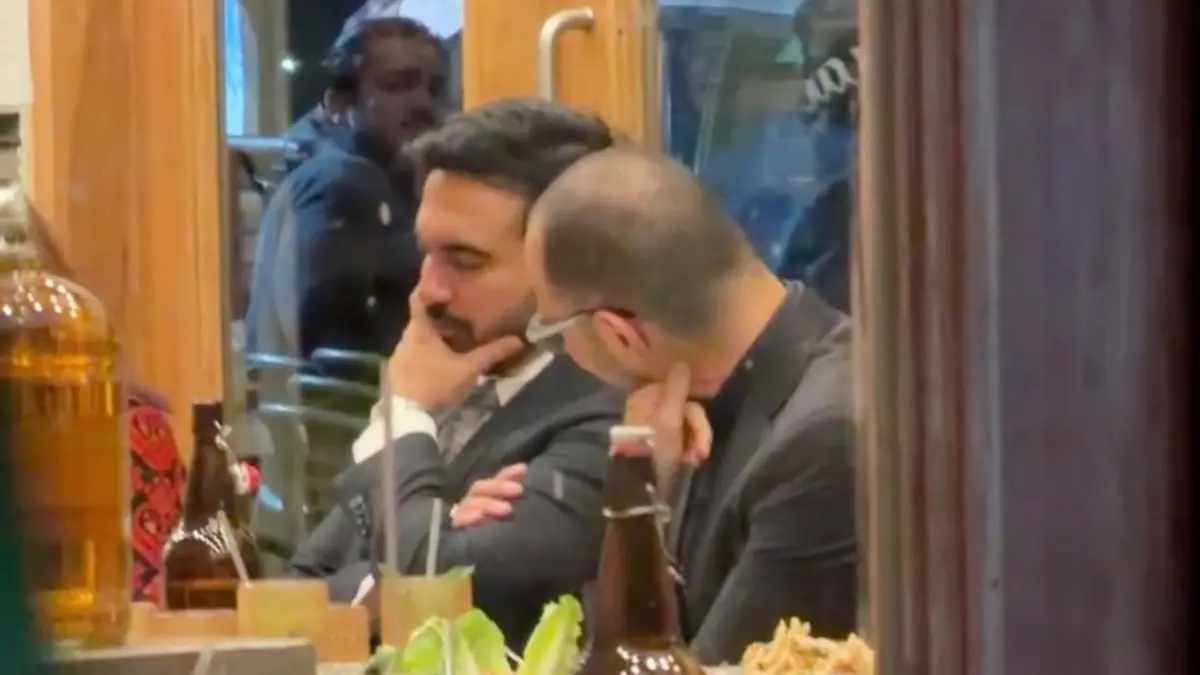
New York City Mayor Zohran Mamdani found himself at the center of a intensifying political firestorm this week as he attempted to navigate the deeply polarized landscape of New York City politics on the third anniversary of the October 7 attacks. On Wednesday, October 7, 2026, the Mayor participated in a series of events that drew sharp condemnation from across the political spectrum, highlighting the precarious balancing act he has maintained since taking office. The day’s events culminated in the Mayor dining at a Palestinian restaurant named in honor of a child killed in Gaza, a move that followed a public vigil where he was heckled by the very activists who once formed the bedrock of his insurgent political base.
The controversy began early Wednesday morning when the Mayor’s office released an official statement regarding the anniversary of the Hamas-led attacks on Israel. While Mamdani described the events of October 7, 2023, as "horrific war crimes" and expressed grief for the more than 1,100 Israelis killed and 251 abducted, he immediately pivoted to a scathing critique of the Israeli government’s military response. In the statement, Mamdani asserted that the suffering "did not begin nor end that day," and accused the administration of Prime Minister Benjamin Netanyahu of conducting a "devastating, ongoing genocide in Gaza." According to the Mayor’s figures, the conflict has resulted in the deaths of more than 74,000 Palestinians, including upwards of 21,000 children.
A Day of Friction and Public Protest
The Mayor’s attempt to acknowledge the trauma of the Jewish community while maintaining his staunch advocacy for Palestinian rights appeared to satisfy neither side. On Wednesday evening, Mamdani attended a candlelit vigil at Union Square, intended to honor the victims of the 2023 massacre. Carrying a single candle, the Mayor joined a silent march that proceeded from City Hall. However, the silence was frequently broken by pro-Palestinian demonstrators who shadowed the procession.
Video footage from the event captured protesters shouting "coward" and "traitor" at the Mayor. For many in the city’s progressive and anti-war movements, Mamdani’s participation in a vigil that focused on Israeli casualties was seen as a betrayal of his campaign promises to prioritize the Palestinian cause. Conversely, members of the city’s Jewish community and several City Council members criticized the Mayor for his presence at the event, arguing that his previous rhetoric—including calls for the arrest of Israeli officials—rendered his appearance at the vigil disingenuous.
Following the solemnities at Union Square, Mayor Mamdani was spotted dining at "Hinds Hall," a Manhattan branch of the popular Palestinian restaurant chain, Ayat, located on the Upper West Side. The choice of venue was laden with symbolic weight. The restaurant is named after Hind Rajab, a five-year-old Palestinian girl whose death in January 2024 became a global symbol of the humanitarian crisis in Gaza. Rajab was killed alongside several family members by Israeli Defense Forces (IDF) fire while attempting to flee Gaza City. The IDF later admitted that its soldiers had fired at the vehicle in which the child was trapped.
The Significance of Hinds Hall and the Legacy of Hind Rajab
The naming of the restaurant branch as "Hinds Hall" also carries a specific resonance within the context of New York City’s recent history of activism. During the spring 2024 campus protests, student activists at Columbia University occupied Hamilton Hall and unofficially renamed it "Hind’s Hall" in honor of the slain child. By choosing to dine at a commercial establishment that adopted this name, Mayor Mamdani signaled a continued alignment with the symbols of the pro-Palestinian movement, even as he faced accusations of "cowardice" from activists just hours earlier.
The restaurant chain, Ayat, has frequently been a flashpoint for political tension in New York. Its owners have been vocal about their support for Palestinian liberation, and the establishments often feature murals and literature documenting the history of the region from a Palestinian perspective. To supporters, Mamdani’s visit was an act of solidarity with a grieving community; to detractors, it was a calculated political maneuver designed to repair his standing with his base after the Union Square heckling.
A Chronology of Escalating Rhetoric
To understand the intensity of the backlash against Mayor Mamdani, one must look at the timeline of his administration’s relationship with the Israeli-Palestinian conflict. Mamdani, who transitioned from the New York State Assembly to the Mayor’s office on a platform heavily focused on international human rights and local social justice, has made support for Gaza a cornerstone of his political identity.
In early 2026, Mamdani sparked international headlines when he announced that he was "actively looking into" the legal mechanisms required to have Prime Minister Benjamin Netanyahu arrested should he set foot in New York City. Mamdani labeled Netanyahu a "war criminal," citing the mounting death toll in Gaza. While legal experts and a subsequent Reuters analysis confirmed that a municipal mayor lacks the jurisdiction to enforce international arrest warrants or bypass diplomatic immunity, the statement solidified Mamdani’s reputation as the most prominent anti-Zionist executive in American municipal government.

In September 2026, during the United Nations General Assembly, Prime Minister Netanyahu utilized his address to the world body to specifically target the New York City Mayor. Netanyahu branded Mamdani "New York’s anti-Semitic mayor," accusing him of stoking division in a city with the world’s largest Jewish population outside of Israel. Mamdani’s response was swift and unapologetic, as he characterized Netanyahu as the "architect of a genocide" and accused the Israeli leader of using accusations of anti-Semitism to deflect from accountability for military actions in Gaza.
Supporting Data and the Humanitarian Context
The statistics cited in Mamdani’s Wednesday statement reflect the staggering scale of the conflict as it entered its third year. The figure of 74,000 Palestinian deaths, if verified by international health organizations, represents a significant escalation from the casualty counts reported in the first two years of the war. The Mayor’s emphasis on the 21,000 children killed aligns with reports from NGOs like Save the Children and UNICEF, which have repeatedly warned that Gaza has become a "graveyard for children."
On the other side of the ledger, the trauma of October 7 remains a defining feature of New York City’s social fabric. With over one million Jewish residents, many New Yorkers have direct personal or familial ties to the victims of the Hamas attacks. The 1,100 deaths and the ongoing uncertainty surrounding the remaining hostages continue to drive a sense of vulnerability and anger that often clashes directly with the city’s growing pro-Palestinian protest movement.
Political Implications and Analysis
The events of October 7, 2026, illustrate the political isolation that can occur when a leader attempts to bridge two irreconcilable narratives. Mamdani’s "middle path"—acknowledging the war crimes of Hamas while simultaneously accusing Israel of genocide—has left him vulnerable to attacks from both the right and the left.
For the Republican opposition in the City Council and centrist Democrats, Mamdani’s use of the word "genocide" is viewed as an inflammatory blood libel that endangers Jewish New Yorkers. They argue that a mayor should serve as a unifying figure rather than a participant in international ideological warfare. Following the Mayor’s statement, several Council members called for a formal censure, arguing that his rhetoric violates the spirit of the city’s commitment to inclusivity.
Conversely, the pro-Palestinian "Left" in New York, which includes groups like Within Our Lifetime and various chapters of the Democratic Socialists of America (DSA), has grown increasingly frustrated with what they perceive as Mamdani’s "performative" politics. To these activists, the Mayor’s participation in a vigil for October 7 victims is an unacceptable concession to a narrative they believe erases decades of Palestinian struggle. The heckling at Union Square suggests that Mamdani can no longer rely on the unconditional support of the movement that propelled him to Gracie Mansion.
The Broader Impact on New York City
As New York City moves toward the 2027 election cycle, the Mayor’s handling of the Middle East crisis is expected to remain a central issue. The city’s economy, particularly its tourism and international investment sectors, is sensitive to perceptions of stability. The frequent protests and the high-profile feud between the Mayor and the Israeli government have created an atmosphere of persistent tension.
Furthermore, the NYPD has been forced to allocate record-breaking resources to manage the competing demonstrations that have become a near-daily occurrence. The cost of policing these events, combined with the heightened security around Jewish and Islamic religious institutions, has placed a significant strain on the municipal budget.
Mayor Mamdani’s dinner at Hinds Hall was perhaps a moment of personal reflection or a strategic attempt to signal that his core convictions remain unchanged despite the day’s criticisms. However, in the hyper-charged environment of New York City, even a meal is a political act. As the city continues to grapple with the local ripples of a global conflict, the Mayor’s actions on the third anniversary of October 7 serve as a stark reminder of the deep divisions that define his tenure and the city he leads.
In the coming days, the Mayor’s office is expected to face continued questioning regarding the data used in his statement and his future plans for engagement with both the Jewish and Palestinian communities. For now, Zohran Mamdani remains a figure who, in trying to speak to the pain of all sides, has found himself standing increasingly alone in the center of a storm.

 Yuyun Lusiyani
 Ana Megawati
 Joko Widodo
 Eva Lovia
 Pevita Pearce