
 Jia Lissa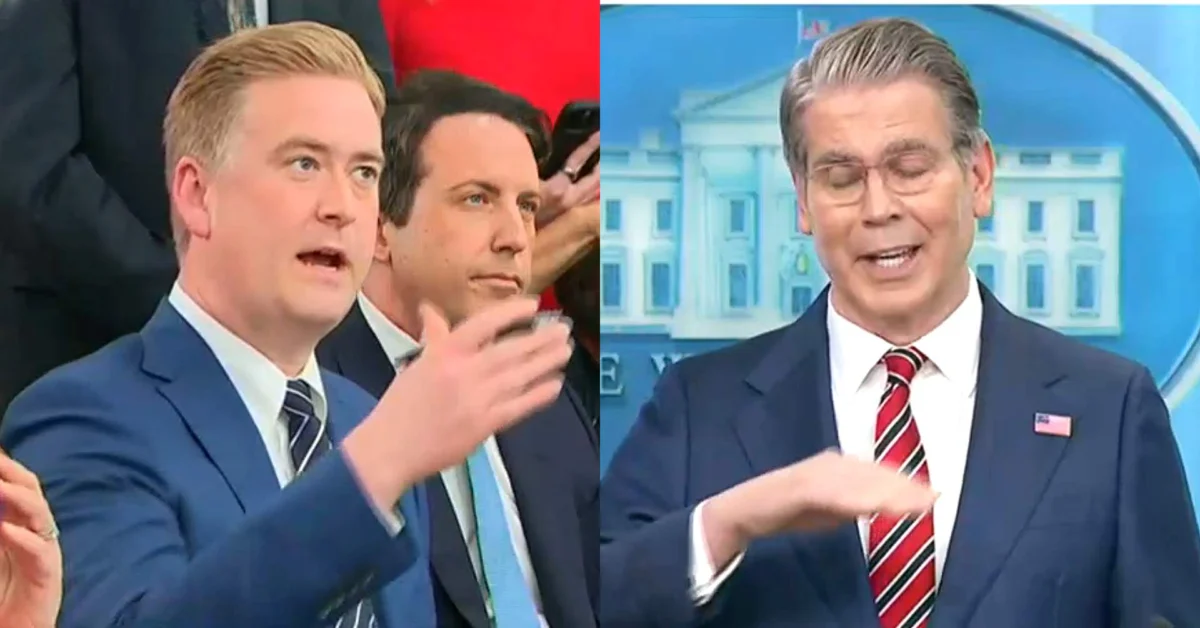
United States Treasury Secretary Scott Bessent signaled a shift in the administration’s economic messaging on Wednesday, tempering expectations for a rapid decline in domestic fuel costs during a high-profile exchange at the White House. During a press briefing alongside Press Secretary Karoline Leavitt, Bessent was confronted by Fox News Senior White House Correspondent Peter Doocy regarding the feasibility of achieving $3-per-gallon gasoline by the start of the summer season. The exchange highlighted an emerging discrepancy within the administration’s energy outlook, as officials grapple with the complexities of global supply chains, Middle Eastern geopolitics, and the inherent lag between falling crude oil prices and retail relief for American consumers.
The discussion followed recent comments from Secretary of Energy Chris Wright, who characterized the goal of $3 gas by the summer as an "aggressive timeframe." This admission marked a departure from earlier, more optimistic projections shared by the administration, which had positioned lower energy costs as a primary objective for the first half of the year. When pressed by Doocy on when Americans could realistically expect to see the "three" handle on gas station marquees, Bessent offered a broader window, suggesting that while the goal remains attainable, it is now tethered to the resolution of international conflicts and the reopening of critical maritime trade routes.
The White House Exchange and Shifting Timelines
The interaction in the briefing room underscored the political sensitivity surrounding energy prices, which remain a primary driver of consumer sentiment and inflationary pressure. Peter Doocy initiated the line of questioning by citing Secretary Wright’s revised assessment. "It doesn’t sound like we’re going to have $3-a-gallon gas by summertime, which we had initially been told by the Energy Secretary," Doocy noted, asking for a definitive timeline.
Secretary Bessent’s response focused on the intersection of diplomacy and energy markets. He attributed the current pricing plateau to ongoing negotiations in the Middle East and the status of the Strait of Hormuz, a vital chokepoint for global oil transit. Bessent noted that while a ceasefire had led to a cessation of active hostilities in certain sectors, the full restoration of oil flow through the Strait had not yet been achieved.
"I’m optimistic that during the summer we will see gas with a three in front of it sooner rather than later," Bessent stated. When Doocy asked for clarification on whether this meant Memorial Day or Labor Day, Bessent defined the administration’s current target as the astronomical summer, falling between June 20 and September 20. This three-month window provides the administration with significantly more breathing room than the late-May deadline associated with the traditional start of the summer driving season.
Geopolitical Factors: The Strait of Hormuz and Global Supply
A central component of Bessent’s argument for falling prices involves the normalization of oil exports from the Persian Gulf. The Strait of Hormuz, situated between Oman and Iran, connects the Persian Gulf with the Gulf of Oman and the Arabian Sea. It is arguably the world’s most important oil transit point, with approximately 20% of the world’s total petroleum consumption passing through the waterway daily.
Bessent revealed that during "bank week" in Washington, D.C., he held extensive meetings with finance ministers from the Middle East. According to the Treasury Secretary, these officials indicated that regional producers are prepared to ramp up production almost immediately once maritime security is guaranteed. "They all say that once the Straits are open, they can start pumping again within one week," Bessent remarked.
The administration’s strategy appears to rely heavily on this "snap-back" in production to flood the market with supply, thereby driving down the global price of crude. However, market analysts point out that the reopening of the Straits is contingent upon complex multi-party negotiations involving regional powers and international mediators. Until the "ceasefire" mentioned by the President and the Treasury Secretary translates into a full cessation of maritime threats, insurance premiums for tankers and logistical hurdles will likely keep the global "risk premium" on oil elevated.
Market Realities and the "Rocket and Feather" Effect
Beyond the geopolitical supply constraints, Secretary Bessent addressed a perennial frustration for American drivers: the disparity between falling crude oil prices and stagnant retail gas prices. This phenomenon, often referred to by economists as the "rocket and feather" effect, describes how retail prices tend to rise like a rocket when crude prices spike but drift down like a feather when crude prices retreat.
Bessent noted that crude oil prices have seen a substantial decline—roughly 10% over the last ten days—yet these savings have not been fully passed on to consumers at the pump. "We are going to be watching the gas stations because they raised prices very quickly when the crude oil prices went up," Bessent warned. "We hope they’ll bring them down just as quickly."
The Treasury Department’s focus on retail margins suggests a potential for increased regulatory scrutiny or public pressure on energy retailers. However, gas station owners often argue that retail prices are influenced by local competition, labor costs, and the price of the next delivery of fuel (replacement cost), rather than just the current spot price of crude. As of late February, the national average for a gallon of regular unleaded gasoline continues to hover above the $3.20 mark in many regions, with significant volatility across different states due to varying tax structures and refinery capacities.
A Chronology of Energy Promises
To understand the weight of Bessent’s comments, one must look at the trajectory of the administration’s energy promises over the last several months:
- Early Administration: President Trump and his economic team prioritized "energy dominance," promising that deregulation and increased domestic drilling would lead to a rapid collapse in energy costs.
- January/February: Energy Secretary Chris Wright and other surrogates frequently cited $3.00 as a psychological and economic target for the "summer."
- Late February: Secretary Wright walks back the "summer" goal as "aggressive," citing unforeseen global volatility.
- The Current Briefing: Secretary Bessent reframes "summer" as the period ending in September, effectively pushing the deadline for the $3.00 goal toward the end of the third quarter.
This shifting timeline reflects the difficulty of managing domestic expectations in a globalized commodity market. While the administration can influence domestic production through leasing and permitting, the global price of oil—and by extension, gasoline—is dictated by a confluence of factors largely outside the control of any single government.
Comparative Data: Gas Prices and Crude Benchmarks
Data from the U.S. Energy Information Administration (EIA) and AAA provides context for the administration’s $3.00 target. Historically, gas prices tend to rise in the spring as refineries switch to more expensive "summer blend" gasoline, which is designed to reduce smog. This seasonal uptick often adds 10 to 30 cents per gallon to the retail price, creating a significant headwind for the administration’s goal.
As of the date of the briefing, West Texas Intermediate (WTI) crude, the U.S. benchmark, traded in the mid-$70 range. Historically, for gasoline to consistently trade at or below $3.00 nationally, WTI crude generally needs to sit comfortably below $70 per barrel, assuming refining margins and retail markups remain at historical norms. If the administration successfully facilitates the reopening of the Strait of Hormuz and a surge in Middle Eastern production, a drop into the $60 range is possible, but it remains a contingent outcome.
Official Responses and Political Implications
The reaction to the shifting timeline has been split along predictable lines. Supporters of the administration’s policy argue that Bessent is being "transparent and realistic" about the impact of global conflicts on the American wallet. They emphasize that the focus on the Strait of Hormuz shows a sophisticated understanding of how international diplomacy impacts domestic inflation.
Conversely, critics argue that the administration over-promised during the campaign and early transition period. They point to Secretary Wright’s "aggressive" comment as an admission that the "drill, baby, drill" rhetoric has yet to manifest in lower consumer costs. Economic analysts also warn that if gas prices do not hit the $3.00 mark by the peak of the summer travel season, it could dampen consumer spending in other sectors, potentially slowing GDP growth.
The political stakes are high. Energy prices are often viewed as a "tax" on the working class, and the administration has tied much of its political capital to the idea of reducing the cost of living. A failure to meet the $3.00 threshold by Labor Day would likely become a central talking point for opposition leaders heading into the next legislative cycle.
Broader Impact and Future Outlook
The Treasury Secretary’s comments indicate that the administration is pivoting from a strategy of "immediate relief" to one of "managed expectations." By defining the summer window through September 20, Bessent has bought the administration time to see if their diplomatic efforts in the Middle East yield results.
The broader implications for the U.S. economy are significant. Lower energy prices act as a disinflationary force, giving the Federal Reserve more room to consider interest rate cuts. If Bessent’s optimism proves correct and gas prices fall toward the end of the summer, it could provide a timely boost to the economy in the fourth quarter.
However, the reliance on the Strait of Hormuz remains a wildcard. Any escalation in regional tensions could abruptly reverse the recent downward trend in crude prices, regardless of domestic production levels. For now, the American consumer remains in a "wait and see" posture, watching the pump for the "three" that Secretary Bessent insists is coming—even if it arrives later than originally billed.
As the administration continues its "bank week" discussions and diplomatic outreach, the focus remains on the delicate balance of global supply and the aggressive monitoring of domestic retail practices. The coming months will determine whether the $3.00 goal was a realistic policy target or an optimistic aspiration caught in the gears of global volatility.


 Yuyun Lusiyani
 Joko Widodo
 Pevita Pearce
 admin
admin
